

Wholesale Tri-isobutyl Phosphate: A Comprehensive Buyer's Guide
2026-11-02
If you're sourcing wholesale tri-isobutyl phosphate, you already know the challenges: finding a supplier that delivers consistent purity, reliable batch-to-batch performance, and honest pricing—without the usual runaround. The market is crowded, and not every vendor deserves your trust. This buyer's guide lays out exactly what to look for, from specifications to supply chain stability. And if you're after a partner with a proven track record, Fortune stands ready to meet your bulk chemical needs.
What Makes Tri-isobutyl Phosphate Essential for Industrial Use?
Tri-isobutyl phosphate often gets overlooked next to its more common cousins, yet its structural quirks make it unusually valuable in industrial settings. The branched isobutyl groups create a sterically hindered phosphorus core, which translates into lower viscosity and a wider liquid range than straight-chain alternatives. This means it can function effectively in systems where temperature swings are extreme or where a fluid needs to stay mobile without thickening. For process engineers, that physical stability alone is reason enough to reach for it before other alkyl phosphates.
Another less obvious advantage is its behavior as a solvent and defoaming agent. Because the molecule resists breaking down under moderate heat and doesn’t readily hydrolyze in neutral or slightly acidic conditions, it can be reused in closed-loop extraction and purification circuits without rapid degradation. Industries that handle metal recovery or polymer processing lean on this durability to cut replacement costs and reduce downtime. The compound’s low surface tension also helps suppress foam in agitated reactors, a benefit that gets noticed quickly on a busy production floor.
What really sets it apart, though, is how it balances polarity with hydrophobicity. Tri-isobutyl phosphate can dissolve both polar and non-polar species, making it an efficient carrier for additives, plasticizers, and flame retardants. It doesn’t just act as an inert diluent; it actively improves the compatibility of ingredients that would otherwise separate. That dual character gives formulators a tool for creating more homogeneous batches without resorting to multiple co-solvents, which simplifies supply chains and lowers overall material handling.
Avoiding Common Pitfalls When Sourcing Wholesale TIBP
One of the quickest ways to get burned in wholesale TIBP sourcing is chasing the lowest quote without checking what actually arrives. Many buyers skip requesting batch-specific certificates of analysis, then discover moisture contamination or off-spec purity only after a container is in their warehouse. Ask for a retained sample from the exact lot you’re buying, not a generic spec sheet, and confirm the testing lab is independent. If a supplier can’t or won’t provide that, treat it as a red flag rather than a negotiation hurdle.
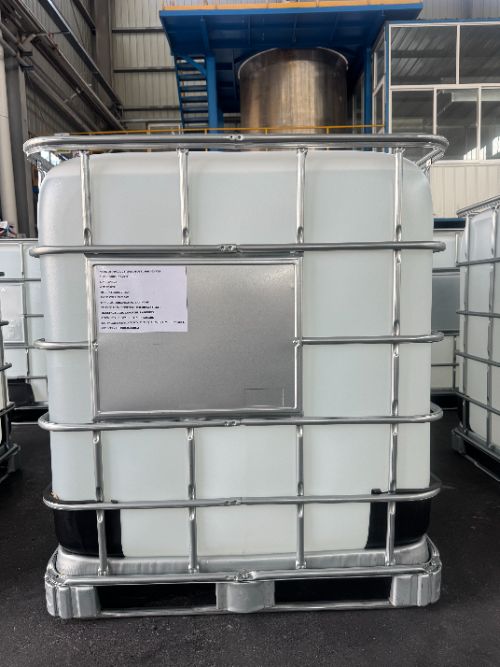
Another trap is overlooking packaging and handling requirements until it’s too late. TIBP may be sensitive to moisture or temperature shifts, and drums that look fine on the outside can hide damaged seals or improper lining. Before finalizing an order, pin down the exact packaging materials, fill weight tolerance, and shipping conditions. Also verify that the supplier has shipped into your region before and understands the paperwork for customs or hazardous material declarations if applicable. A lower unit price evaporates fast when you’re stuck with unusable product or a delayed clearance.
Purity Levels and Quality Checks That Actually Matter
Most purity claims stop at a single number, but that figure rarely tells you what’s actually in the product. A 99% label might still hide residual solvents, heavy metals, or isomers that affect how the material behaves. Instead of obsessing over one percentage, look for batch-specific certificates that break down the impurity profile. If a supplier can’t name the three most common contaminants in their own batch, that’s a bigger red flag than a slightly lower purity number.
Quality checks that matter are the ones tied to your intended use. For synthesis, trace moisture and oxygen content often matter more than total purity. For biological work, endotoxin levels, microbial count, and residual aldehydes can ruin an experiment even at 99.5% purity. Ask for the actual test methods—HPLC, GC, ICP-MS, Karl Fischer—not just a passing grade. A meaningful quality check tells you the detection limit and the uncertainty, not just “pass/fail.”
Finally, consistency across batches matters more than a single impressive purity number. A supplier that shows slight variation batch to batch but always within your acceptable range is often more reliable than one that claims perfect purity every time. Insist on seeing real data for at least three consecutive lots, and pay attention to how the material is handled after testing—because a high-purity product shipped in the wrong container can degrade before it reaches your bench.
Negotiating Bulk Pricing Without Compromising Quality
Push for a lower unit price only after you map exactly where the supplier's costs sit. Ask for a breakdown of raw material, labor, packaging, and freight. Once you know which components flex, you can propose a tiered schedule that rewards larger volumes over a longer commitment instead of squeezing the supplier on a single order. This shifts the conversation from "give me a discount" to "let's build a cost structure that works for both of us."
Quality stays protected when you write it into the agreement before price gets discussed. Define tolerances, rejection rates, and inspection protocols in plain language. If the supplier pushes back on price, offer to reduce nonessential packaging or consolidate shipments rather than accepting a cheaper base material. A small pilot run with statistical sampling gives you hard data before you scale up, so the lower price doesn't arrive with hidden defects.
There's also room to negotiate around the edges. Ask for longer payment terms, free warehousing for 30 days, or a rebate when annual volume hits a certain threshold. These concessions can be worth several percentage points without touching product specs. When the supplier sees you're not just hammering the price, they're more willing to lock in a rate that protects both margin and quality.
Safe Handling and Storage: What Buyers Often Overlook
Most buyers check the label for temperature limits and call it a day, but real-world handling is messier. A pallet left on a sunny loading dock for thirty minutes can push product temps past the safe zone before it ever reaches the shelf. The same goes for storage: stacking boxes too tightly against a wall blocks airflow, turning a cool room into a warm pocket. These aren't hypothetical failures—they're routine shortcuts that quietly shorten shelf life.
What rarely makes the spec sheet is how the product behaves after the first opening. A bag that reseals poorly or a drum with a stubborn lid invites moisture, pests, and oxidation. Buyers who overlook closure integrity end up paying twice—once for the original order, again for the wasted portion. It's worth testing a sample by opening, closing, and reopening it under normal conditions rather than trusting a zip-lock claim on the packaging.
Another blind spot is cross-contamination during handling. A shared scoop, a gloved hand that touched raw material, or a storage bin that wasn't fully dried after washing—these small slips create issues no certificate of analysis will catch. Smart buyers walk the warehouse floor, watch how staff actually move product, and ask where returns get stored. If the answer is a dusty corner next to the cleaning supplies, the best spec in the world won't save the batch.
From Defoaming to Plasticizing: Practical Applications to Consider
When reformulating a coating or adhesive, defoamer choice usually comes down to more than just knocking down foam fast. A mineral oil defoamer might clear microfoam quickly but can leave surface haze in a high-gloss clear coat. Silicone-based options are powerful at low dosage, yet an overdose during letdown often creates fisheyes that only show up after the film cures. Plant trials with a ladder series are still the most reliable way to catch those late-appearing defects before a full batch is committed.
Plasticizer selection brings a similar set of trade-offs. General-purpose phthalates have been workhorses for flexible PVC due to their low cost and easy processing, but migration into adjacent materials remains a common failure in multi-layer flooring or automotive interiors. Citrate or benzoate alternatives can reduce that migration and improve low-temperature flexibility, though they may require higher addition levels or changes in fusion temperature. Watching the gelation curve on a torque rheometer gives a more honest picture than simply matching solubility parameters.
What often gets overlooked is the interaction between defoamers and plasticizers in the same system. A high-solvating plasticizer can lower the surface tension enough to destabilize the defoamer droplet distribution, making the wetting agent work harder or the foam break slower. Formulators who treat these additives as independent variables tend to chase the same defect through multiple batch adjustments. Running a small factorial blend study early usually saves more time than troubleshooting a failed production run later.
FAQ
Check the supplier's production capacity, lead time consistency, and whether they can provide samples from the same batch that would be shipped. Ask for a recent certificate of analysis rather than a generic spec sheet, and confirm the packaging type matches your handling equipment. Also clarify whether the price includes palletizing, shrink wrapping, and loading for export if applicable.
Purity directly influences performance in flame retardants, plasticizers, and extraction solvents. Look beyond the headline purity percentage: monitor acid value, moisture content, color (APHA), and trace metal levels. A product with 99% purity but high acidity can still corrode equipment or destabilize formulations, so request full batch data before comparing grades.
Suppliers use end use to determine the appropriate grade, regulatory documentation, and packaging compatibility. A buyer using tri-isobutyl phosphate in an industrial lubricant has different purity and additive tolerance than someone using it in a sensitive polymer system. Disclosing the application helps avoid overpaying for unnecessary specs or receiving a grade that will fail in your process.
Store in a cool, dry, well-ventilated area away from strong oxidizers and direct sunlight. Use stainless steel or lined carbon steel tanks for bulk storage, and keep moisture ingress minimal because water accelerates hydrolysis and raises acid value. For drum quantities, reseal partially used containers immediately and rotate inventory using first-in, first-out logic to prevent degradation at the bottom of older stock.
Normalize every quote to a delivered cost per kilogram of active ingredient, not per drum or per ton. Factor in payment terms, minimum order quantity, packaging deposits, inland freight, and demurrage risk at the port. A supplier offering a lower base price but charging for nitrogen blanketing or heat tracing will often end up more expensive than a quote that includes those controls.
Request a commercial invoice, packing list, bill of lading, certificate of analysis, and safety data sheet aligned with the latest revision of GHS. If the material is destined for a regulated industry, ask for a statement of composition, absence of conflict minerals, and any applicable REACH or TSCA compliance confirmation. For landed cost clarity, also obtain the harmonized system code and country of origin certificate before shipment departs.
Watch for reluctance to share batch production records, inconsistent lot numbering between the certificate of analysis and drum labels, or sudden changes in the declared country of origin. If a supplier cannot explain how they control residual alcohol content or neutralization steps, their process control is likely insufficient. Also be wary of manufacturers who offer unusually short lead times during peak demand periods without a clear explanation of available capacity.
Request a small commercial batch, not a laboratory sample, and ask the supplier to draw retain samples that both parties keep for six months. Specify the exact packaging type and closure style you will use at scale, and run the material through your actual production line rather than only performing bench tests. Agree in writing on the acceptance criteria for acid value, moisture, and color before the trial, so a borderline result cannot be dismissed later.
Conclusion
Tri-isobutyl phosphate (TIBP) rarely makes headlines, yet it quietly keeps many production lines running. As a phosphate ester, its defoaming and plasticizing properties make it indispensable in coatings, adhesives, and certain polymer systems. When buying wholesale, the most common misstep is trusting a supplier's word on purity without verifying the actual certificate of analysis or requesting a retained sample. A low price often signals recycled or off-spec material that clogs filters or alters viscosity in ways only noticed after a batch fails. Insist on transparent test methods—such as acid value, water content, and refractive index—not just a generic "99% pure" claim. Consistency across lots matters more than a single impressive data sheet.
Negotiating bulk pricing works best when you decouple it from quality concessions. Instead of asking for a blanket discount, lock in volume tiers, payment terms, or scheduled deliveries that reduce the supplier's logistics costs. This keeps the per-kilogram price competitive without silently switching to a lower-grade ester. Safe handling and storage are another area buyers shortchange: TIBP is hygroscopic and can degrade if stored in unsealed drums or exposed to high humidity, so confirm packaging and warehouse conditions before signing. Finally, think beyond the obvious defoaming use—TIBP also serves as a plasticizer in PVC and a flame retardant synergist, so a single well-chosen source can cover multiple production needs without multiplying vendor relationships.
Contact Us
Contact Person: WANG SIHAI
Email: [email protected]
Tel/WhatsApp: +86-13815295628
Website: https://www.fortunechemtech.com/index_en.html