

What Makes China INNOMOTICS Geared Motors Manufacturer a Trusted Partner for Industrial Drive Systems
2026-11-16
Everyone promises reliable drive systems; fewer suppliers can explain what reliability actually costs in practice. In China’s INNOMOTICS geared motors market, that difference separates order-takers from engineering partners. Chuangjuman belongs to the second group—not through branding alone, but through the way it handles load calculations, component traceability, and after-sales support. This article unpacks the specific strengths behind that trusted-partner status and what they mean for your industrial drive systems.
Engineering Support Before the First Order
Most suppliers wait until a purchase order lands before they ask how a part will actually be made. We start earlier. During the pre-order phase, our engineers go through your drawings, material callouts, tolerances, and finishing notes line by line. If a dimension is likely to drift during machining or a surface finish spec adds cost without adding function, we flag it before it turns into a rejected batch.
That back-and-forth often includes revised models, alternative material suggestions, or a quick phone call to understand what the component really needs to do. It is not a sales screening process; it is closer to a design review. The goal is to make sure the first quote is tied to a buildable part, not just a file that looks complete on screen.
For teams without a dedicated manufacturing engineer, this step tends to uncover issues that would otherwise surface weeks later. It also shortens the gap between first contact and first shipment because the tooling, tolerances, and inspection points are already settled before the order is entered.
Repeatable Quality in Geared Motor Production
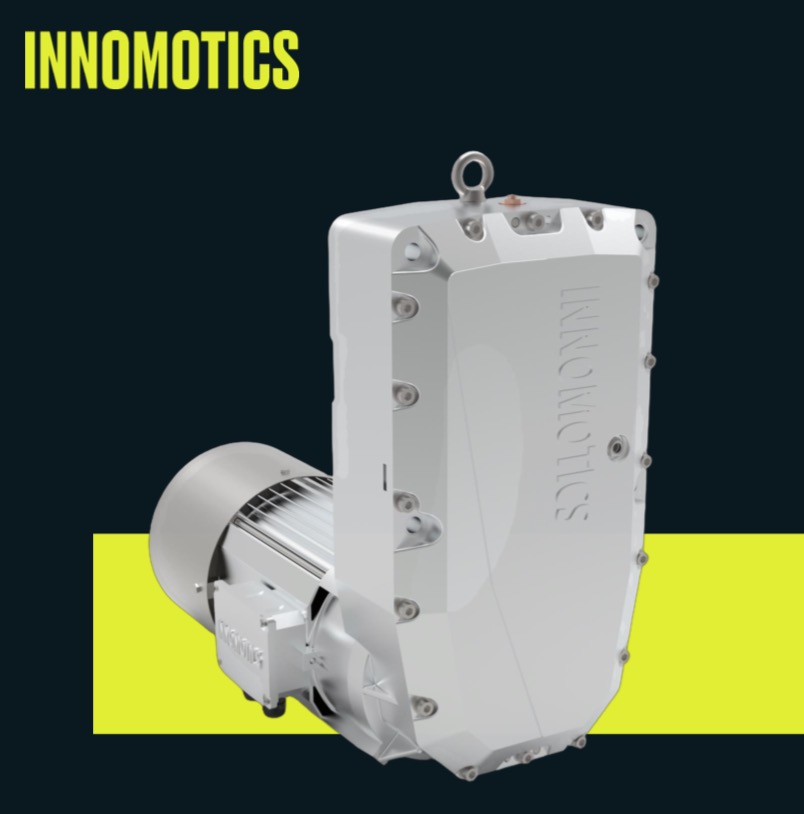
Consistency here is built before assembly, not inspected in at the end. Each batch of gear blanks is sampled for metallurgical and dimensional drift before machining begins. Heat treatment cycles are tied to furnace profiles and verified against expected case depth, so hardness does not wander between shifts or seasons.
On the assembly line, torque tools record their own fastening curves and the geared units pass a short loaded run-in. Vibration and noise signatures are compared with a stored baseline for that motor frame, which catches slight mesh irregularities that a simple pass/fail gate would miss. The goal is not just a quiet unit today, but a predictable signature across every build.
Supplier changes and tool wear receive the same scrutiny. A new hob, grinding wheel, or lubricant batch is validated on a small run before it touches full production. Operators see only the process trends that matter, so corrections happen when a parameter drifts, not after a box of rejected units has already been produced.
Application-Fit Drive Design Without Wasteful Overspecification
Application-fit drive design starts with a clear-eyed look at the actual duty cycle, load spectrum, and operating environment. Rather than copying a previous selection or defaulting to the largest standard frame, the engineering team maps out peak torque, continuous speed, thermal limits, and the frequency of overload events. This granular understanding reveals where capacity is truly required and where it simply adds mass, cost, and inertia without delivering any measurable benefit.
A practical approach is to build the drive train around the highest sustained demand, not the rare spike that can be handled through controls, energy storage, or brief overload ratings. For example, a conveyor that runs at 60% torque for 95% of its life and only touches peak torque for a few seconds per cycle does not need a motor and gearbox sized for continuous peak output. By distinguishing continuous from intermittent requirements, the design avoids paying for headroom that never gets used.
The result is a package that fits the application like a tailored garment instead of an off-the-shelf compromise. Components operate closer to their best efficiency point, heat generation stays manageable without oversized cooling systems, and the overall footprint shrinks. Avoiding wasteful overspecification does not mean shaving margins to the bone; it means placing the margin where the physics demands it, and not where habit or fear would put it.
Delivery Planning Tied to Real Project Milestones
Most delivery plans fall apart the moment they are built around dates instead of events. When a plan says work starts on the 10th and ends on the 24th without naming the milestone that unlocks the next phase, nobody can tell whether late work is a scheduling issue or a dependency problem. Tying each delivery slice to an actual milestone, such as a completed foundation inspection, a signed-off API contract, or a working payment flow, gives the team a shared trigger for what must be true before the next piece moves.
Milestones also change how delays are handled. Instead of quietly pushing dates forward, the team revisits the milestone itself, decides what scope can be split or dropped, and keeps the plan honest. The result is less reporting noise and more signal: a delivery date only shifts when a real project event shifts, not when a calendar estimate drifts.
Field Teams That Know Your Installed Base
A site visit works differently when the person walking in already knows which pump was rebuilt in 2019 and which control panel has a habit of throwing false alarms after heavy rain. Our field teams spend most of their time on a small number of accounts, so the installed base becomes familiar in a way that goes beyond serial numbers and asset tags.
That memory shows up in small, practical ways. They bring the right seals without being asked, notice when a motor is running a few degrees hotter than last quarter, and do not waste the first hour re-learning the layout. For your maintenance lead, it means fewer repeat explanations and fewer visits that end with a part still on order.
The real value comes when something fails. Familiarity with the equipment history helps the team separate a one-off fault from a slow-developing pattern, which keeps repair decisions grounded in how your site actually runs rather than how it looks on a generic checklist.
Lifecycle Economics That Hold Up After Installation
Too many purchasing decisions stop at the sticker price, ignoring the slow bleed of operational costs that surface months after installation. A system designed with lifecycle economics in mind flips that focus, treating the initial outlay as just one data point in a much longer spreadsheet. Durable components, modular service access, and predictable energy draw all matter more than a flashy upfront discount. The real test is whether the total cost of ownership still looks reasonable at year five, not just on day one.
Installation marks the starting line, not the finish. Poorly documented wiring, proprietary parts with long lead times, or a control scheme that fights the building's natural thermal inertia can quietly inflate maintenance invoices. Good lifecycle economics show up in small, unglamorous ways: a filter that takes thirty seconds to swap instead of an hour, a firmware update that refines setpoints without replacing hardware, a motor that runs cool enough to skip an annual bearing replacement. These details compound into thousands of dollars saved or lost over a decade.
The sharpest owners evaluate a project by modeling three scenarios, not one. They ask what happens to operating costs when energy rates climb, when a key component reaches its expected service life, and when the building's occupancy pattern shifts. If the answers still hold up under those stresses, the economics are real. If the numbers only work with optimistic assumptions, installation is just the beginning of an expensive lesson.
FAQ
The team works from actual load cycles, ambient conditions, and duty requirements rather than just nominal power ratings. That approach prevents oversizing, reduces energy waste, and catches thermal or radial load issues before a unit is built. Test cells and application reviews are part of the standard workflow, so the final drive package fits the machine instead of forcing the machine around a catalog item.
Custom ratios, special shaft configurations, brake options, encoders, and paint or sealing for washdown areas are handled through a defined engineering change process. The local engineering group can modify housings, flanges, and terminal boxes while keeping the core gear geometry proven. Prototype or pilot units are usually available before full batch production, which lets project teams validate fit and performance early.
Every critical component is traced from incoming steel and casting checks through hobbing, grinding, and final assembly. Noise testing, backlash verification, and leak checks are performed on finished units. Because the China plant follows the same global design and audit system, repeat orders do not drift in dimensions, surface finish, or bearing preload, even when volumes rise sharply.
The product range includes sealed housings, stainless steel hardware, food-grade lubricants, and smooth surfaces that minimize product buildup. Rather than treating harsh conditions as an afterthought, the factory configures sealing, breathers, and coatings around the actual cleaning and temperature cycle. This reduces corrosion-related failures and makes washdown or dusty operations far more predictable.
Local production shortens the chain for castings, machining, and final assembly, but the specifications remain tied to international engineering standards. Inventory planning for common frame sizes helps cover urgent replacements, while customized units are scheduled with clear milestones. The result is faster reaction to site needs without substituting materials or skipping inspection steps.
Support does not end at delivery. The local team assists with commissioning, alignment checks, oil selection, and troubleshooting vibration or thermal alarms. If a drive fails, the service group can often diagnose from photos, noise recordings, or operating data before deciding whether repair on site or in the workshop is faster. Spare parts for older series are kept available longer than typical.
Efficiency starts with correct sizing and gear stage selection. Higher gear efficiency means less heat, lower current draw, and longer lubricant life. Combined with robust bearings and seals, that reduces unplanned downtime and extends maintenance intervals. Customers often find that a slightly higher initial cost is recovered through lower energy bills and fewer production interruptions over the drive's service life.
Yes. Small replacements are treated with the same documentation and traceability as large project orders. The engineering team can match existing mounting dimensions for older machines or design a full conveyor, mixer, or pump package for new capacity. That flexibility means maintenance teams and project teams work with the same contact point and the same quality system.
Conclusion
Trust in a geared motor manufacturer is not built on datasheets alone. With China INNOMOTICS, the relationship begins well before purchase orders are signed. Application engineers dig into actual load behavior, starting torque, ambient conditions and mounting geometry, often flagging risks that a standard RFQ would miss. That same rigor follows into the factory, where gear cutting, winding and assembly are controlled as a repeatable process rather than left to final inspection. The outcome is a drive package that fits the duty cycle without wasteful overspecification—no oversized frames or unnecessary service factors simply to cover uncertainty. Delivery planning then locks to the project’s real milestones, so motors and gear units reach the site when structural, mechanical and electrical work are ready to receive them.
After installation, that engineering continuity matters even more. Field support teams arrive with knowledge of the plant’s installed base, so troubleshooting references the machine’s own repair and operating history instead of relying on generic fault trees. This shortens downtime and prevents the familiar cycle of repeated part swapping. Lifecycle costs also remain predictable: correct sizing keeps energy consumption in check, while service intervals and spare parts planning reflect real operating hours rather than conservative assumptions. It is this combination of early application work, controlled production, practical delivery timing and long-term support that makes China INNOMOTICS a dependable partner for industrial drive systems—not just another geared motor source.
Contact Us
Contact Person: Jony
Email: [email protected]
Tel/WhatsApp: 086-0571-86161808
Website: https://en.hzcjm.com/