
Turnkey Complete Cleanrooms Supplier Delivers Seamless End-to-End Facility Solutions
2026-09-12
Most cleanroom projects stall in the handoffs—design, construction, HVAC, validation—each with its own vendor and its own excuses. GENO Pharmatech removes those seams by acting as a single turnkey cleanroom supplier, carrying your facility from initial concept to fully operational compliance. Here's what end-to-end delivery actually looks like when one team owns the entire outcome.
From First Sketch to Final Validation: Why One Team Makes Cleanrooms Simpler
Most cleanroom projects suffer from a fractured handoff: design drawings get tossed over the wall to construction, construction hands a barely finished shell to validation, and the owner ends up coordinating three different vendors who don't share the same assumptions. This team collapses those boundaries from the very first sketch. A single group owns the geometry, the airflow modeling, the material selection, and the installation sequencing, so the sketch isn't just a pretty picture—it's a working blueprint that already accounts for how the room will be built and tested. That early integration eliminates the usual back-and-forth where a designer's ideal layout gets chopped up by field conditions or a validator discovers that the door swing conflicts with the pressure cascade.
As construction progresses, the same engineers walk the site daily, comparing what's actually installed to the intent behind the original sketch. They don't wait for a formal inspection to flag a seam that might trap particles or a filter housing that's slightly off level. Because they wrote the validation protocol before the first wall panel went up, they can run informal smoke studies and particle counts mid-build, catching issues while they're still cheap to fix. This proactive rhythm turns what is usually a frantic punch-list scramble into a quiet, deliberate progression toward certification.
By the time the room reaches final validation, there are no surprises. The documentation is already aligned with the as-built conditions, the airflow patterns match the modeled predictions, and the owner receives a cleanroom that works on day one—not after weeks of rebalancing and retrofits. The simplicity isn't just in the final result; it's in every step where one accountable team makes the next step obvious instead of painful.
The Real Reason Turnkey Cleanroom Projects Finish Without the Usual Drama
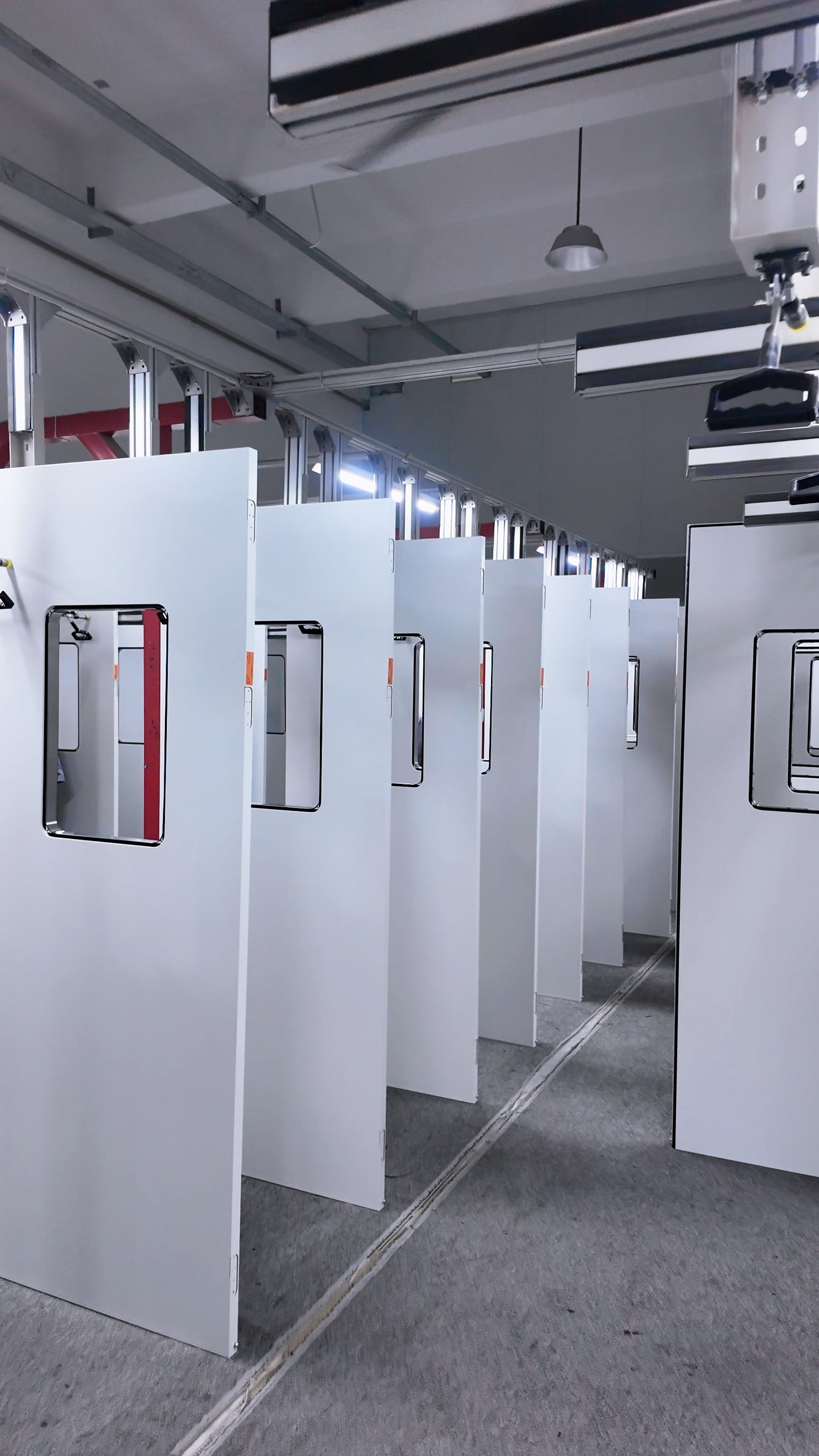
Most cleanroom builds get tangled up when the design team, the equipment vendor, and the construction crew stop talking to each other. A turnkey approach removes that fracture point by putting one group in charge of the whole sequence—from airflow modeling to final certification. When the same engineers who sized the fan filter units are the ones watching the pressure decay test, the usual “that’s not our scope” standoffs never happen.
There’s also a quieter advantage: the schedule isn’t built on hope. Because the turnkey provider has run this exact sequence before, they know which lead times actually bite and which approvals can be parallel-tracked. That means the project doesn’t stall while someone hunts for a missing door interlock or waits three weeks for a third-party balancer to show up.
In the end, the lack of drama isn’t magic. It’s the result of fewer handoffs, tighter accountability, and a team that has already made the expensive mistakes on someone else’s dime.
Custom Cleanrooms That Fit Your Process, Not the Other Way Around
Most cleanroom suppliers hand you a catalog and expect your workflow to bend around their standard footprints. That approach costs you time, floor space, and often compromises the very controls you're trying to maintain. We start from the other end: mapping how your materials move, where operators stand, what equipment needs clearance, and how air should flow for the specific contamination risks you face.
Because the room is designed around that operational picture, everything from pass-through placement to gowning zones ends up where you actually need it, not where a template says it should go. The result is less walking, fewer transfers, and cleaner transitions between process steps—without paying for square footage that never gets used.
If your process changes later, the layout can adapt rather than forcing a redesign from scratch. That flexibility matters more than a glossy spec sheet, because a cleanroom that fits how you work today should also leave room for how you'll work tomorrow.
Cleanroom Compliance Without the Last-Minute Scramble for Documentation
The scramble to pull together cleanroom documentation before an audit usually comes from treating records as a separate chore. When particle counts, pressure differentials, and temperature logs live in scattered spreadsheets or paper binders, someone has to hunt them down and format everything at the last minute. Shifting to systems that capture this data automatically during production removes that frantic search entirely. The documentation becomes a byproduct of normal operations, not an afterthought.
Real-time environmental monitoring tied to a controlled database means every reading is timestamped, attributed, and stored without manual transcription. Staff training records update the moment a qualification is completed, and equipment calibration dates roll forward as soon as maintenance is signed off. Because the information is already in one place and current, generating an audit-ready report takes minutes rather than days.
Routine internal reviews also stop feeling like major events when the underlying records are always fresh. Managers can pull up a live view of compliance status for any room or process, identify gaps early, and address them before an inspector ever arrives. That steady, built-in discipline replaces panic with confidence, and the documentation itself becomes a tool for improvement instead of a source of stress.
How a Single Supplier Turns Facility Handover Into a Non-Event
When handover day arrives, the usual scramble of coordinating multiple vendors, reconciling punch lists, and chasing missing documentation simply doesn't happen. A single supplier takes ownership of the entire sequence, from final commissioning to the walkthrough. The result is a process that feels less like an event and more like a routine step.
Behind that calm is a tightly managed interface. Instead of juggling separate contracts for equipment, installation, and certification, your team deals with one point of accountability. That supplier has already aligned internal schedules, pre-tested integrations, and compiled the required documentation before anyone steps on site. The handover becomes a formality because the real work was finished days earlier.
Facility managers often brace for the unexpected: a missing O&M manual, a subcontractor who didn't finish, a warranty question no one can answer. With a single supplier, those gaps are closed by design. The person standing next to you during the final inspection can speak to every component, every code requirement, and every future service need. That continuity turns what is usually a high-stakes milestone into a non-event.
The Hidden Cost of Managing Multiple Cleanroom Vendors—and the Turnkey Alternative
Managing a cleanroom project across five or six different vendors seems manageable on paper—until the invoices start rolling in. Each supplier tacks on their own markup for project management, site visits, and change orders. The real sting comes from the soft costs nobody quotes upfront: your facilities team spending hours reconciling conflicting schedules, the production downtime while waiting for the HVAC contractor to align with the modular wall installer, and the blame-shifting when a particle count fails. You're not just paying for materials; you're paying for the privilege of being the general contractor yourself.
Coordination overhead is the silent killer. One vendor's cleanroom panel arrives on Tuesday, but the electrical contractor can't start until Thursday. The flooring specialist needs the room sealed, but the door installer is stuck on another job. Every handoff breeds delay, and every delay ripples into your validation timeline. Multiply that by a dozen micro-decisions—airflow balancing, lighting placement, gowning room layout—and you're not managing suppliers, you're herding cats while trying to keep your day job.
A turnkey provider flips that burden. Instead of stitching together five scopes of work with duct tape and hope, you get one point of accountability. The design, construction, HVAC, electrical, and validation all sit under one roof—so the person who drew the airflow diagram is the same one installing the fan filter units. Problems get caught before they become change orders, timelines compress by weeks, and the total cost often lands lower because there's no inter-vendor markup stacking. You're not just buying a cleanroom; you're buying back your schedule and your sanity.
FAQ
A genuine turnkey project covers everything from initial site assessment and design through construction, HVAC and filtration installation, cleanroom panels, flooring, lighting, utilities, and final certification. The supplier manages the entire process, so you're handed a fully operational facility rather than a shell that still needs coordination from multiple vendors.
The design phase begins with your process requirements and cleanroom classification target. The supplier reviews your workflow, personnel and material movement, and future expansion needs before drafting layout options. You can expect 3D models and performance calculations for airflow and particle counts, so changes are made on paper long before construction starts.
Industries with tight contamination control needs benefit the most, including pharmaceutical manufacturing, medical device assembly, semiconductor fabrication, aerospace, biotechnology, and advanced optics. Any operation where airborne particles, static, temperature, or humidity can compromise product quality tends to rely on turnkey cleanroom teams.
A true turnkey supplier takes single-source responsibility for the entire build. Instead of you managing separate designers, HVAC specialists, electricians, and certification labs, one team handles all of it. That includes permits, procurement, installation, commissioning, and training, with one point of contact throughout the project.
Certification happens after construction through particle counts, airflow velocity tests, filter integrity checks, and pressure differential measurements. A turnkey supplier designs with those standards in mind from day one, and many offer third-party validation as part of the package, so there's no last-minute scramble to fix non-compliant zones.
Yes, modular cleanroom systems make expansion much easier than traditional stick-built rooms. If you work with a supplier that uses demountable wall panels and adaptable HVAC zones, you can add square footage, change classifications, or reconfigure layouts with less downtime and lower cost than rebuilding from scratch.
One common mistake is focusing only on the room classification and ignoring workflow ergonomics or future growth. Another is underestimating the utility loads from HVAC and process equipment. People also often wait too long to involve certification specialists, which leads to expensive rework. A turnkey approach reduces these risks by integrating all disciplines early.
Timelines vary widely based on size and classification, but a small to mid-size cleanroom often takes four to seven months from design approval to final certification. Larger or more complex facilities can take nine months or more. The turnkey model shortens the schedule by overlapping design, procurement, and construction activities that would otherwise happen sequentially.
Conclusion
When a single team handles everything from the initial sketch through final validation, the entire cleanroom project loses its usual friction. Instead of juggling design consultants, construction crews, and equipment vendors, you work with one group that understands your process well enough to build the room around it. Custom layouts, airflow patterns, and material choices are tailored to your actual workflow rather than forcing you to adapt to a generic shell. That same team also carries compliance documentation forward from day one, so certification packages are assembled progressively instead of being scrambled together at the last minute.
The hidden cost of coordinating multiple vendors shows up in delayed handovers, conflicting specifications, and endless blame-shifting. A turnkey supplier removes those failure points by owning every interface internal to the project. The result is a facility that gets handed over without drama—systems already tested, documentation already complete, and your staff already trained on what they will actually operate. What used to be a stressful event becomes a routine sign-off, and the cleanroom simply starts working as intended.
Contact Us
Contact Person: Amy Yang
Email: [email protected]
Tel/WhatsApp: 008619330882686
Website: https://www.genopharmatech.com/