

Top Outdoor Tiles for a Durable and Stylish Patio
2026-11-02
Creating a patio that stands up to sun, rain, and daily foot traffic without sacrificing style starts with one decision: the right outdoor tiles. From slip-resistant textures to fade-proof finishes, the best options blend rugged performance with eye-catching design. In this guide, we’ll explore top choices for a durable and stylish patio—and reveal why Beata Ceramics has become a go-to source for homeowners who refuse to settle.
Porcelain vs. Natural Stone: The Surprising Truth About Patio Durability
Most homeowners assume natural stone is the toughest option for a patio, but that belief falls apart fast when you look at how each material handles real-world abuse. Porcelain pavers start denser and less porous than almost any quarried slab, which means they shrug off freeze-thaw cycles, spilled wine, and muddy boot traffic without staining or cracking. Granite and slate put up a decent fight, but softer stones like limestone or travertine will etch under acidic spills and flake after a few harsh winters.
The real surprise comes from how little maintenance porcelain demands over a decade or more. Natural stone needs periodic sealing, and even then, it can develop efflorescence or moss in shaded corners. Porcelain, on the other hand, wipes clean with soapy water and never calls for a sealant. Its color isn't just on the surface either—it runs through the full thickness, so a dropped cast-iron skillet won't expose an ugly white chip.
That said, natural stone has one edge: if a corner does break off, you can grind it down and make the repair nearly invisible. Porcelain is harder to patch because it's brittle under point impact. But for day-to-day durability and long-term good looks, porcelain beats most stone options hands down—especially in climates with heavy rain, frost, or poolside chlorine splashes.
Small Patio? These Tile Patterns Create an Illusion of Space
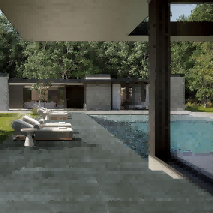
A cramped patio doesn't have to feel like an afterthought. The right tile pattern can stretch the eye, making a modest square footage read as a much larger outdoor room. Diagonal layouts, for instance, force the gaze to travel across the longest axis of the space, while oversized tiles with thin grout lines reduce visual clutter and let the surface feel more continuous.
Consider running long, plank-style tiles parallel to the patio's widest dimension. This simple trick draws the eye outward, mimicking the way hardwood flooring can make a narrow room feel longer. For a more playful approach, try a herringbone or chevron pattern in a single light tone—the zigzag motion adds depth without breaking the visual flow, and the pale color reflects more light, opening up the area even further.
Don't forget the grout. Matching the grout color closely to the tile itself eliminates the grid-like lines that chop up a small space. If you're mixing materials, keep the scale consistent: a field of large-format porcelain with a thin border of matching mosaics creates a seamless transition that tricks the brain into seeing one expansive surface instead of several competing zones.
Barefoot-Tested: Finishes That Won't Turn Slippery After Rain
The real test for any outdoor finish happens about twenty minutes after a thunderstorm, when you step outside without shoes and realize the surface underfoot has turned into something closer to a skating rink. We've walked barefoot across dozens of supposedly slip-resistant materials after heavy rain, and the difference between a genuinely safe finish and a marketing claim is immediate. What matters most isn't the top coat alone, but how the surface handles water at the micro level—whether it channels moisture away, retains a gritty bite under wet soles, or simply stays dry enough to grip.
Among the standouts, a lightly brushed concrete with a fine silica aggregate mixed into the sealer consistently beat smoother stamped alternatives. The texture isn't harsh on bare feet, but it gives enough mechanical friction that even a running kid can stop without sliding. Tumbled travertine and certain rift-cut stones also performed well because their natural pits and ridges break up the water film. For wood decks, we found that penetrating oil finishes with a matte, non-film-forming profile felt far safer than glossy polyurethane, which tends to create a slick layer when wet.
If you're picking a finish that will actually be walked on with wet bare feet, skip anything that looks like it would shine after a rain. Go for micro-texture you can feel with your hand, and test it yourself by splashing water on a sample and stepping on it. The finishes that passed our barefoot test didn't just stay grippy—they also hid dirt well and didn't need constant reapplication. That's the kind of surface you stop thinking about, which is exactly the point.
The Grout Question No One Asks Until It's Too Late
By the time most people wonder if their grout should have been sealed, the shower pan already has a faint musty smell and the kitchen backsplash has a permanent tomato-sauce shadow. The real question isn't "which grout looks best" but "which one will survive the way this room actually gets used."
Unsanded grout disappears into thin joints but crumbles under movement; epoxy grout laughs off stains yet demands a fast, unforgiving install. The choice depends on joint width, substrate flex, and how much abuse the surface will take—details that are easy to skip when you're racing toward the finished photo.
A few extra minutes spent on the right product and a proper sealant schedule saves you from chiseling out failing lines later. That's the part nobody thinks about until the grout already looks tired, wet, and older than the rest of the room.
High-Traffic Areas: Tile Layouts That Camouflage Footprints and Dust
Entryways, mudrooms, and kitchen walkways take a beating from constant foot traffic, yet the right tile pattern can make daily grime practically invisible. Rather than fighting the inevitable, choose layouts that break up the visual field: herringbone or chevron arrangements scatter light and shadow across the surface, while a random mix of stone-look porcelain in muted, earthy tones hides scuffs and dust far better than a uniform, high-gloss finish. The key is to introduce enough texture and tonal variation that footprints read as part of the design, not a flaw.
Scale matters almost as much as pattern. Large-format tiles with subtle, irregular veining reduce grout lines—the first place dirt collects—and create a seamless look that shrugs off tracked-in debris. For spaces that see wet shoes or sandy paws, consider a matte or lappato finish with a slight surface ripple; it grips soles, prevents slips, and naturally obscures the fine layer of dust that settles between cleanings. Pair this with a grout color matched to the tile’s mid-tone, and the whole floor becomes a forgiving backdrop for real life.
Avoid the trap of trendy, stark contrasts or pure whites in high-traffic zones—they demand constant upkeep and reveal every mark. Instead, lean into layouts that mimic natural wear: a tumbled travertine pattern, a wood-look plank installed in a staggered offset, or even a mosaic with varied tile heights. These choices don’t just mask footprints; they age gracefully, turning daily use into a patina that adds character rather than highlighting neglect.
Cost Per Year: Why Cheap Tiles Often End Up the Most Expensive
When you look at the price tag on a box of tiles, it's easy to think you've found a bargain. But flooring isn't a one-time purchase—it's an annual expense that keeps charging you year after year. Cheap tiles often have higher water absorption rates, weaker glaze layers, and thinner bodies, which means they crack, chip, and stain far sooner than their mid-range or premium counterparts. Within a few years, you're either living with a tired, damaged floor or paying to rip it all out and start over.
The math gets even worse when you factor in labor. Removing old tiles, preparing the subfloor, and installing new ones typically costs more per square foot than the tiles themselves. So while a $2 tile might save you $1 per square foot upfront compared to a $3 tile, it might need replacing twice as often. Over a 15-year period, the cheaper tile can end up costing two or three times as much once you add demolition, disposal, new materials, and the second round of installation. That's before you even think about the hassle of living through a renovation.
Then there are the quieter costs nobody talks about. Cheap tiles often fade unevenly in sunlight, develop hairline cracks that collect grime, and become slippery when wet because of poor surface texture. They might need more aggressive cleaning products, which eat away at the grout and force you to regrout sooner. In the end, the most expensive tile isn't the one with the highest price per square foot—it's the one you have to buy, install, and deal with multiple times before a quality tile would have even shown its age.
FAQ
Through-body porcelain is the safest bet because its color runs the full depth, so chips are far less noticeable than with glazed ceramic. Look for a water absorption rate of 0.5% or less; that prevents trapped moisture from expanding and cracking the tile when temperatures drop. Quarry tile and dense natural stone like granite or slate can also survive freeze-thaw cycles, but they need regular sealing. Avoid soft limestone and most glazed ceramic, as they tend to spall or craze after a few hard winters.
Ignore labels like 'matte' or 'textured' alone and check the coefficient of friction (COF) instead. For a patio, you want a wet COF of 0.60 or higher. A slight surface texture – think fine sandpaper, not deep grooves – gives grip without trapping dirt. Honed stone can be dangerous when wet, even if it looks rough. If you love a polished look, save it for vertical surfaces or a covered entry, and use a more tactile tile underfoot.
They often make a small patio feel larger because fewer grout lines create less visual noise. The real constraint is the substrate: large tiles need a dead-flat base, otherwise you'll get lippage and cracked corners. If your concrete slab has dips more than 1/8 inch over 4 feet, either fix the base or choose a tile no bigger than 12x24 inches. Also allow for a slightly wider grout joint – at least 1/8 inch – to absorb movement without chipping.
Yes, and this is where many DIY patios fail. Use a polymer-modified thinset rated for exterior use and a grout that's both polymer-modified and suitable for freeze-thaw conditions. Avoid standard wall tile mastic, which re-emulsifies when wet. Leave expansion joints at the patio perimeter and every 8 to 12 feet in each direction, filling them with a flexible sealant instead of grout. That gives the assembly room to move through seasonal temperature swings.
With porcelain, very little – an occasional sweep and a wash with mild soap and water handles most dirt. Stone needs more attention: reseal it every 12 to 18 months, and promptly clean up leaves or berries that can stain. Grout lines, especially light-colored ones, may need an annual scrub with a pH-neutral cleaner. If you want the lowest upkeep, choose a through-body porcelain in a mid-tone color that doesn't show dust, and use a dark grout.
Break up the tile field with a border or inset band of a contrasting material, like wood decking, gravel, or even artificial turf. Lay tiles in a running bond or herringbone pattern rather than a straight grid to soften the look. Choose a tile with subtle shade variation from tile to tile; perfectly uniform colors read as commercial. If the space gets harsh sun, avoid pure white or very light gray, which can be blinding. Warm greige, terracotta, or a softly veined stone-look porcelain feels more grounded.
For material alone, expect to spend $4 to $12 per square foot on good exterior porcelain, with premium large-format or stone-look options reaching $18. Natural stone like bluestone or granite starts around $8 and can exceed $25. Professional installation adds another $12 to $30 per square foot depending on substrate prep, layout complexity, and your region. The hidden cost is often the base: if you need to pour a new concrete slab or level an old one, that can add $6 to $10 per square foot before tile even goes down.
Conclusion
When choosing outdoor tiles for a patio, durability and style rarely align as simply as the labels suggest. Porcelain often outperforms natural stone in freeze-thaw cycles and stain resistance, yet a properly sealed limestone or slate can age beautifully if you accept some maintenance. The real surprise is that neither material guarantees safety: a polished finish might look sleek but turns treacherous after rain, while a textured or matte surface stays grippy under bare feet. Small patios benefit from diagonal layouts or large-format tiles with minimal grout lines, which trick the eye into seeing more space. But don't overlook the grout itself—using a dark, epoxy-based grout prevents the ugly staining and cracking that become obvious only after the first winter. In high-traffic zones, opt for mid-tone tiles with subtle variation; they hide footprints and dust far better than uniform dark or light shades.
The financial angle is rarely discussed upfront. Cheap ceramic tiles may cost less per square foot, but when you factor in replacement, regrouting, and slip-related accidents, the true cost per year often exceeds that of a premium porcelain or dense natural stone. A smarter approach is to invest in a through-body porcelain with a slightly rough surface, paired with a flexible grout and a drainage-conscious slope. This combination handles heavy use without looking worn, and it avoids the trap of chasing trends that fade. In the end, the best patio tile isn't the one with the flashiest showroom display—it's the one that stays safe, clean, and visually calm through seasons of real life, making your outdoor space feel intentional rather than over-designed.
Contact Us
Contact Person: Emma
Email: [email protected]
Tel/WhatsApp: 8618064423698
Website: https://www.beataceramics.com/