

Top 10 Villa Door Companies Crafting Stunning First Impressions
2026-11-02
Most villa tours start in the driveway, but the real first impression is already standing at the threshold. A remarkable entrance does more than welcome—it hints at what’s inside before a single word is spoken. That’s the standard behind this list, and why FANSI earns a place among the ten door companies worth knowing if you’re serious about curb appeal with substance.
Doors That Set the Tone Before the Bell Rings
A door does more talking before anyone presses the button than most entryways manage in a full conversation. The paint you chose—glossy black, faded teal, or bare wood with knots like thumbprints—sets expectations. Even the hardware whispers: a tarnished brass knocker hints at slow Sunday mornings, while a brushed steel handle with a square rosette suggests someone who folds their T-shirts. Walk up close and you'll notice the threshold wear, the slight scuff where the mail slot catches, the way the light hits the panel grain. None of it is accidental, and all of it registers before your finger reaches the bell.
Color and material do the heavy lifting. A deeply stained oak door with raised panels and a leaded glass transom reads as hand-me-down furniture and long dinners. Swap that for a chartreuse slab with a round porthole window and a slim vertical pull, and suddenly you expect a record player, mismatched chairs, and a dog named after a city. The frame matters too—chipped paint around the strike plate or a new sweep at the bottom tells you whether the house is cared for in bursts or steadily. Even the surrounding details, like potted rosemary or a cracked tile step, become part of the message the door delivers before the bell rings.
There's a reason some doors make you want to knock even when a bell is right there. It's not about grandeur; it's about coherence. A door that checks every box—weight, sound, hardware, weatherstripping—feels like a handshake that matches the voice you're about to hear. Small imperfections don't hurt. A scratch from a bicycle handlebar, a brass number that's slightly crooked, the faint outline where an old mail slot was patched—these add texture instead of subtracting polish. By the time the chime sounds, you've already decided whether the person behind it waters their plants, keeps good coffee, or leaves shoes at the door. The door did that.
Quiet Luxury in Every Panel and Pivot
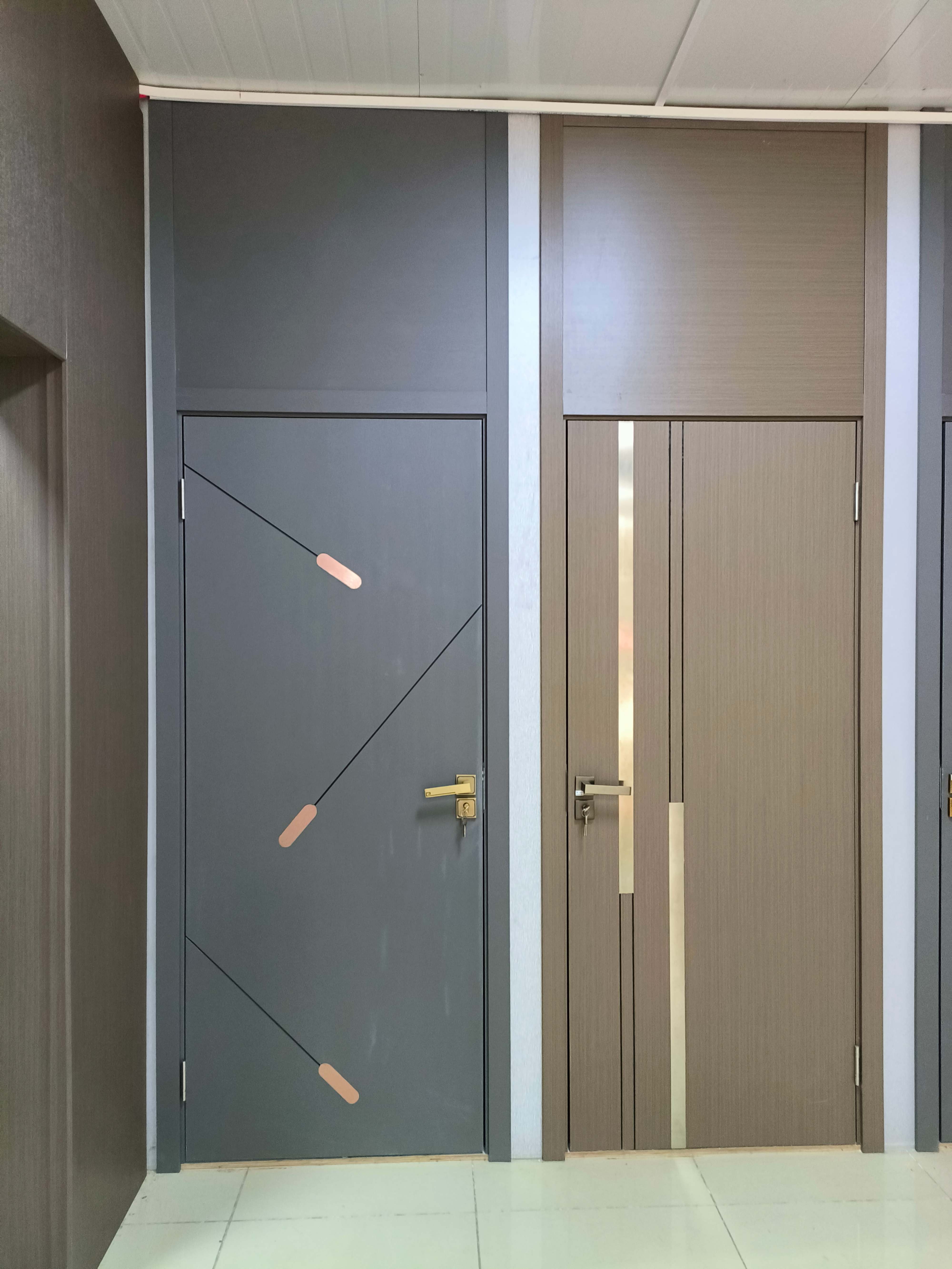
Quiet luxury lives in the way a cabinet door closes without a sound, in the gentle resistance of a drawer gliding back on soft-close runners. There’s no need for logos or loud finishes—only the smooth, weighted pivot of a hinge that feels as deliberate as a handshake. Every panel sits flush, every edge softened, and the materials—brushed brass, honed stone, warm timber—do the talking in hushed tones.
The beauty of this approach isn’t in what it adds, but in what it removes: noise, clutter, unnecessary ornament. A cabinet front cut from a single slab of veneer, matched so the grain flows like water across the whole run. A pivot door that swings with the heft of a bank vault, yet stops exactly where you let go. These details don’t shout; they simply wait for you to notice.
It’s the opposite of fast design. The reveals are consistent to the millimetre, the touch of a handle almost unnecessary because the edge is chamfered just enough to invite your fingertips. Over time, the patina deepens, the hinges settle into their rhythm, and the room feels less decorated and more composed—like a well-tailored jacket that never needs adjusting.
Bespoke Entrances That Echo the Landscape
A driveway should never feel like an afterthought. When we design an entrance, we look first at the surrounding land—its folds, its stone, the way light moves across it—and let those qualities shape the approach. The goal is not to impose a pathway, but to reveal one that was almost waiting to be found.
This often means using materials that come from the site itself: reclaimed fieldstone for low walls, local gravel that settles into the earth's natural color, or timber that weathers to the same grey as the nearby trees. The curve of the drive follows the land's own contours rather than cutting through them, so that arriving feels like a gradual unfolding instead of a sudden turn.
What results is an entrance that belongs to its place. It does not announce itself loudly, but draws you in slowly, letting the landscape set the tone before the house ever comes into view. For those who live there, it becomes a daily ritual of return—a quiet transition from the outside world into a space that feels entirely their own.
Hand-Finished Details You Can’t Unsee
Once you notice the way the stitching dips slightly at the corner of the cuff, mirroring the curve of a wrist rather than running straight for the sake of speed, it's hard to look at mass-produced seams the same way again. The thread isn't just a color match; it's waxed linen that catches light differently depending on the angle, revealing a faint sheen that synthetic alternatives lack. These are the details that don't announce themselves in a spec sheet but become impossible to ignore after a single close look.
There's a small leather pull on the zipper that's been burnished by hand, not tumbled in a drum, so its edges have a soft irregularity no machine can replicate. Even the inside of the pocket uses a contrasting fabric chosen to feel cool against the fingers, a decision that serves no functional purpose beyond the quiet pleasure of discovery. That's the real test of hand-finishing: it adds nothing you can measure, yet once you've seen it, the absence of that care feels louder than any logo.
Invisible Tech, Visible Calm
There's a particular satisfaction when a room doesn't announce its gadgets. The lights adjust without a switch being touched, the temperature settles before you notice discomfort, and music follows you from kitchen to study like a polite ghost. This is the quiet promise of invisible technology: not a showcase of capability, but a background hum that keeps life moving without demanding applause.
The real craft is in restraint. Rather than installing a dozen screens and a voice assistant that needs constant correction, the better design hides sensors inside ceiling beams, tucks speakers behind plaster, and replaces remotes with simple gestures you already make. The result is a home that feels less like a control room and more like a well-tended garden — a place where the machinery disappears, and what remains is simply your own calm attention.
This shift matters more as daily life grows louder. When every app and appliance competes for a notification, the most advanced feature may be silence. Invisible tech earns its keep not by being impressive on day one, but by being forgettable on day ninety. The calm isn't accidental; it's the whole point.
Materials With a Past, Design With a Future
A beam pulled from a dismantled barn still carries the shadow of its iron nails; a length of linen, darned in three places, holds the memory of hands that mended it. These are not imperfections to be hidden but coordinates for a different kind of making. When designers start with materials that have already lived, every scratch and stain becomes a quiet instruction, shaping cut lines, joint choices, and surface finishes.
Working this way demands patience. Salvaged timber may arrive warped or riddled with old fastenings, so layout is less about maximizing yield and more about listening to what the wood will allow. Traditional joinery and reversible assemblies often replace glue-heavy shortcuts, because a piece built from a 200-year-old oak beam should be able to come apart and be remade again. The past sets the rules, but it does not set limits.
The result is furniture and objects that feel less like products and more like conversations between eras. A cabinet front milled from reclaimed floorboards may show a century of foot traffic, while its clean, contemporary silhouette keeps it rooted in the present. This is design with a future precisely because it refuses to throw anything away—not the material, not the story, not the energy already spent.
FAQ
Focus on proportion, material depth, and how the door interacts with surrounding stone or landscaping. A great villa door doesn't just sit in the wall; it extends the architectural line and offers a tactile pause before entering.
They're both. A well-engineered pivot system handles heavier slabs with less stress on hinges, and it allows wider openings that feel effortless. The visual anchor it creates at the entry is a side benefit that many architects intentionally exploit.
The trick is using reinforced cores, multi-point locking, and discreet smart access rather than bulky visible hardware. The door should feel solid without reading as defensive, often by hiding the security layers inside the panel itself.
Thermally treated oak, bronze cladding, and oversized glass inserts are common. Many companies also pair natural timber with powder-coated steel frames for crisp edges and better weather resistance without losing warmth.
Yes, because the entry is the only part of a facade people touch and stand directly beside. A well-scaled custom door can visually lower a massive wall or add a focal point that makes the whole elevation feel intentional rather than repetitive.
Depending on the maker and materials, it often runs ten to sixteen weeks. That includes site measure, shop drawings, fabrication, finishing, and a final fitting that accounts for settling or slight wall movement.
The best ones do, using marine-grade stainless hardware, sealed cores, and finishes tested for salt air. You'll see more aluminum and composite options in those environments, with wood used only as a protected accent.
Absolutely. The pivot mechanism works across styles—rustic, Mediterranean, or transitional—if the proportions and panel detailing are right. It adds a sense of ceremony to any entry, not just minimalist ones.
Conclusion
A villa's front door is rarely just a threshold—it's a prelude to the life lived behind it. The ten companies assembled in this collection understand that better than anyone, treating each commission as a small piece of architecture rather than a mere swinging panel. Their work sets the tone long before the bell rings, whether through a monolithic pivot in oiled walnut or a slim steel frame that frames the garden like a painting. Quiet luxury runs through every selection: no gilded excess, just precise proportions, soft-close hinges, and materials that feel as good as they look. And for homes nestled into specific terrain, these makers shape bespoke entrances that echo the landscape—charred timber that recalls a nearby forest edge, textured stone that seems lifted from the hillside itself.
What separates these doors from ordinary millwork, though, is the obsession with detail and restraint. Hand-finished edges, subtly chamfered corners, and grain-matched veneers reveal themselves only up close—details you cannot unsee once noticed. Technology disappears into the frame: biometric locks, concealed closers, and integrated lighting that guide a hand without ever drawing attention. Even the materials tell a quieter story, with reclaimed oak, weathered bronze, and low-carbon steel giving each entrance a sense of history while pointing toward a more considered future. Together, these ten firms prove that a villa door can be more than protection or curb appeal; it can be the first, lasting line of a home's character.
Contact Us
Contact Person: Liam
Email: [email protected]
Tel/WhatsApp: (+86)16658531012
Website: https://www.fansifiredoor.com