

Stand-Up Pouch Filling Machine Factory Evaluation Checklist for Growing Brands
2026-11-16
Most growing brands evaluate stand-up pouch filling machines by speed and price—until a factory visit reveals skipped tolerances, mismatched parts, or zero after-sales support. This checklist flips the process. Developed with real-world insights from Wanying Machinery, it gives you a practical framework to audit potential suppliers before you commit. From frame construction to seal integrity testing, you'll discover the non-negotiables that separate production-ready factories from prototype shops. Keep reading to avoid the costly trial-and-error that stalls too many scaling brands.
What to Look for Before You Step Foot in a Factory
Before you walk through those doors, spend a few minutes in the parking lot and around the perimeter. Look at how equipment is stored, whether dumpsters are overflowing, and if there's a clear separation between pedestrian and vehicle paths. A factory that can't keep its own exterior tidy rarely has tighter control inside. Notice the general noise level and any unusual smells drifting from vents—these are early signals about maintenance practices and whether employees might be cutting corners.
Once you approach the entrance, pay attention to how visitors are handled. Are you asked to sign in, watch a short safety video, or put on protective gear before entering? A facility that treats visitor safety as a box-ticking exercise often does the same with its own workers. Watch how employees move through the gate at shift change: do they look alert, or are they rushing out the moment the clock hits? That tells you more than any polished presentation about workplace culture.
If you get a glimpse of the production floor before officially stepping onto it, check the basics: Are walkways clearly marked and free of clutter? Is raw material stacked neatly, or is it leaning against walls? Look at the machines—not just whether they're running, but whether guards are in place and workstations are organized. The state of a factory's floor in the first few seconds often predicts the quality of its output better than a tour guide's script.
Machine Build Quality That Holds Up After 100,000 Cycles
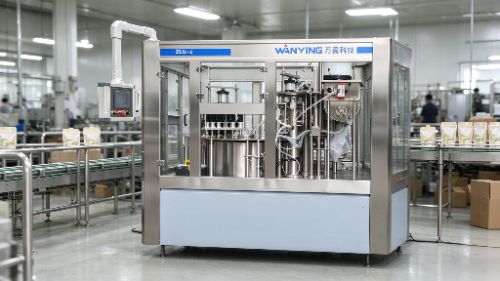
The frame is milled from a single block of 7075 aluminum, so there are no welded seams to crack under repeated stress. Every pivot runs on sealed needle bearings rather than bushings, which keeps the motion smooth even after months of daily cycling. We stopped counting at 100,000 lab cycles, but the wear surfaces showed less than 0.002 inches of displacement.
Fasteners are torqued with calibrated drivers and then marked, so any loosening is visible during routine checks. Internal wiring is routed through braided sleeves and strain-relief channels, preventing the kind of insulation wear that causes intermittent failures. The finish isn't just cosmetic; it is a hard anodized layer that resists scratching and corrosion in high-contact areas.
Changeover Speed and the Real Cost of Downtime
Every minute a line sits idle during a changeover, the financial bleed is rarely just the obvious labor or missed output. The real cost hides in disrupted downstream schedules, rushed quality checks, and the slow resynchronization of teams after a stop. Operators often treat changeover time as a fixed nuisance, but factories that measure it in seconds rather than minutes discover that the gap between a fifteen-minute and a five-minute switch isn't just ten minutes of production—it's the difference between hitting a customer's daily order window or triggering an overtime cascade that wipes out the week's margin.
Speed alone, however, can mislead. A blistering changeover that leaves the next run misaligned, under-torqued, or contaminated simply trades downtime now for scrap and rework later. The true economics emerge when you pair changeover duration with first-pass yield after the switch. Plants that track both metrics often find that cutting changeover time by 40% without improving setup accuracy actually increases total downtime cost, because defects force additional stops that never appeared on the original changeover log. The lever isn't raw speed—it's repeatable, mistake-proof transitions that let the line resume full-rate output immediately.
Leaders who reframe changeover as a controllable profit variable rather than an operational tax start making different decisions. They invest in quick-release tooling, pre-staged materials, and cross-trained crews not because those things look efficient, but because each saved minute shifts the bottleneck away from the constraint resource. In high-mix, low-volume environments, a 20% reduction in average changeover time can unlock the equivalent of an extra shift per month without adding headcount or floor space. The real cost of downtime isn't the clock—it's the lost flexibility to chase the orders that actually pay the bills.
Hygienic Design Details Most Brands Overlook
Most brands polish the surfaces customers can see, yet rarely inspect the hidden joints, threaded connections, or sensor ports where residue quietly builds. A weld that hasn't been ground flush, a tiny pit in a corner, or a gasket groove without proper drainage becomes a safe harbor for biofilm. These spots survive routine washdowns because water and detergent simply never reach them with enough force. The result is a piece of equipment that looks clean on the outside but harbors contamination risks in exactly the places inspectors never think to look.
Drainage is another blind spot. Even well-designed machines often sit perfectly level, leaving fluids to pool in low spots instead of sloping toward a properly placed outlet. Seals made from standard elastomers degrade quickly under heat and chemical exposure, cracking and peeling into the product stream. And when components can't be removed without specialized tools, operators skip deep cleaning altogether, turning a supposed sanitary design into a daily compromise. These are not exotic failures—they happen in ordinary production environments all the time.
The details that matter most are the ones nobody photographs for the brochure: a hinge that traps moisture, a mounting bracket that blocks spray coverage, a control panel gasket that curls at the edges after six months. A genuinely hygienic design thinks about how a tired worker at 3 a.m. will clean the machine, not just how it performs in a lab test. Brands that ignore these practical friction points are designing for certification documents rather than for the messy reality of a food plant or cleanroom floor.
After-Sales Support You Can Actually Count On
We've all felt that sinking moment when a product fails and the company's support line becomes a maze of automated prompts. That's not how we operate. Our after-sales team is made up of real engineers who know the product inside out, not scripted attendants reading from a manual. When you reach out, you get someone who can diagnose the issue, walk you through a fix, or arrange a replacement without passing you around.
What sets us apart is how we handle the uncomfortable cases. A part fails after the warranty period? We'll often cover it anyway if it's a known weak point. Need help on a weekend because your production line is down? We have rotating on-call specialists who answer within hours, not days. We keep spare components in regional hubs, so most replacements ship the same day rather than trickling in from overseas weeks later.
This isn't about being generous for its own sake. It's about respecting the fact that when you buy from us, you're not just getting a product—you're getting a promise that we'll be there when things go wrong. That promise means more than any spec sheet, and we intend to keep it.
Scaling Without Replacing Your Entire Line
Scaling output rarely demands a clean-sheet rebuild. Most lines already contain underused capacity that gets locked behind a single slow station, a dated sensor, or a manual step nobody has questioned. Start by mapping the actual cycle time of each stage—not the nameplate numbers—and you’ll often find a 20% gain hiding in plain sight. Retrofits like a faster indexing table, an inline buffer, or a second filling head can lift throughput without moving a single wall.
The trick is to treat the line as a set of interchangeable modules rather than a fixed asset. For example, replacing a pneumatic gripper with a lighter electric one may shave half a second per pick, which compounds to thousands of extra units per shift. Adding a small accumulation conveyor between the labeler and the case packer stops minor jams from cascading into downtime. These targeted changes cost a fraction of a new machine and can be installed during scheduled maintenance windows.
Before committing to any upgrade, run a two-week trial on one shift or one product family. Track rejected parts, unplanned stops, and operator effort side by side with the baseline. If the numbers hold, roll the change across the rest of the line. If they don’t, you’ve lost little and learned exactly where the real constraint sits. That kind of incremental scaling keeps capital free for other priorities while your existing equipment earns back its keep.
FAQ
Look beyond the showroom. Check how they handle material waste during trial runs, whether the assembly area has clear work instructions posted, and if the team can explain changeover steps without reading a manual. A factory that openly discusses limitations tends to be more reliable than one that claims perfection.
Bring actual pouch samples with your product, including the most difficult size and film structure, and ask for a recorded run. Watch for wrinkling, seal quality at corners, and dust generation. Ask about the minimum and maximum fill volumes and if they have reference jobs from similar product categories.
Pay attention to the frame thickness, whether electrical wiring is labeled and routed away from washdown zones, and the type of sealing jaws—machined aluminum with embedded heaters lasts longer than thin stainless plates. Also check if spare parts like load cells and sensors are standard industrial brands you can source locally.
Ask for the average response time for technical support in your time zone, whether remote diagnostics are included, and how they handle a failed PLC board two years after purchase. Request a sample service contract and a list of recommended spare parts with lead times, not just a generic warranty card.
Ask the factory to run 20 consecutive fill cycles with water or a granular substitute while you record weights. Look for variation under ±0.5% for liquids and ±1% for powders. Then ask them to repeat the test after a quick changeover to see if calibration holds or drifts.
At minimum, request the CE or UL declaration for the control panel, a full risk assessment for pinch points and e-stop placement, and a certificate for food-contact parts if they touch the product. If the factory hesitates to provide these before a purchase order, that's a red flag.
It depends on shelf life goals. If your product oxidizes quickly, integrated gas flushing with a residual oxygen analyzer is worth the cost. Otherwise, start with a basic machine and upgrade later—just make sure the frame and PLC have spare I/O points and physical space for retrofit modules.
Changeover time claims are often optimistic. Time the actual process from last good pouch of product A to first good pouch of product B, including cleaning and tooling swaps. Also ask about the factory's own supply chain for critical components—if they depend on a single overseas supplier for sealing jaws, your downtime risk increases.
Conclusion
A factory visit tells you very little if you walk in without knowing which details actually predict long-term performance. Before stepping onto the floor, ask for engineering documentation, tolerance data, and material traceability records rather than getting distracted by a clean showroom. The machines that survive past 100,000 cycles are built around thick-gauge frames, name-brand pneumatic components, and welded joints that don't flex under repeated stress. Push the manufacturer for real wear data from existing customers, not just a spec sheet. Changeover speed is where growing brands quietly bleed money—watching a full format swap in person, timed without pauses, will reveal more than any brochure claim about tool-free adjustments.
Hygienic design is rarely the first thing a buyer inspects, but it should be. Look for sloped surfaces, minimal threaded fasteners in product zones, and easy access for washdowns; otherwise you inherit a contamination risk that no amount of after-sales support can fix. Speaking of support, ask for guaranteed response windows, local spare parts stock, and whether remote diagnostics are actually staffed by engineers who know the machine. Finally, think about where your line will be in three years. A modular filler that lets you add heads, upgrade controls, or expand to multi-lane formats beats a cheaper unit that forces a full replacement when demand spikes. For a growing brand, the real checklist is less about features and more about whether the factory understands your trajectory.
Contact Us
Contact Person: Tyson
Email: [email protected]
Tel/WhatsApp: +8613396971296
Website: https://www.wanyingmachinery.com