

Shock Absorber Piston Factory: How Precision Manufacturing Drives Smoother Vehicle Performance
2026-11-02
Every bump you barely notice on the highway starts deep inside a shock absorber piston. At XIAYI, we don't just machine those pistons—we obsess over micron-level tolerances that separate a jarring ride from a glide. This is the story of how our factory turns precision into comfort, one piston at a time.
Two Microns Make a Noticeable Difference in Damping
In precision engineering, the gap between two surfaces often dictates how vibration energy gets absorbed rather than reflected. A two-micron variation in that clearance—whether from tool wear, thermal expansion, or a deliberate surface texture—can shift the contact stiffness enough to alter the entire damping curve. When the mating parts press together, the real contact area is not the nominal footprint but a scattered set of asperity tips. Those tips deform elastically and plastically under load, and their microscopic geometry controls how much energy is converted into heat during cyclic motion. Shrink that average asperity height by just two microns, and you may reduce the slip amplitude at each contact patch, effectively turning a lossy interface into a spring-like one.
This effect becomes especially pronounced in laminated structures and bolted joints, where damping arises from micro-slip at the interfaces. A two-micron change in the thickness of a viscoelastic damping layer—often applied as a constrained-layer treatment—can move the loss factor peak by several percent because the shear strain field in the layer is highly sensitive to its thickness. Even without changing material composition, a two-micron difference in particle size distribution within a metal matrix composite can reorganize the internal friction network, shifting the frequency at which the material dissipates energy most effectively. The takeaway is that in the sub-ten-micron regime, small dimensional changes are not rounding errors; they are the difference between a quiet machine and a resonant one.
Piston Groove Cleanliness Is the Dirt You Can’t See
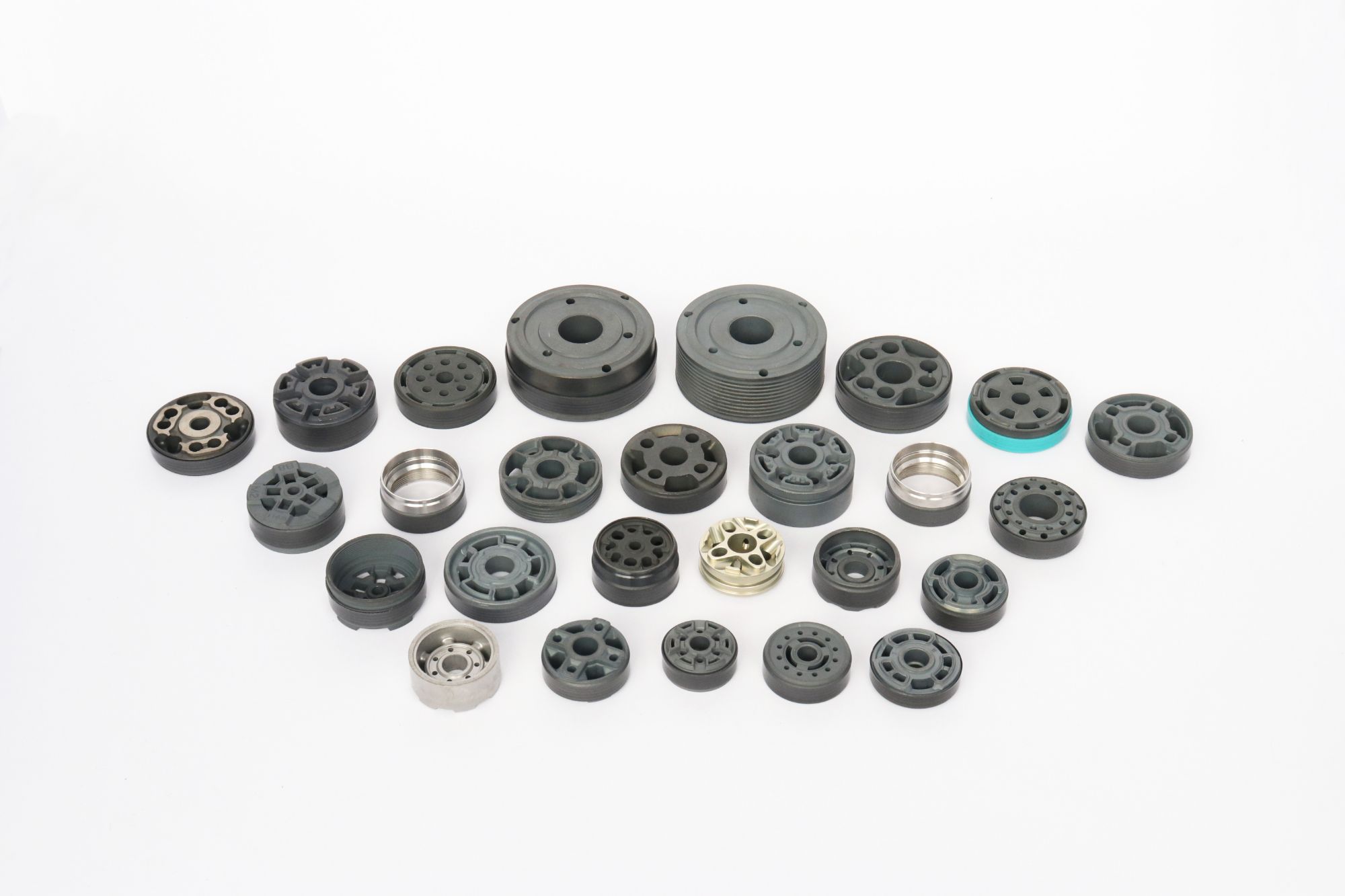
Most engine builders obsess over bore finish, ring end gap, and bearing clearances, yet the tiny grooves cut into a piston often harbor a silent assassin. Carbon, varnish, and microscopic metallic debris embed themselves in the ring lands, creating a layer of abrasive paste that no solvent wipe can fully remove. This invisible contamination doesn't just sit there—it acts like sandpaper every time the ring flexes, accelerating groove wear and reducing ring seal long before any visible failure shows up.
The real problem is that this dirt hides in plain sight. A piston fresh out of the parts washer can look spotless under shop lighting, but run a white cotton swab through the bottom ring groove and you'll pull out a gray-black smear. That residue is a cocktail of combustion byproducts, honing debris, and oxidized oil that chemically bonds to the aluminum surface. Left unchecked, it prevents new rings from seating properly, causing blow-by, oil consumption, and a power loss that gets blamed on everything except the actual culprit.
Proper groove cleaning demands more than a quick scrub. It requires a dedicated tool—a groove cleaner with a hardened blade—used methodically around each land, followed by compressed air and a solvent flush from the back side. Even then, the final test is tactile: a fresh cotton tip should come out clean. If it doesn't, you haven't cleaned the groove; you've just rearranged the dirt. And in a high-compression engine, that invisible grit will make itself known in ways you'd rather not discover.
Forging or Machining—Consistency Hides in the Process Choice
The choice between forging and machining often boils down to how much variation you're willing to accept. Forged parts, shaped under immense pressure, align the metal's grain flow along the contours of the component. This directional integrity means less internal stress and fewer hidden weak spots, so batch after batch behaves the same way. Machined parts, cut from bar stock or plate, inherit the stock material's original grain structure. If that stock comes from a consistent supplier, good; if not, every cut exposes unpredictable internal stresses that can throw off dimensions later.
Consistency doesn't just show up in final dimensions—it lingers in tool wear and cycle times too. A forging die produces hundreds or thousands of near-identical shapes before needing attention, and each part starts from the same plastic deformation. Machining, by contrast, relies on cutting edges that dull gradually, changing surface finish and perhaps even the amount of heat going into the part. Skilled operators compensate, but compensation itself introduces variability. The process chosen at the drawing board quietly decides how much inspection and rework you'll be doing down the line.
There's also the question of what you're actually measuring. A machined feature can be checked with a micrometer and found perfect, yet still crack under load because the grain was severed. A forged part might have a coarser surface but a far more predictable fatigue life. Buyers often chase the tightest machined tolerance while ignoring that the forging gives them repeatable performance without the extra passes. When true consistency is the goal, the process choice is not a footnote—it's the whole game.
Hard Anodizing Does More Than Protect the Surface
Hard anodizing is often mistaken for a simple thickening of the natural oxide skin, but the process does something more interesting: it grows inward and outward at the same time. Roughly half the coating penetrates below the original surface while the rest builds above it, which lets machinists adjust final dimensions without re-cutting a part. That inward growth also creates a compressive layer at the aluminum interface, and when the process is well controlled, it can help delay crack initiation in parts that flex or vibrate.
The coating’s electrical behavior changes the part’s role in an assembly. Because the layer is non-conductive, hard anodized aluminum can serve as an insulator between components or act as a dielectric barrier where stray current would otherwise be a problem. Before sealing, the surface is also porous enough to absorb dry lubricants or polymer-based friction modifiers. That turns a wear-resistant shell into a self-lubricating contact surface, useful for threaded bodies, sliding brackets, and small bearing journals that cannot use a conventional grease fitting.
Thermal performance is another quiet benefit. While the oxide layer is less conductive than bare aluminum, its high emissivity—especially when dyed black—helps parts shed heat through radiation more effectively. Enclosures, heat sinks, and LED housings can run cooler after hard anodizing even though the coating itself is a thermal insulator. Add the ability to color the coating without weakening its hardness, and the same process that starts as surface protection becomes a tailored part of the overall design.
Lab Tests Say Smooth, Real Roads Say Otherwise—Bridging That Gap
Lab drum tests and flat-track rigs give engineers a surface that is almost insultingly polite—uniform micro-texture, controlled temperature, zero debris. A tire can post repeatable grip and noise numbers under those conditions, but those figures often drift far from reality. Real roads carry patches, ruts, bridge joints, and polished aggregate that alter the contact patch and water evacuation paths. That's why a tire that measures quiet and grippy indoors can still hum or slide on a worn highway ramp.
The mismatch isn't just about surface roughness. Load transfer, speed variation, and weather all act together in ways that a stationary test bench rarely captures. Lab protocols usually fix load and inflation, while real driving constantly deforms the tire through braking, acceleration, and cornering. Bridging the gap calls for a hybrid approach: quick lab screening for compound and tread candidates, followed by instrumented road loops that log noise, wear, and wet braking on everyday surfaces. Only when the lab trend and the road trend point in the same direction can a development team trust that the improvement will survive contact with actual asphalt.
When Pistons Lose Weight, Damping Logic Has to Adapt
When a piston sheds mass, the first casualty is often the damper's carefully calibrated force-velocity curve. A lighter piston accelerates and decelerates more readily under the same fluid pressures, so the old valve stack that used to produce a smooth, controlled damping force now lets the piston move too quickly through the initial travel. This leads to a harsh top-out or bottom-out feel, and in some cases a subtle flutter during high-frequency wheel movements. Engineers quickly learn that simply scaling spring rates isn't enough—the damping logic itself has to be re-tuned for the new inertia profile.
The adaptation usually starts with the piston's hydraulic pathways. Reducing piston weight often means thinner walls or a smaller skirt, which changes how oil flows around and through the piston. That extra bypass area can make low-speed damping feel vague, so technicians might add a stiffer preload on the bleed shim or reduce the piston port size slightly. On the rebound side, a lighter piston returns faster, so more rebound damping is often required to keep the wheel from jumping back too aggressively after a bump.
There's also a less obvious effect: the natural frequency of the unsprung mass changes, and the damper's internal piston becomes part of a faster-responding subsystem. Modern adaptive dampers, for example, may interpret the new piston behavior as a fault or simply fail to deliver the expected current-to-force mapping. In practice, re-mapping the electronic damping control for a lighter piston often involves adding a predictive term that accounts for the reduced inertia—otherwise the system hunts for a damping force that no longer matches the physical hardware.
FAQ
Think of the piston as the main valve inside the damper. It pushes hydraulic fluid through small passages and shim stacks, converting suspension movement into controlled resistance. When the piston's dimensions or port edges are even slightly off, the driver feels it as harshness, float, or inconsistent wheel control.
Tight tolerances keep each piston round and its port geometry consistent. That makes fluid flow predictable throughout the stroke. Without that repeatability, one shock on an axle can feel firmer than the other, and that difference shows up quickly on rough pavement.
Powdered metal and sintered steel are popular because they can be pressed into complex port shapes with very little waste. For higher loads, factories may use hardened steel or anodized aluminum. The goal is a material that resists wear and holds sharp, precise edges on the valve ports.
Besides regular dimensional checks, a good facility will test bore diameters with air gauges, inspect port edge sharpness under magnification, and measure surface roughness in microinches. Many also run sample shocks on a dyno to make sure the damping curve matches the design target.
A smooth, even finish cuts friction against the inner tube and prevents tiny scratches that can lead to internal leaks. It also lets the piston ring or seal bed in correctly. If the finish is rough or patchy, the shock can develop a slight stick-slip feel during slow suspension movements.
Absolutely. Changing the number, size, and angle of the ports alters how quickly fluid moves during compression and rebound. A factory that works with suspension engineers can adjust the port layout, shim preload, and piston thickness to deliver a firmer sport feel or a softer, more touring-oriented ride.
A few microns of ovality can make the piston bind or leak fluid unevenly, creating dead spots in the damping curve. Over time, uneven seal wear accelerates and the shock fades. The driver may feel a floaty sensation after bumps or a loss of composure during hard cornering.
Process control. Top factories monitor tool wear continuously, use climate-controlled metrology labs, and keep full traceability for every batch of raw material. If a piston ever fails in the field, they can track it back to the exact machine, shift, and material lot.
Conclusion
Within a shock absorber piston factory, the margin between a composed ride and a jittery one often comes down to details that never appear in a brochure. A two-micron deviation in a piston land may alter oil bleed enough to shift damping force, which is why final honing and inspection stations treat every surface as a load-bearing interface. The grooves themselves carry another hidden risk: residual abrasive or cutting fluid that looks harmless but chews at seals and valves once the unit is in service. Choosing between forging and machining is not simply a cost decision—grain flow and dimensional repeatability differ between the two, and that consistency defines how predictably a batch of pistons behaves. Hard anodizing, meanwhile, is less about cosmetic protection and more about changing the friction and wear characteristics of the groove walls, helping damping stay linear over tens of thousands of cycles.
Even when bench tests report a silky force-velocity curve, real roads expose flaws that a smooth dyno trace cannot simulate—micro-impact harshness, off-axis loading, and temperature swings. Factories that close this gap run accelerated durability on rough-surface rigs and then pair those results with vehicle-level subjective tuning. The push to shave piston mass for unsprung weight savings makes the calibration work trickier; a lighter piston reacts faster, so the valving logic and low-speed bleed must be retuned to prevent the damper from feeling nervous over small inputs. Done well, the payoff is a suspension that filters high-frequency texture without losing mid-corner composure—an outcome that depends less on any single spec than on how tolerances, surface finish, process stability, and field feedback are stitched together.
Contact Us
Contact Person: Leela
Email: [email protected]
Tel/WhatsApp: 8613586885132
Website: https://www.xiayishockparts.com