

Shock Absorber Jounce Bumper Factory: How These Critical Components Are Made
2026-11-16
Ever wondered what keeps your suspension from bottoming out on rough roads? Inside every shock absorber lies a small but mighty part: the jounce bumper. At XIAYI, we don’t just mold rubber—we engineer that last line of defense against harsh impacts. This behind-the-scenes look at our factory reveals the precision, material science, and testing that turn raw polyurethane into a component you rarely see but always feel when the road gets rough. Here’s how we make them, and why it matters for every mile you drive.
Choosing the Rubber That Won't Quit
Before you chase the highest durometer or the lowest price, think about what the part actually endures. A rubber that won’t quit is rarely the stiffest one on the shelf. It’s the compound that shrugs off repeated flexing without cracking, keeps its sealing force after thousands of compression cycles, and doesn’t harden into a brittle shell after a few months of heat. Look for real dynamic fatigue data, not just a smooth spec sheet. If the supplier can’t show how the material behaves after aging and repeated deformation, you’re gambling on lab-fresh numbers.
Pay close attention to the environment, because rubber fails differently in every setting. A part that feels tough at room temperature can turn brittle at minus thirty or soften into sticky putty at one-twenty. Ask for aged physical properties, especially retention of elongation and tensile strength after heat aging. If the rubber lives outdoors, ozone and UV resistance matter just as much as abrasion resistance. Nitrile, EPDM, silicone, and HNBR each have a sweet spot. Matching the polymer to the fluid, temperature swing, and mechanical load is the difference between a part that lasts years and one that dies quietly in service.
Don’t ignore the small details that show up only in real use. A seal that swells a few percent can bind a moving assembly. A gasket that takes a slight compression set can start leaking before anyone notices. Prototype in the actual operating environment and watch for surface tackiness, microcracks at sharp corners, or loss of recovery after load is removed. The rubber that won’t quit is usually the one that tolerates its specific abuse without drifting from its original shape, spring-back, and sealing force.
Inside the Mixing Room Where the Compound Gets Its Strength
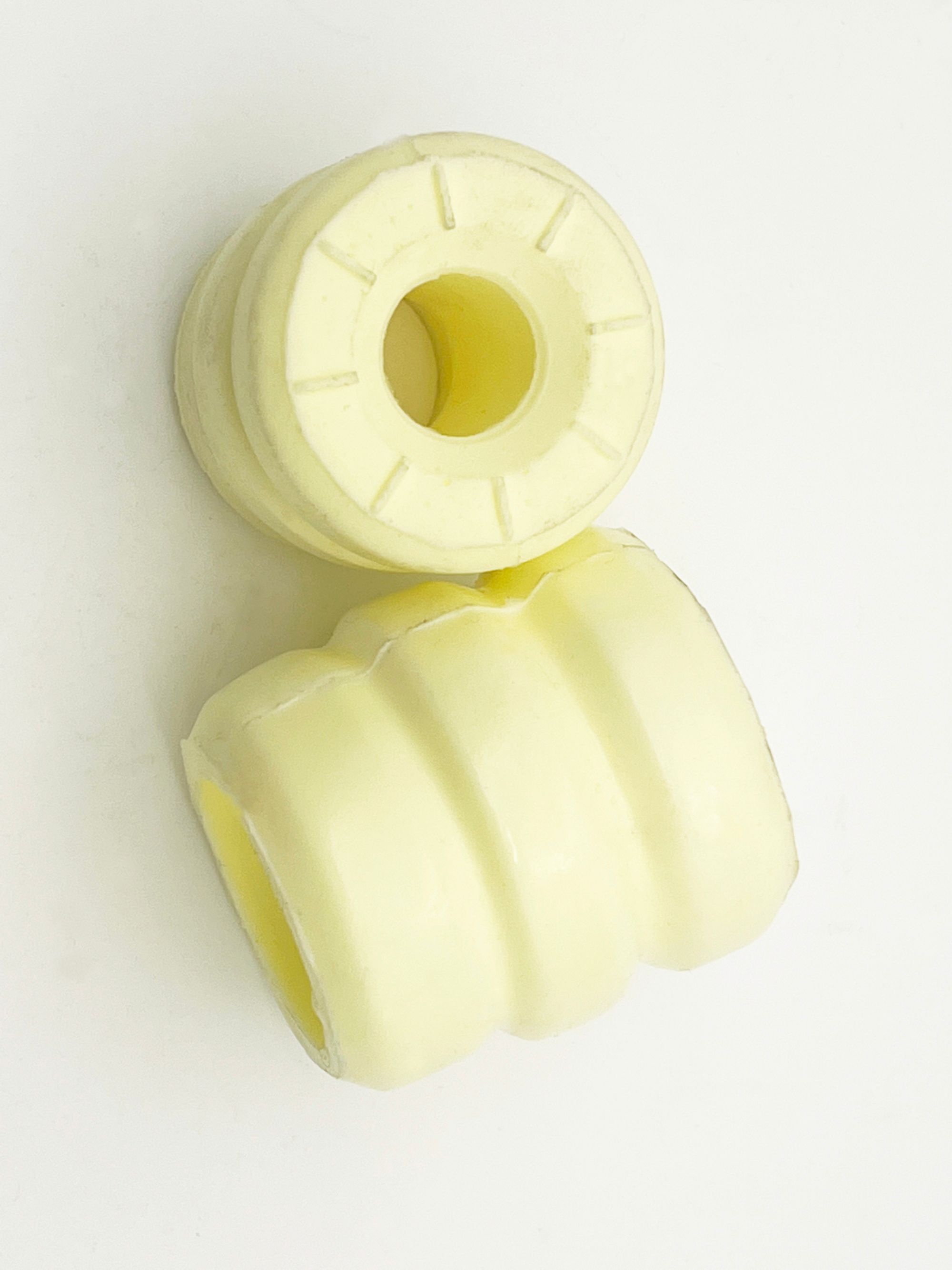
Step through the heavy rubber flaps and the air changes—thicker, warmer, carrying the sharp scent of uncured rubber and carbon black. Here, the real work begins. Raw bales are sliced, weighed, and fed into a bank of internal mixers that groan like old engines as they chew through the batch. It's not a quiet place. The floor trembles slightly, and operators move with a rhythm that only comes from years of listening to the pitch of the rotors.
The mixer itself is a sealed chamber where two counter-rotating blades work the compound under intense pressure. Friction builds heat, and heat is both friend and enemy—enough to soften the rubber and disperse the fillers, but too much will scorch the batch before the cure. So the operator watches the temperature curve like a hawk, sometimes adding a late dose of oil or a small adjustment to the rotor speed. Every few minutes, the mixer tilts and drops a hot, smoking mass onto a two-roll mill below.
On the mill, the compound is sheeted out, folded, and fed back through the nip until it takes on a smooth, glossy surface. This is where you first see the strength beginning to show—the way the sheet snaps back when stretched, the way it holds a crease without cracking. From here, it moves to a batch-off cooler, where a dusting of anti-tack keeps the layers from sticking. Then it's stacked, tagged, and left to rest. Not finished, but waiting. The compound has its own timetable, and the next room will pick up where this one leaves off.
Heat, Pressure, and Timing in the Molding Press
Heat in a molding press is rarely just a setpoint on a dial. The thermal profile across the platens can shift by several degrees depending on heater placement, insulation, and even the mass of the tooling itself, which means a thermoset compound might cure unevenly if the edges stay cooler than the center. Skilled operators learn to read those gradients and adjust preheating cycles or buffer layers rather than blindly trusting a single thermocouple reading.
Pressure does more than squeeze material into a cavity—it changes how the material flows, how trapped air escapes, and how the final part packs out. Too little pressure leaves surface sinks or internal voids, while too much can force flash into parting lines or strain the press frame. The real trick is modulating pressure as the material viscosity drops under heat, sometimes holding a lower pressure during initial flow and then ramping up as the cavity fills to control fiber orientation or knit line strength.
Timing ties heat and pressure together in ways that aren't always obvious from a cycle sheet. The dwell time under full pressure must match the material's cure or crystallization rate, but if the mold opens a few seconds early, the part might look fine yet warp after cooling. Conversely, holding too long wastes energy and can degrade heat-sensitive resins. A well-tuned press cycle accounts for the lag between platen temperature, material core temperature, and the moment the part actually reaches dimensional stability.
Trimming the Flash for a Perfect Finish
The leftover flash along a model part's edge is rarely uniform. Some sections peel away with a light scrape, while others cling stubbornly, threatening to tear the surrounding plastic if you rush. Start by running a fingernail or blunt toothpick along the seam to feel for high spots. That quiet mapping step saves you from gouging a visible surface later.
Switch to a fresh hobby blade and cut away from your body, angling the edge almost parallel to the part. The goal isn't to slice the flash off in one pass, but to reduce it in thin, controlled shavings. If the blade starts to chatter, it's dull or you're pressing too hard—either way, pause and reassess. A curved blade works better for concave areas, while a straight edge handles long, flat runs.
Once the bulk is gone, wrap a small piece of fine sandpaper around a rigid backing and lightly buff the seam. Work in one direction only, and check the surface under raking light from a window or desk lamp. The shadows will reveal any remaining ridge faster than your fingertip can. Take your time here; a perfect finish is built on a dozen tiny corrections, not one aggressive cut.
Lab Tests That Try to Destroy Every Bumper
Engineers don't trust a bumper until they've swung a steel battering ram into it at least a dozen times. Pendulum rigs and moving barriers slam into front and rear fascias at walking speed and beyond, while high-speed cameras track how the plastic skin, foam absorber, and reinforcement beam each react. It's not about making the bumper survive—it's about mapping exactly where and how it fails.
Beyond straight hits, test benches twist, offset, and angle the impact to mimic real parking mishaps and low-speed city collisions. Some labs cycle bumpers through salt spray, UV ovens, and sub-zero chambers before re-running the same impact sequence. If a bumper cracks after a 4 km/h corner strike or the foam core loses rebound after weather aging, the design goes back to the CAD file.
Data loggers measure intrusion depth, load cells capture peak force, and accelerometers show how much energy reaches the radiator or frame. A passing bumper isn't one that stays flawless; it's one that deforms predictably, protects the expensive bits behind it, and still meets the repair-cost threshold. The goal is a bumper you can bump without a five-figure bill.
Packed, Stacked, and Ready for the Assembly Line
The dock crew doesn’t just offload generic pallets anymore. Each crate is packed according to build order, with smaller parts nested inside larger bins and the top layer matched to the first station on the line. That means the person at station one opens one container, not five, and the fasteners they need are already sitting where their hands naturally go.
Stacking follows the same logic but in reverse. The crates that feed the final assembly step are at the bottom of the stack, while the first station’s materials sit on top. By the time the line reaches steady pace, there’s no backlog at the staging area and no last-minute search for a missing subcomponent. The next shift starts the same way: everything packed, stacked, and exactly where it should be.
FAQ
Most factories rely on microcellular polyurethane because it offers the right balance of elasticity, compression set resistance, and long-term durability. Some designs still use natural or synthetic rubber, but polyurethane has become the preferred choice for its ability to absorb repeated impacts without crumbling or hardening.
The molding process determines the internal cell structure and overall density. If the material flows unevenly or cures too quickly, you get voids or hard spots that can cause premature failure. A well-controlled process produces a consistent microcellular foam with progressive compression characteristics, which is essential for smooth suspension travel.
Microcellular polyurethane provides a lower weight, better energy absorption, and a softer initial contact that progressively stiffens. It also resists oils, greases, and road salts better than many rubber compounds, which helps the bumper survive harsh underbody environments without cracking.
Factories usually run dimensional checks, weight measurements, and hardness tests on each batch. They also perform compression set testing and dynamic fatigue cycling to simulate real-world impacts. Some facilities use X-ray or CT scanning to detect internal voids or density variations that could lead to weak points.
Modern factories use automated mixing and injection or casting systems that precisely control temperature, pressure, and shot size. This reduces material waste and improves repeatability compared to older manual methods. Inline vision systems and robotic trimming have also replaced hand finishing, giving tighter tolerances and faster output.
Effective designs often include a tapered or convoluted shape that allows progressive compression, along with internal ribs or recesses to control buckling. Some bumpers have vent holes to release trapped air during impact. The mounting base is usually molded with a groove or lip so it stays seated on the shock absorber rod or suspension cup.
Yes, customization is common. Manufacturers adjust the polymer formulation, density, hardness, and shape to match the vehicle's weight, suspension travel, and intended use. For example, an off-road truck may need a taller, softer bumper for long suspension droop, while a sports car needs a shorter, firmer bumper for precise body control.
They control the ratio of polyol to isocyanate, monitor mold temperature, and use timed pressure release during foaming. Many lines include real-time sensors that track viscosity and reaction speed. Sampling and destructive testing of small batches help verify that the cell size and density stay within strict limits, so every bumper behaves the same in the field.
Conclusion
At the heart of every shock absorber jounce bumper is a rubber compound chosen not just for softness but for its stubborn resistance to tearing, ozone cracking, and fatigue. The process starts with raw elastomers and curatives weighed out in the mixing room, where a two-roll mill or internal mixer kneads carbon black and processing oils into the polymer until the batch reaches a uniform, almost dough-like consistency. That compound is then cut into preforms and loaded into multi-cavity molds. Inside the press, it's not simply a matter of cooking the rubber—the exact balance of heat, pressure, and dwell time determines how well the molecular chains crosslink. Too little time leaves the bumper weak; too much makes it brittle, so technicians watch the cycles closely.
Once the parts come out of the mold, they carry a thin skirt of flash along the parting line. Workers trim this excess by hand or with cryogenic deflashing, chasing the clean geometry that lets the bumper seat properly against the suspension. Then the real test begins. In the lab, finished bumpers are compressed, stretched, aged in hot air ovens, and sometimes cycled thousands of times to simulate years of potholes and curb strikes. Only the batches that survive without splitting or losing height get the green light. Finally, the bumpers are stacked into corrugated bins or pallet boxes, each layer separated to avoid deformation, and shipped to assembly plants where they'll take their place between the shock body and the chassis.
Contact Us
Contact Person: Leela
Email: [email protected]
Tel/WhatsApp: 8613586885132
Website: https://www.xiayishockparts.com