

RFID Chip Tag Brands Worth Exploring
2026-11-16
When it comes to RFID chip tags, the market is flooded with options, but only a handful of brands genuinely deserve your attention. Whether you're streamlining inventory, securing assets, or enabling contactless interactions, the right chip tag can make or break your rollout. In this guide, we'll cut through the noise and spotlight the RFID chip tag brands worth exploring—including OSRFID, a name that's been quietly earning trust among integrators and supply chain teams alike. Stick around to see which brands deliver on range, durability, and real-world performance.
Beyond the Big Two: Lesser-Known RFID Chip Makers Doing Things Differently
For most integrators, the RFID chip conversation starts and ends with NXP and Impinj. But a handful of smaller fabricators are quietly building silicon that solves problems the dominant players treat as afterthoughts. EM Microelectronic, for instance, has pushed its UHF and NFC chips toward extreme low power, making it possible to run sensor logging on a single charge for years rather than months. That focus shows up in medical and cold-chain monitoring, where replacing a battery often costs more than the tag itself.
Fudan Microelectronics takes a different route. Instead of chasing the highest read sensitivity, it optimizes for cost-sensitive asset tracking and library tagging, producing chips that are cheap enough to embed in millions of passive labels without sacrificing basic anti-collision performance. That practical approach has made it a quiet force in large-scale retail and logistics rollouts across Asia, often under names that never appear in Western trade press.
Then there are companies like Kiloway, which concentrate on unusual memory architectures. Rather than a small EPC bank plus a modest user memory, Kiloway offers larger, non-volatile storage in a standard UHF package. It is not a headline-grabbing feature, but for engineers managing tool cribs or maintenance records it removes an entire middleware layer. These players do not compete with the big two on every metric; they simply pick one or two constraints and design silicon around them.
Built for the Cold Chain: Tag Brands That Hold Up in Brutal Conditions
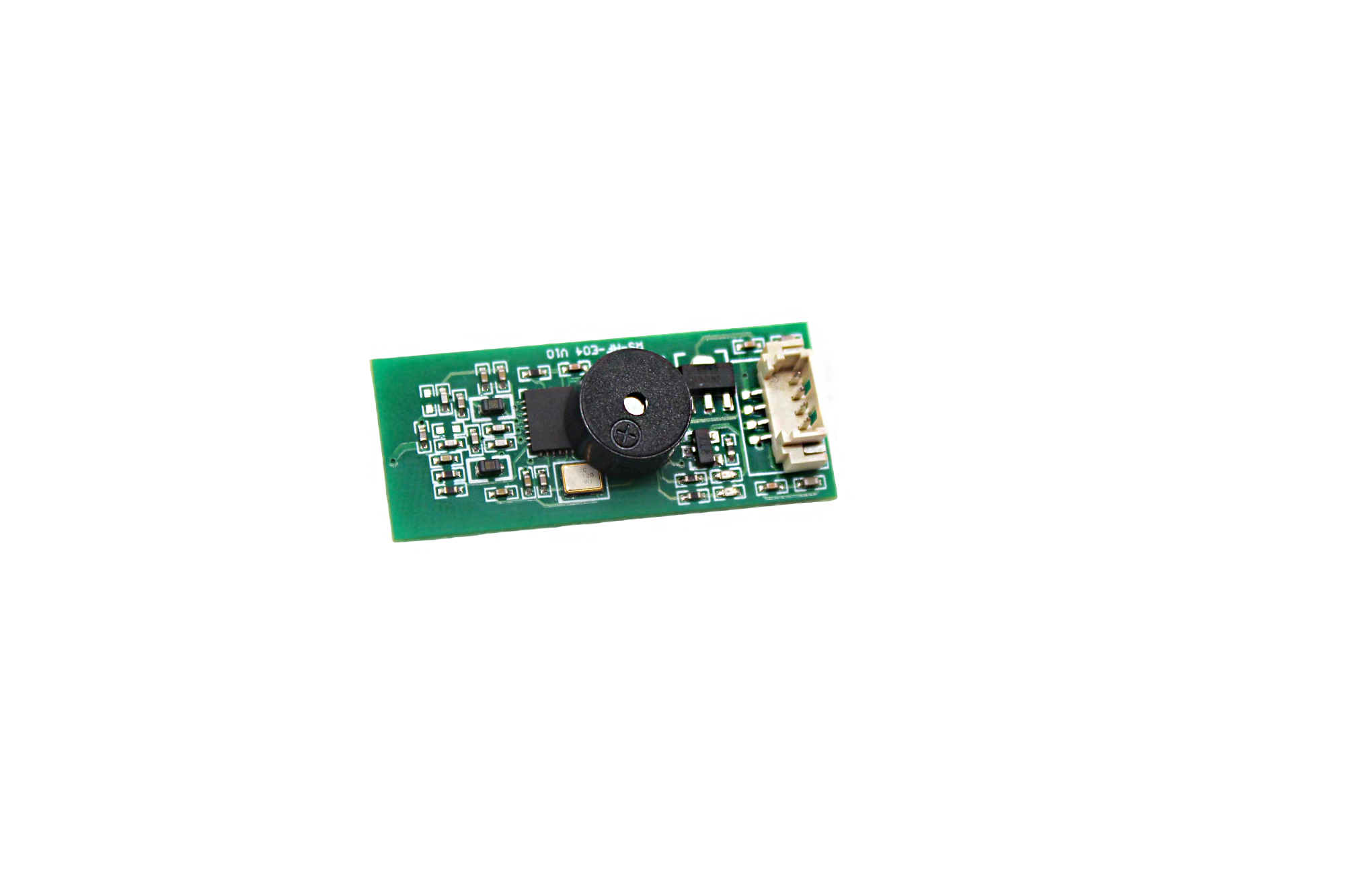
When a pallet moves from a -25°C deep freeze to a humid loading dock, the label takes the hit. Most standard tags give out within days—adhesive turns brittle, ink smears, and the RFID inlay cracks. The brands that actually survive these swings are the ones that engineer for the worst-case condensation event, not just the average temperature. Look for thermal-transfer printed synthetic facestocks, aggressive freezer-grade adhesives, and inlays rated to repeated thermal shock. It's not about one "extreme cold" spec; it's about how the tag performs across the cycle from freezer to truck to store.
You can tell a lot about a tag brand by how it handles moisture. In cold chain, frost turns to water, water seeps under the label edge, and suddenly your tracking data is gone. The tougher brands use top-coating that repels condensation and bonds to damp, uneven surfaces like waxed corrugate or plastic totes. Some even test their tags in blast freezers with forced air, which exposes weak adhesive edges within hours. If a supplier can't show you real-world photos of labels still attached to frost-covered boxes after a week, keep looking.
There's also a difference between a tag that prints well in a warm office and one that scans after months in a freezer. Barcode readability drops fast when ink bleeds or the surface gets scratched by ice. The better brands lean on resin ribbons rather than wax, and they design the label surface to stay crisp under plastic wrap and condensation. In the end, the right tag brand is one that treats cold chain as an ongoing stress test—not a one-time certification.
When Reader Range Matters Most: Brands That Push the Limits
Many brands play it safe, speaking only to a well-defined audience they believe they know. But the real breakthroughs happen when a brand dares to question those assumptions. Consider a company that originally targeted young tech enthusiasts, then introduced lifestyle content that drew in older professionals. Instead of weakening its identity, the brand found that expanding its reader range added fresh perspectives and deepened loyalty across segments.
Brands that push the limits understand that reader boundaries are not fixed. They actively reshape them through content choices. They are not afraid to risk alienating a small core group if that means attracting edge audiences hungry for a different angle. By doing so, they build a more inclusive and resilient community—one that thrives on diversity of thought rather than uniformity.
When reader range is treated as a dynamic asset rather than a static label, a brand can stand out in a crowded market. Those that push the limits do more than satisfy existing expectations; they create new ones. In the end, reader range becomes one of the strongest levers for growth, precisely because it was never taken for granted.
Open Standards, Real Interoperability: A Fresh Look at Compliant Tags
Compliant tags have long served as shorthand for “this product follows the spec.” But following the spec and actually working with other implementations are two very different things. Open standards only deliver real interoperability when the tags reflect tested, observed behavior—not just a vendor's claim.
Take any protocol with a compliance checklist. A device can tick every box yet fail in practice because the standard left room for interpretation, or because the test suite was too shallow. The tag then becomes little more than a checkbox on a slide deck. A fresh look means shifting from self-attestation to shared, continuously updated test harnesses that exercise edge cases and cross-vendor scenarios.
When compliance is proven through open, reproducible testing, the tag earns its keep. Developers can trust that a tagged product will actually talk to others without hidden surprises. That's the kind of interoperability worth aiming for—not a sticker, but a signal backed by evidence.
Priced for Pilots, Ready for Scale: Budget-Friendly Tags That Don't Feel Cheap
You don't need a six-figure rollout to test whether asset tracking actually solves your workflow problems. These tags come in small, affordable batches so you can run a focused pilot in one warehouse or on a single delivery route without begging for budget approval. The cost per tag stays low, but that doesn't mean you're stuck with flimsy paper labels that fade after a week. The substrate holds up to daily handling, and the print quality stays legible long enough to prove the concept.
When the pilot works and you're ready to order ten thousand more, the price doesn't jump. Volume discounts are built in from the start, so scaling from a handful of tags to a full fleet feels like a natural step instead of a budget crisis. You won't find hidden setup fees or per-roll surcharges that only appear after you're committed. The same adhesive, the same RFID inlay, the same print resolution — whether you buy fifty tags or fifty thousand.
Plenty of budget tags scream "disposable" from across the room. These don't. The finish is matte enough to avoid glare under scanners, the edges don't curl after a few trips through a conveyor, and the barcode doesn't smear when someone grabs the tag with damp gloves. It's the kind of label you can hand to a client or attach to a rental item without apologizing for how it looks. Cheap to buy, but not cheap in the ways that matter.
Customization Without the Custom Price: Brands Offering Flexible Encoding
The old model of personalization demanded either a hefty markup or a limited set of predefined options. Flexible encoding sidesteps that by letting each item carry unique data—a name, a colorway, a pattern—while the production line never slows down. No hand-finishing, no separate run, just a digital handoff from your input to the machine.
Footwear labels now offer mix-and-match panels, typed words on heel tabs, and gradient prints that would have required a separate silk screen a decade ago. Home goods brands do the same with linen napkins embroidered with a family initial or a pet's silhouette, priced only a few dollars above the blank version. The trick is in the software: designs are stored as instruction sets, not physical templates.
This shift means you are no longer choosing between off the rack and made to order. You can have a jacket in a rare color, a notebook with a line from a favorite poem debossed on the cover, or a water bottle with your own sketch wrapped around it—all at a price that feels closer to standard retail. The personal touch becomes a default option, not a luxury tier.
FAQ
If entry-level tags aren't cutting it anymore, I'd point you toward Impinj, NXP, Alien Technology, and Avery Dennison. Impinj and NXP dominate the UHF space because their chips handle dense reader environments well and have broad reader compatibility. Alien's Higgs series is a solid budget-friendly pick that still performs respectably. Avery Dennison is more about the inlay and tag construction side, so if you need labels that survive odd surfaces or harsh handling, they're worth pairing with a good chip. Don't overlook Smartrac or Invengo either, especially if you're sourcing in volume outside North America.
Impinj's real edge is the Monza chip family and the way it handles backscatter efficiency. The Monza R6 and R6-P chips are known for strong read sensitivity and reliable performance on challenging materials like metal or liquid-adjacent packaging. Their readers and gateways are tuned to work best with their own chips, which reduces integration guesswork. But you pay for that ecosystem. If your project doesn't need that tight loop, NXP's UCODE chips can match much of the day-to-day performance at a lower per-tag cost.
NXP and Impinj get most of the attention, but they're not the whole story. Alien Technology's Higgs 9 and Higgs 3 chips still show up in plenty of supply chain and asset tracking projects, especially where cost per tag is a hard constraint. Invengo has been gaining traction in Asia and Europe with competitive sensitivity specs and aggressive pricing. CAEN RFID does interesting work with specialized tags for industrial and scientific environments. For most mainstream retail and logistics work, sticking with NXP or Impinj is safer due to reader compatibility, but if you're willing to test, those alternatives can save real money.
At the million-tag scale, the per-tag price difference between brands becomes huge, so you need chips that are stable and widely supported. NXP's UCODE 9 and Impinj's Monza R6 are the safe bets because almost every fixed and handheld reader on the market has been tested against them. Alien's Higgs 9 can undercut them on price by a meaningful margin, but you'll want to run a pilot with your actual reader fleet and tag placement. Avery Dennison and Smartrac can supply both chip types as finished inlays, so you're really choosing the chip inside. Don't chase the cheapest tag without checking failure rates on your specific product surfaces.
In real-world terms, the Higgs 9 and Monza R6 are close on standard corrugate and plastic, but the Monza tends to pull ahead when tags are partially obscured or surrounded by dense RF noise. Higgs chips often have slightly lower read sensitivity on metal or liquid-heavy items, though the tag antenna design matters more than the chip in many of those cases. Where Higgs wins is cost and simplicity: if you're tagging pallets or bins in a relatively open environment, the savings add up fast without a noticeable performance hit. For item-level retail on shelves packed tight, I'd lean toward Monza.
First, check for ISO 18000-6C compliance and get a sample pack to test against your intended readers, not just a spec sheet. Less familiar brands often have solid chips but weaker inlay construction quality, so adhesion and flex endurance matter. Ask for real-world read range tests on your actual products, not on foam or air. Also confirm supply stability and lead times, because a great tag that shows up late can stall a rollout. Invengo's pricing is tempting, but I've seen variations between batches, so lock in a quality clause with the supplier. CAEN RFID is more specialized; their tags are often designed for scientific or high-durability use, so don't assume they're drop-in replacements for retail tags.
Yes, for harsh environments you should look beyond the typical retail tag suppliers. HID Global makes durable tags for tool tracking, medical equipment, and outdoor asset management. Omni-ID (now part of HID) built its reputation on tags that survive metal, high heat, and chemical exposure. Zebra's silverline and hard tags are common in manufacturing and returnable container tracking. Xerafy specializes in small, rugged tags for surgical instruments and aerospace, where autoclavability and impact resistance are non-negotiable. CAEN RFID also has rugged options for industrial and scientific settings. These tags cost a lot more than paper labels, but they don't fail after a few weeks in a factory.
It's close, but Avery Dennison tends to have the most consistent inlay quality across a wide range of label and tag materials. Their manufacturing tolerances are tight, and they supply to many enterprise clients, which forces consistency. Smartrac is nearly as good and often more competitive on price for large orders, but I've seen more variation in their specialty inlays. Zebra is different: they're stronger in finished tags and printers than in raw inlays, so if you're buying pre-encoded labels or hard tags, Zebra's ecosystem is excellent, but for raw inlay flexibility and surface consistency, Avery Dennison edges them out.
Conclusion
Plenty of RFID evaluations stop at the two chipmakers everyone already knows, but a closer look reveals smaller suppliers quietly solving problems the giants often overlook. Some of these lesser-known brands have built their tags around polyurethane or ceramic housings that shrug off condensation, freezer burn, and the kind of rough handling that destroys standard inlays in cold-chain logistics. Others focus on antenna geometry and chip sensitivity, squeezing out an extra meter or two of read range in dense warehouses or outdoor yards where every decibel of backscatter counts. What makes them worth exploring isn't just raw performance—it's how they approach design. A few prioritize ultra-thin form factors for embedding in apparel or curved assets, while others tune for metallic surfaces or high-speed conveyor reading. These aren't one-size-fits-all products; they're deliberate trade-offs, and that's exactly why they deserve attention beyond the usual spec sheets.
Interoperability remains a sticking point in RFID, but a growing cluster of tag brands now treats ISO 18000-6C and GS1 standards as a baseline rather than a bullet point. Their chips work across readers from multiple vendors without handshake surprises, which matters when pilots grow into full rollouts. On the cost side, there's a practical middle ground emerging: tags that hit a low per-unit price but still survive repeated read cycles and don't feel flimsy. These are ideal for pilot programs where volume hasn't yet justified a massive investment. Just as useful are brands offering flexible encoding options—custom EPC schemes, user memory partitioning, or pre-printed barcodes—without treating every tweak as a premium service. For teams tired of paying custom prices for what should be a standard feature, these makers prove that practical differentiation doesn't have to break the budget.
Contact Us
Contact Person: Esme Mo
Email: [email protected]
Tel/WhatsApp: 0086 191 2931 7837
Website: https://www.osrfidglobal.com/