

PP Hollow Grid Board Production Line Supplier Key Considerations for Buyers
2026-11-02
Choosing a PP hollow grid board production line supplier isn’t just about machinery—it’s about securing uptime, consistency, and long-term profitability. Yet many buyers overlook critical factors like extrusion stability, die design, and after-sales support until production hiccups surface. COMRISE understands these pain points firsthand, having engineered turnkey lines for converters worldwide. Before you commit to a supplier, ask yourself: does their technology truly match your board thickness, output targets, and recycled-material tolerance? In this guide, we break down the non-negotiable checks that separate reliable partners from costly gambles.
Extruder and Die Design Determine Board Consistency
The way an extruder is configured has a direct bearing on how uniformly the board comes out. Screw geometry, compression ratio, and melt temperature control all shape how the material behaves before it reaches the die. If the screw fails to build stable pressure or leaves unmelted pockets, the board will show density shifts, wavy edges, or patches of uneven gloss. Board consistency isn't just about raw material; it starts with how predictably the melt is delivered.
Then die design matters. The die's internal flow channels need to be balanced so material exits at the same velocity across the full width. Even small differences in land length or gap height can create thicker centers, thin edges, or surface drag marks. A well-machined die with adjustable lips lets operators fine-tune distribution on the fly, but poor thermal uniformity in the die body can still cause warpage or internal stress. In practice, consistent board production depends on matching screw output characteristics with die flow resistance, then keeping that pairing stable over long runs.
Line Layout Flexibility for Different Grid Board Thicknesses
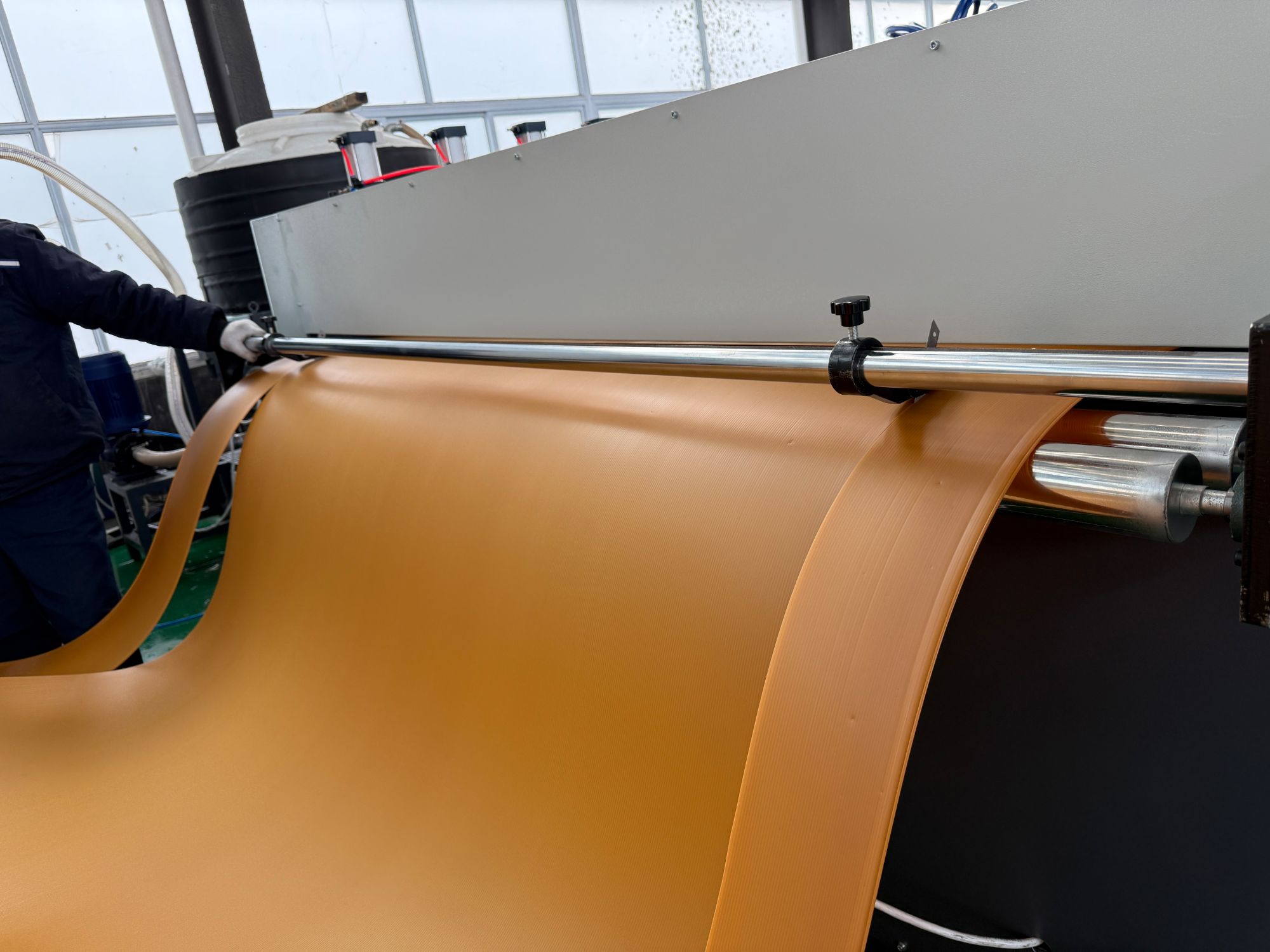
Trace routing on a grid board rarely gets the same attention as layer count or via style, yet board thickness quietly sets the ceiling on what a layout can achieve. A thinner core forces designers into narrower trace widths and tighter spacing to keep impedance within tolerance, which sounds restrictive until you realize it also opens up room for more aggressive fan-out under dense BGAs. The real constraint isn't the copper itself, but how the dielectric thickness interacts with the prepreg and copper weight. Once you accept that a 0.8 mm stackup behaves differently from a 1.6 mm one in terms of etch factor and plane capacitance, routing decisions stop being guesswork and start following the board's physical grammar.
Thicker boards bring their own kind of freedom, mostly in the form of mechanical stability and better heat spreading, but that comes at the cost of longer via barrels and less forgiving impedance transitions. If you are pushing a high-current design, a thicker grid board lets you use wider traces without blowing the thermal budget, but you may find yourself boxed in when trying to route differential pairs around mounting holes. On the flip side, ultra-thin boards allow serpentine routing with far less crosstalk penalty, yet they demand stricter handling during assembly. The flexibility is never absolute; it is a negotiation between the copper foil thickness, the laminate's glass weave style, and how much layer-to-layer registration drift you can tolerate before a trace loses its return path.
Power Consumption and Throughput Benchmarks Worth Verifying
Manufacturers love to quote peak throughput numbers measured in a lab with zero interference and a single client on a quiet channel. Those figures rarely survive contact with a busy office. It is worth running benchmarks with mixed traffic—video conferencing, large file transfers, and intermittent IoT telemetry—while watching power draw at the wall. A device might push impressive packets per second, but if it needs a noisy fan or doubles its idle consumption to do so, the real-world tradeoff starts to look different.
Power consumption is not a static spec either. Load-dependent behavior matters: how much does the unit draw at idle, under 30% load, and at sustained 80% load? Some hardware is tuned for bursty performance and then throttles hard to stay within thermal limits, which can create ugly throughput dips mid-transfer. Measuring both watts and throughput over a 24-hour period, including overnight with scheduled backups, reveals whether efficiency holds up or collapses under sustained pressure.
Finally, test with realistic traffic profiles instead of synthetic UDP floods. Small packet performance, concurrent connections, and encrypted streams all shift the power-per-megabit equation. If you have a smart PDUs or a managed PDU, capturing per-port energy data while running repeatable benchmarks will give you numbers that actually inform purchasing decisions—not just marketing slides.
Customer References That Reveal More Than Sales Pitches
A sales pitch is designed to highlight strengths and hide friction, but customer references often let slip the unscripted details: how long implementation actually took, where support had to step in, which promised features needed workarounds. These admissions are rarely framed as negatives; they surface in offhand comments about team habits or the specific role someone played during rollout.
Asking the right follow-up questions turns a reference call into an operational debrief. Instead of “Are you happy?” ask what they stopped doing after switching, which reports they still pull manually, or how they trained new hires. The pauses and qualifiers—"eventually," "with some tweaks," "once we got used to"—reveal more than any ROI slide.
The most telling references compare before and after not in metrics but in daily behavior. One customer might mention they no longer need a Monday morning status email because the system already surfaces bottlenecks. Another might admit they still keep a spreadsheet for a specific edge case. These concrete routines are the difference between a vendor's promise and a peer's reality.
Spare Parts Availability and Service Response Windows
When a critical component fails, the true measure of a supplier isn't found in glossy brochures but in the quiet efficiency of their parts pipeline. We've built our spare parts network around a simple premise: the moment you log a request, the clock starts, and we don't rest until the right part is in your hands. Our regional distribution hubs are stocked using real-world failure data, not guesswork, so high-wear items sit closer to your operation than you might expect.
Response windows aren't just numbers on a contract for us; they're a daily operational rhythm. For standard wear parts, we commit to a four-hour dispatch from the nearest hub, while critical breakdown components trigger a two-hour technician-assisted response in most industrial zones. If your site sits outside typical coverage, we pre-stage a curated inventory on your premises based on your equipment's service history, effectively collapsing the response window to minutes rather than hours.
What sets this approach apart is the transparency baked into every stage. You'll never chase a tracking number or decode vague promises. Our service desk logs each request with a live timestamp, and you receive a direct line to the warehouse lead handling your case. If a part has to travel across a border or through a customs checkpoint, we've already pre-cleared the paperwork and flagged alternative carriers, so the only surprise is how fast the box actually arrives.
Lifecycle Costs That Go Beyond the Purchase Price
The figure on the invoice rarely tells the whole story. A machine that costs less upfront can quietly drain your budget through energy draw, proprietary consumables, and service contracts that kick in after the warranty lapses. For instance, two air compressors might have a 30% price gap at purchase, yet the cheaper unit often burns more electricity per cubic meter and needs filter swaps twice as often. Over a five-year run, that initial savings evaporates—and then some.
Downtime carries a cost too, though it never appears on a balance sheet line item. Waiting on spare parts, retraining operators after software updates, or nursing an older system through unplanned repairs all chip away at productivity. And when a piece of equipment reaches end of life, removal, decommissioning, or resale value can swing the total cost by thousands. The real price of ownership only shows itself long after the checkout screen fades.
FAQ
Look beyond the spec sheet and ask for a live run with your own raw material. This reveals how the line handles real melt flow variations, whether the die gap adjustment works smoothly, and if the calibration unit truly holds thickness across the full width. A supplier who hesitates on this usually has something to hide.
It can be significant, often 15 to 25 percent. The main differences come from barrel heating zones, screw design, and whether the downstream haul-off uses AC servo motors or older DC drives. Over five years, a less efficient line can add tens of thousands of dollars in hidden operating costs.
The die head controls how evenly the melt spreads before it enters the calibrator. A poorly machined internal flow channel creates uneven thickness, weak corners, or warping. Better suppliers use chrome-plated flow surfaces and adjustable restrictor bars, allowing you to fine-tune the board profile without stopping production.
At minimum, you need a supplier that provides on-site commissioning, two to three days of operator training, and a clear response time for remote troubleshooting. More importantly, check whether they keep common wear parts like screws, barrels, and calibration plates in local or regional warehouses. If they quote eight weeks for a replacement heater band, that line will sit idle too long.
A machinery-only supplier often has a broader view of processing conditions, while a resin producer may understand formulation interactions better. Neither is automatically superior. The key is whether they have tested different PP grades, recycled content, and filler loadings on their own line. Ask for trial data with your exact material mix before committing.
Request a time-stamped video showing the line running continuously for at least one hour, with a digital counter capturing the actual board length. Also ask for a third-party energy meter reading during that run. If they refuse, treat the claimed output as marketing rather than engineering data.
Common omissions include the foundation and leveling work, water chiller and air compressor sizing, initial die cleaning tools, spare filter screens, and the cost of a voltage stabilizer if your grid is unstable. Also confirm whether installation and travel expenses for the supplier's engineers are included, otherwise they can add ten percent or more to the total.
Automated stackers, automatic edge trim removal, and closed-loop thickness control reduce direct labor from three operators per shift to one, sometimes less. The upfront premium usually pays back within two years. However, avoid over-automating if your workforce has no PLC troubleshooting experience, because downtime from a failed sensor can erase the labor savings quickly.
Conclusion
When evaluating a PP hollow grid board production line, start by looking past the glossy brochure. Extruder and die design matter more than any marketing claim because they directly govern board consistency—small fluctuations in melt temperature or die lip adjustment can show up as warping or uneven cell walls. Ask the supplier to walk you through how their screw geometry and die manifold handle polypropylene rheology at your target thickness. At the same time, check whether the line layout can be reconfigured without major rework. A calender stack or cooling table that only fits one board thickness will trap you if your product mix changes. Verify power consumption and throughput benchmarks with your own operators, not just the supplier's numbers, since actual output often drops when running thinner or denser grid profiles.
Beyond the machine itself, customer references reveal more than a rehearsed sales pitch. Speak with buyers who run similar board weights and widths, and ask about downtime frequency, die cleaning intervals, and how well the line holds tolerance after six months of continuous use. Spare parts availability and service response windows should be tested before you sign: ask for a list of critical wear items like screws, barrels, and die lips, and find out whether replacement parts ship from a local hub or wait on overseas freight. Finally, calculate lifecycle costs that go beyond the purchase price—energy per kilogram of output, labor needed for line changes, and expected maintenance over five years often outweigh the initial discount. A supplier that is transparent about these figures is usually a safer long-term partner than one offering the lowest bid.
Contact Us
Contact Person: LISA LEE
Email: [email protected]
Tel/WhatsApp: +86 13780696467
Website: https://www.qdpipemachine.com