ODM Textured Geomembrane Key Benefits and Applications
2026-10-22
Containment failures rarely start in the liner itself—they begin at the interface, where smooth geomembrane meets soil and stability disappears. ODM textured geomembrane solves this with a high-friction, puncture-resistant surface that locks into place, reduces slippage, and protects against installation damage. At JInseed Geosynthetics Solution, we've watched this texture turn risky slopes into stable barriers and turn a simple liner into a long-term asset. If your next project involves landfill cells, mining pads, or stormwater ponds, the key benefits and applications below will show you why textured beats smooth every time.
Grip Where It Matters on Slopes and Anchor Trenches
On steep terrain, traction is never evenly distributed. The real work happens at the contact points where your weight shifts during each step, turn, or brace. That's why this design focuses grip precisely where sloped surfaces demand it most—under the ball of the foot, along the outer edges, and across the heel strike zone. Instead of a uniform tread pattern that looks aggressive but slips under lateral pressure, the lugs are shaped and spaced to bite into loose soil, wet grass, and packed snow without clogging. You'll feel the difference the moment you angle your foot against a grade and the sole holds firm rather than skating sideways.
Anchor trenches present a different challenge. These are the narrow, dug-out ledges or shallow ditches you brace against when belaying, hauling gear, or stabilizing a ladder on uneven ground. Standard treads often lose contact here because the edge of the sole floats over the trench lip. The solution is a reinforced toe cap and a sharply defined heel brake—two zones that dig into the trench wall and create a mechanical lock. The rubber compound in these areas is slightly softer for grip but backed by a denser layer to prevent deformation under heavy loads. So when you plant your foot in an anchor trench, the sole conforms to the soil's texture instead of skimming across it.
What ties these two scenarios together is a principle of selective traction. Rather than increasing overall friction, which can make the boot feel sticky and slow on flat ground, the tread map channels grip to the exact places where slopes and trenches generate shear forces. Transition zones between lugs are kept clean and open, so mud and debris shed naturally with each step. The result is a sole that feels nimble on approach hikes yet locks down confidently when you're working at an angle. That balance—agile when you're moving, anchored when you're not—is what separates a boot that merely has tread from one that actually uses it.
Standing Up to Aggressive Leachate and Chemicals
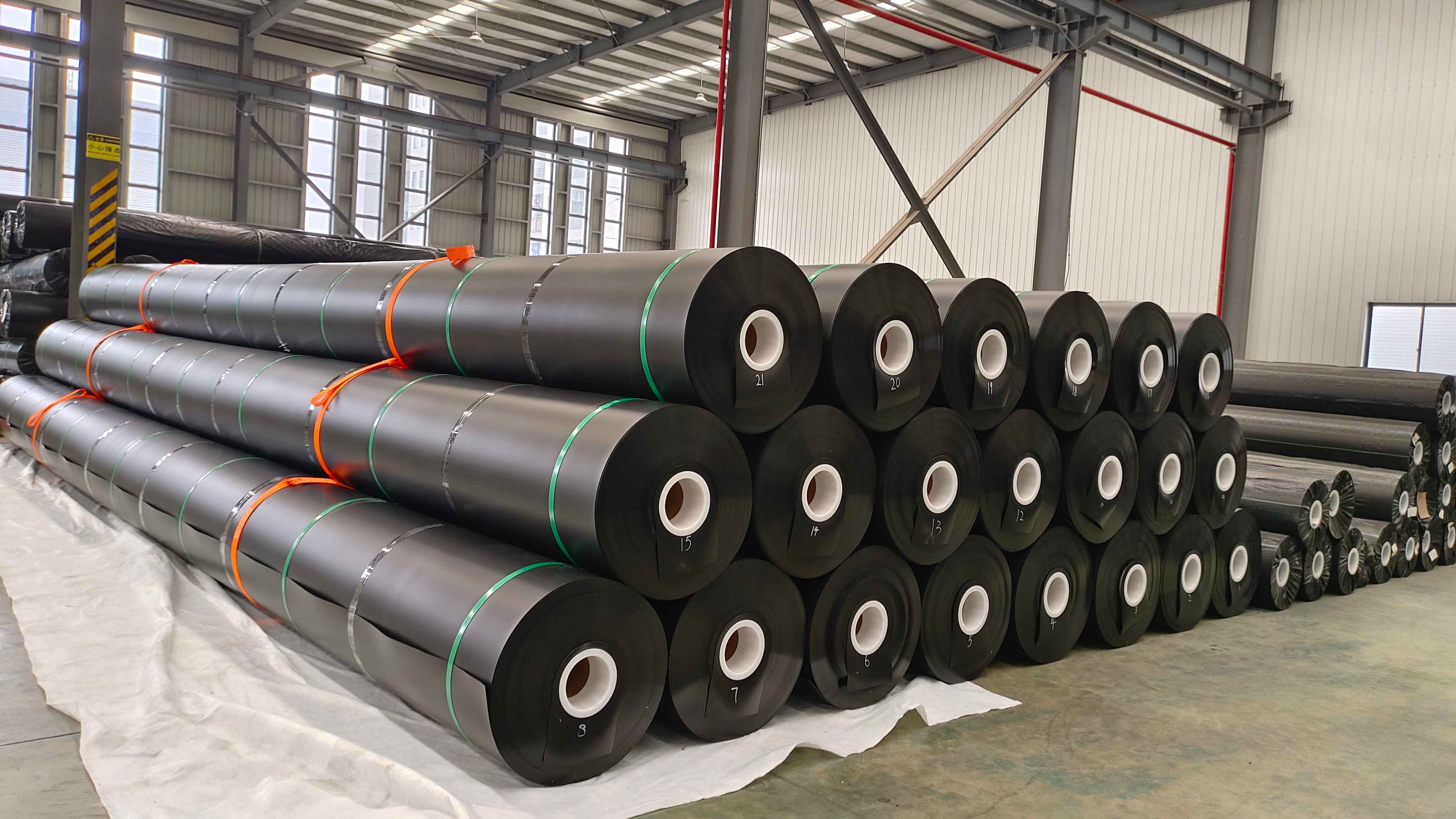
Geomembranes in landfill and industrial containment face a daily assault from leachate rich in organic acids, heavy metals, and solvents. Without the right resin package, even a small puncture or seam flaw can become a fast track for chemical attack, swelling the liner and compromising the entire barrier system. Choosing a membrane formulated with high-density polyethylene and fortified antioxidant packages isn't just a spec checkbox—it's the difference between a liner that holds for decades and one that silently degrades under the surface.
Beyond basic chemical resistance, aggressive leachate often carries elevated temperatures and fluctuating pH levels that accelerate aging. Standard HDPE may handle a neutral pH landfill, but when the waste stream shifts—say from industrial sludge or ash monofills—the liner needs to withstand concentrated chlorides, sulfates, and volatile organic compounds simultaneously. That's where stress crack resistance becomes critical: a liner that can shrug off point loads from rough subgrade while maintaining its molecular integrity in a chemical soup.
In practice, standing up to aggressive leachate means looking past the initial thickness or tensile strength numbers. It means verifying long-term oxidative induction time, checking for resistance to specific chemical mixtures found in your leachate analysis, and ensuring the seaming methods don't introduce weak zones. Field reports from mining heap leach pads and hazardous waste cells show that liners with proven chemical compatibility outlast their cheaper counterparts by a wide margin—often avoiding costly shutdowns and liner replacement that no operator wants to face.
Fewer Seams, Less Risk During Installation
Fewer seams mean fewer places for moisture, air, or everyday wear to sneak in. When you work with wider panels or materials that lock together cleanly, you skip much of the taping, sealing, and edge-checking that usually eats up time on a job. The result isn't just a faster install—it's a surface that behaves better in corners, doorways, and high-traffic areas where a weak joint would otherwise start showing problems early.
Every extra seam is a quiet liability. Heat cycles, humidity shifts, and heavy foot traffic always find the weak point, and that's usually where two pieces meet. By reducing the number of transitions, you remove the most common triggers for callbacks and early repairs. Installers notice the difference quickly: fewer lines to align means fewer chances for lippage, gaps, or adhesive squeeze-out, even when the subfloor isn't perfectly flat or the room isn't exactly square.
In tight layouts or complicated spaces, this forgiveness becomes a real advantage. You can work with the room instead of fighting it, knowing that a single seam won't throw off the whole visual line. The finished look stays clean and professional, and the long-term durability speaks for itself—less maintenance, fewer surprises, and a surface that holds up without constant attention.
Decades of Service Under UV and Stress Cracking
Long-term outdoor exposure rarely tells the whole story on a datasheet. The real test comes when a polymer must hold its shape under relentless UV bombardment while also carrying a constant mechanical load. Over the years, we've seen plenty of materials that pass accelerated weathering tests only to fail in the field because the combined effect of ultraviolet light and tensile stress creates micro-cracks far earlier than either factor alone would suggest. This is why our formulations are built around a simple principle: if the surface shows the first sign of crazing after a decade, the part is still doing its job, but if that crazing appears in year two, the design was never ready for sunlight.
What separates durable parts from disposable ones often comes down to how the material manages the energy from UV photons and mechanical strain at the same time. Most thermoplastics resist one or the other, but not both simultaneously. We approach this by choosing stabilizer packages that don't just sit on the surface—they migrate slowly as the outer layer erodes, maintaining protection even after years of rain and abrasion. For stress cracking, the key is reducing internal molded-in tension through careful processing, then backing that up with a polymer backbone that resists environmental stress cracking agents like road salt, detergents, and industrial fallout. The result is a part that can flex slightly without forming cracks that would then become entry points for UV damage.
Real-world validation is slow and unglamorous, but it's the only way to know if these combined defenses work. We have parts still in service after more than twenty years on rooftops, highway guardrails, and agricultural equipment—places where the sun is brutal and the mechanical loads never stop. Those long-term installations don't get the attention of a quick lab test, but they tell you something far more useful: whether a material will still be holding together when the warranty expired a decade ago and the owner has long since forgotten who made it. That kind of track record doesn't come from hype or oversized marketing claims. It comes from understanding that UV and stress cracking are not separate problems, but two sides of the same slow failure mode that only shows up when you're not looking.
Landfill Liners, Mining Pads, and Other Critical Uses
Landfill liners block leachate from moving into surrounding soil and groundwater. A typical modern system combines a compacted clay layer with a high-density polyethylene geomembrane, then adds a drainage layer above the liner to collect liquids before pressure builds. The real challenge isn't just the material choice; it's making sure seams, anchor trenches, and protective cover layers survive years of settling waste and equipment loads.
Heap leach pads in mining operations push liner performance much further. These pads hold crushed ore treated with mildly aggressive solutions, so the geomembrane must resist chemical attack, puncture from sharp rock, and constant traffic from trucks and dozers. Thicker HDPE or LLDPE liners are common, and installation relies heavily on field weld testing and destructive sample pulls to catch flaws that would otherwise go unnoticed under a mountain of ore.
Outside waste and mining, the same liner technology appears in canals, reservoirs, industrial secondary containment, tunnel waterproofing, and even floating covers for odor or gas control. Each job tweaks the polymer blend, surface texture, and thickness according to slope angles, temperature swings, and chemical exposure. These liners disappear under soil, concrete, or ore, but their performance determines whether a site stays clean for decades.
The Drainage and Containment Balancing Act
Managing water on a construction site often feels like trying to hold a handful of sand—the tighter you squeeze, the more escapes through the cracks. The real challenge isn't just moving water away quickly; it's knowing when to let it flow and when to hold it back. Too much containment and you risk flooding the work area, creating a muddy mess that halts progress. Too little, and you end up with erosion, sediment runoff, and a very unhappy inspector. Finding that middle ground is what separates a well-run site from a constant battle with the elements.
On the practical side, it comes down to a few key moves. Silt fences and check dams slow the water down, giving sediment time to settle before it leaves your site. But you also need a clear path for the water to go—whether that's a temporary swale, a pump system, or a properly graded slope that directs runoff toward a controlled discharge point. The trick is to build in some redundancy: a heavy rainstorm will always find the weak link in your drainage plan, so having a backup route or a quick-deploy barrier can save you from a washout.
What most people overlook is how much this balancing act depends on the daily weather pattern. A plan that works great for a light drizzle will fail completely during a downpour. Smart crews adjust on the fly—moving a pump, adding a straw wattle, or opening a small gap in a berm to release pressure. It's less about following a rigid plan and more about reading the conditions and making small, continuous tweaks. Once you get that rhythm down, drainage stops being a headache and becomes just another part of the job's pulse.
FAQ
The ODM textured geomembrane offers a high-friction surface that improves interface stability on slopes, plus excellent puncture and tear resistance. Its textured profile also helps keep cover materials in place during installation and service.
It is widely used in landfill caps and base liners, mining heap leach pads, containment ponds, and secondary containment areas. The surface texture provides added grip in these demanding environments.
On slopes, the texture increases the friction angle between the geomembrane and adjacent soils or geotextiles, reducing the risk of sliding and improving long-term stability.
It combines high tensile strength, chemical resistance, and UV stability with a rough surface that resists abrasion. These properties help it withstand harsh weather and aggressive leachates.
Yes. The textured surface reduces slippage for workers and equipment, making it easier to weld and place panels on inclines. Fewer anchoring adjustments are needed as a result.
While it is often used in containment and waste applications, it can be used for water storage if the resin formulation meets drinking water contact standards. Always verify regulatory compliance for the specific project.
Textured geomembrane may collect slightly more sediment in low-flow areas, but its improved stability often means fewer liner repairs over time, especially on steep slopes.
Mining, waste management, agriculture, and civil engineering sectors commonly use it for applications like tailings storage, evaporation ponds, canal linings, and landfill closures.
Conclusion
Textured geomembrane from ODM earns its keep on steep grades and in anchor trenches where smooth liners tend to slip under load. The surface asperities create a reliable friction interlock with overlying geotextiles or soil, so crews can work slopes without constantly fighting liner movement. At the same time, the resin formulation holds up against aggressive leachate, acids, and industrial chemicals that would embrittle lesser polyethylene. Fewer factory-fabricated panels also mean fewer field seams; this shortens installation windows and removes a major source of leak risk at the most vulnerable points of a lining system.
Over decades, the product resists ultraviolet degradation and environmental stress cracking, which matters in exposed applications and under high compressive loads. Typical installations include landfill liners and caps, heap leach pads, evaporation ponds, and secondary containment around tanks. In these roles the textured surface does double duty: it keeps drainage layers from sliding while still allowing controlled liquid movement to collection points. Engineers can specify a single geomembrane for both containment and interface stability instead of layering separate geosynthetics. That balance between robust chemical resistance, long-term weathering performance, and slope friction is why ODM textured geomembrane gets specified across mining, waste management, and industrial projects where failure is not an option.
Contact Us
Contact Person: Jerry Qiu
Email: [email protected]
Tel/WhatsApp: +65 84265294
Website: https://jinseed-geo.com