

Low Voltage Switchgear Factory: How Modern Manufacturing Ensures Safety and Performance
2026-11-02
Behind every reliable low voltage switchgear is a factory floor where precision engineering meets uncompromising safety standards. At Deepwill, we don’t just assemble components—we build performance into every connection. Curious how modern manufacturing turns raw copper and steel into switchgear you can trust? Let’s step inside.
Precision Assembly: The Foundation of Low Voltage Switchgear Dependability
In low voltage switchgear, the difference between dependable service and unexpected downtime often traces back to assembly precision. Torque values on busbar joints, alignment of breaker contacts, and the exact seating of insulation barriers aren't minor details; they define how current flows and heat dissipates under load. Even a slight deviation in bolt tension can create localized resistance that gradually degrades connections, turning a well-designed panel into a source of nuisance tripping or worse.
Precision assembly demands more than careful hands. It requires calibrated tooling, staged inspections, and a clear understanding of material behavior. Copper busbars expand and contract with thermal cycles, so initial torque settings must account for relaxation over time. Draw-out mechanisms for circuit breakers need consistent rail spacing and latch engagement; otherwise, a breaker that tests perfectly in the shop might fail to close reliably after repeated racking operations. These are the kinds of variables that separate panels which last decades from those that need rework within months.
Ultimately, dependability isn't proven by a single factory test. It's built through repeatable processes where every connection is verified, every clearance checked, and every torque wrench calibrated on a schedule. When assembly precision becomes a culture rather than a checklist, low voltage switchgear can handle real-world conditions like unbalanced loads, harmonic currents, and high ambient temperatures without compromising protection or uptime.
How Automated Lines Remove Variability from Production
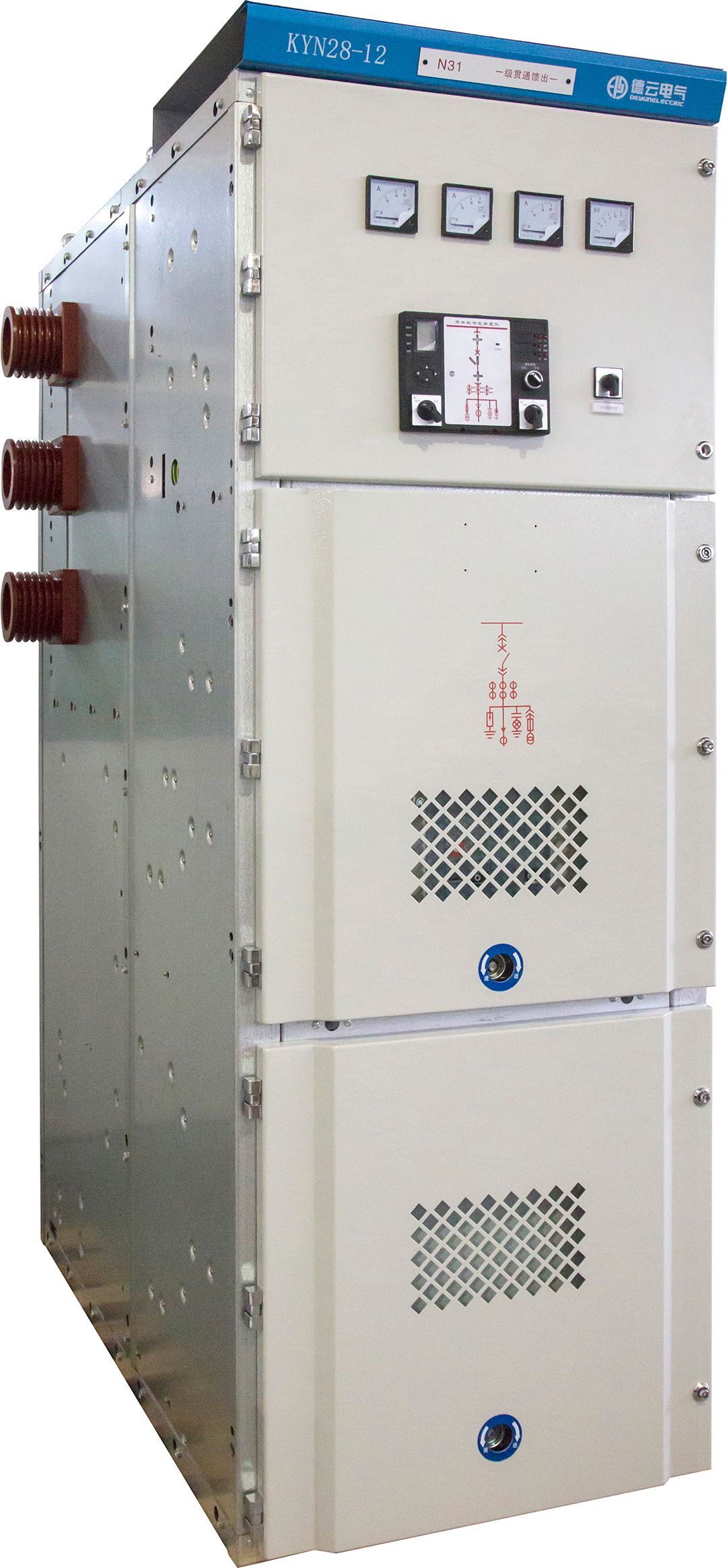
Manual workflows carry a hidden tax: the same operator can produce slightly different results at 8 a.m. and 4 p.m., on a good day versus a rushed one. Fatigue, divided attention, and even minor differences in hand placement all inject variation into the product. Automated lines strip away this layer of unpredictability by fixing the sequence, timing, and force of each operation. A robot does not get tired, does not improvise, and does not drift from its taught path. Every cycle repeats the same coordinates, the same torque values, and the same dwell times, so the output falls within a much narrower band than even a highly skilled human crew could sustain over a full shift.
The real enforcement comes not just from repeatable motion, but from closed-loop control. Sensors embedded at each station measure what actually happened rather than what was supposed to happen. If a dispense volume drifts by half a percent, the system adjusts the next cycle automatically. If a press force begins to climb because of tool wear, the line flags the condition before parts fall out of spec. This constant measurement and correction turns variability into a managed variable instead of an accepted risk. Over time, the collected data also makes residual sources of variation visible—material batches, ambient temperature shifts, or fixture wear—so engineers can address root causes rather than compensate after the fact.
Beyond the individual station, automated material handling keeps parts moving in identical orientations and at identical intervals. Manual handoffs often introduce small delays or misalignments that cascade into final tolerances. Automation removes those handoff ambiguities by physically constraining every part to the same position, every time. The result is a process that produces not just more parts, but parts that match the design intent far more consistently—reducing the need for downstream inspection, rework, or sorting. Variability does not disappear entirely, but it shrinks to a level that is understood, controlled, and predictable.
Copper Purity and Steel Toughness: The Unseen Safety Layer
The quiet reliability of electrical systems hinges on materials you rarely see. Copper purity isn't a marketing buzzword here—it's a physical safeguard. High-grade copper with minimal oxygen content resists embrittlement under thermal cycling, meaning connections stay tight and conductive even after years of load fluctuations. In critical infrastructure, that purity directly translates to fewer hot spots and a lower risk of insulation breakdown.
Steel toughness plays a complementary role, often overlooked until something goes wrong. Structural steel in enclosures and busbar supports must absorb vibration, short-circuit forces, and the occasional accidental impact without cracking. A brittle support can turn a minor fault into a cascading failure. By specifying steel with the right balance of yield strength and elongation, engineers create a hidden buffer that keeps conductive paths aligned and protected, even when the unexpected happens.
Together, these two material qualities form an unseen safety layer. They don't show up on spec sheets as a line item, but they determine whether a system degrades gracefully or fails abruptly. In practice, this means choosing materials not just for their nominal ratings, but for how they behave over decades of service—under heat, mechanical stress, and the slow creep of time.
Testing Protocols That Simulate Real-World Faults
Most test suites fail because they run in a world where disks never fill up, networks never drop packets, and clocks never drift. Real production systems break in far messier ways. A meaningful testing protocol has to force those failures deliberately, at controlled moments, and then watch how the system reacts. That means not just checking that a service returns the right answer under ideal conditions, but also whether it degrades gracefully when a dependency starts returning garbage after a three-second delay.
One effective approach is to inject faults at the boundary between components rather than inside them. For example, instead of killing a database process outright, you might introduce a proxy that randomly drops every twentieth write, or that holds connections open just long enough to trigger a timeout elsewhere. These small, targeted disruptions reveal coupling that unit tests miss: a retry loop that assumes idempotency where none exists, a cache that never expires because the invalidation path assumes a reliable message bus, or a circuit breaker that trips too late to prevent a cascading failure.
The key is repeatability. A fault simulation that happens once and never again teaches you nothing. Build a harness that can replay the exact same sequence of latency spikes, packet loss, and slow disk reads on demand. Then run it against every release candidate, not just when someone remembers. Over time, you'll start to see patterns—like the fact that your search service always fails when the metadata store experiences a partial partition, even though neither one is broken on its own. That kind of knowledge is what turns a fragile stack into something that can survive a bad Tuesday afternoon.
Designing for Thermal Runaway and Arc Containment
Managing the cascading energy release from a failing cell requires more than just spacing—it demands a deliberate path for hot gases and ejected particles. We integrate vent channels that direct effluents away from adjacent cells, using layered stainless-steel baffles to break up jet flames before they can impinge on neighboring modules. The enclosure itself is designed as a pressure vessel, with rupture panels calibrated to open only after internal pressure exceeds a threshold that would otherwise compromise the pack structure.
Arc containment starts with understanding where unintended conduction can occur. Busbar joints are coated with ceramic-filled silicone, and all high-voltage connections sit behind interlocked covers that kill the circuit before exposure. In parallel, we specify arc-resistant materials for the module walls—mica-based laminates that can withstand a direct plasma strike without carbonizing. This prevents a localized arc from turning into a sustained short across multiple strings.
Finally, the design ties these two hazards together through a shared control philosophy. A dedicated battery management unit monitors cell voltage sag signatures that precede thermal runaway, while current sensors with microsecond response isolate a developing arc fault before it evolves into a full-blown event. The result is a containment strategy that treats thermal and electrical failure as linked phenomena, not separate checkboxes.
Training Programs That Turn Standards into Instinct
Most safety courses dump a manual on the table and hope for the best. That's not how muscle memory works. Our programs strip away the fluff and drill the core standards through repeated scenario work. You don't just read about lockout-tagout; you physically perform it on a live panel until it feels unnatural to skip a step. The goal isn't compliance on paper, it's a reflex that kicks in when the pressure spikes.
Instead of marathon slide decks, every session runs in short, high-intensity rounds. We pair each standard with a twisted real-world failure, then make you trace where the breakdown began. That tension sticks with people. A warehouse lead who has walked through a simulated racking collapse remembers load limits far better than someone who circled the right answer on a quiz. The standards stop being abstract rules and start feeling like hard-won lessons.
What sets this apart is the feedback loop after the drill. Trainers don't hand out a score and move on; they pause the moment, replay the choice, and ask one question: "What made that feel wrong?" That reflection, repeated across weeks, shifts decision-making from careful thought to automatic judgment. Within a month, workers start flagging violations before the inspector even lifts a clipboard.
FAQ
Automated wire processing machines cut, strip, and crimp cables to exact lengths based on digital schematics, removing the guesswork and fatigue that lead to loose terminations. Many lines also use vision systems that flag a misplaced lug before the panel moves to the next station, so a torque check happens once instead of relying on a final inspector to catch every mistake.
Every breaker and busbar assembly goes through a high-current injection test that simulates a short circuit at several thousand amps. The test bay records temperature rise on joints, trip times for protective devices, and any deformation of conductors. Only units that stay within the design limits for heat and let-through energy get a test certificate, which is linked to the serial number.
Bare copper oxidizes over time, and oxidation increases contact resistance at bolted joints. Factories apply tin or silver plating in a controlled bath with thickness checks, because a thin or patchy layer can wear through during assembly. Good plating keeps connection resistance stable for decades, preventing hot spots that degrade insulation and cause nuisance trips.
Arc containment starts with the enclosure design: internal barriers and compartments are cut and bent to tight tolerances so that an arc cannot jump between phases. During assembly, creepage and clearance distances are verified with gauges, not just by eye. Finally, some plants perform an actual arc fault test on a sample design, using high-speed cameras to confirm the doors and covers stay closed under pressure.
Each major component—breaker, relay, busbar section, even a batch of screws—is scanned at the point of installation and linked to the panel's serial number. If a supplier later reports a defect, the factory can pull the exact list of affected units in minutes rather than issuing a broad recall. For maintenance teams, the same data lets them order a replacement part that matches the original revision without guesswork.
Laser cutting creates clean, square edges that let panels fit tightly with minimal gap, which is important for both dust protection and arc pressure containment. Robotic welding then applies consistent penetration along seams, reducing weak spots that might open under fault conditions. Compared to manual cutting and welding, the repeatability means every enclosure behaves like the one that passed the type test.
Switchgear assembly areas are kept at positive air pressure with filtered intake, and humidity is usually held between 40% and 60% to prevent condensation on insulating surfaces. Workers wear gloves when handling busbars and breakers because skin oils can attract conductive dust. Final assembly steps often happen in a cleanroom-like zone where a particle counter verifies the air stays below a set limit.
They use modular design libraries where engineers configure a panel from pre-approved building blocks instead of drafting every project from scratch. The production line then assembles those blocks with the same jigs and test routines used for standard designs. Customization happens in the arrangement, breaker sizes, and control logic, while the core busbar layout and clearance checks remain unchanged, so a bespoke panel gets the same validation as a catalog item.
Conclusion
At the heart of a modern low voltage switchgear plant, precision assembly sets the stage for long-term dependability. Every busbar connection, breaker mount, and wire termination is positioned within tight tolerances—often checked by laser-guided alignment systems rather than manual eye. Automated lines then take over repetitive tasks like torque tightening and component placement, eliminating the slight variations that human fatigue can introduce. But hardware alone doesn't guarantee safety; the raw materials carry hidden weight. High-conductivity copper with minimal oxygen content resists overheating, while heavy-gauge steel enclosures provide the structural backbone needed to contain internal faults. These choices are rarely visible to the end user, yet they form an unseen barrier against failure.
Beyond assembly, each unit endures testing protocols that deliberately push it toward real-world fault conditions. Short-circuit withstand tests, temperature-rise runs under full load, and dielectric voltage checks simulate what happens when a downstream motor stalls or a cable insulation breaks. Designers also account for worst-case thermal scenarios, incorporating venting paths and arc-quenching chambers that redirect explosive energy away from personnel. Finally, training programs convert these engineering principles into shop-floor habit. Workers don't just memorize standards like IEC 61439; they practice fault insertion drills, learn to read thermal scan patterns, and internalize why a missed torque mark matters. That combination of disciplined manufacturing, material integrity, and human skill is what keeps a low voltage switchgear factory delivering both safety and performance.
Contact Us
Contact Person: Julion
Email: [email protected]
Tel/WhatsApp: 8617351370631
Website: https://www.deyunelectric.com