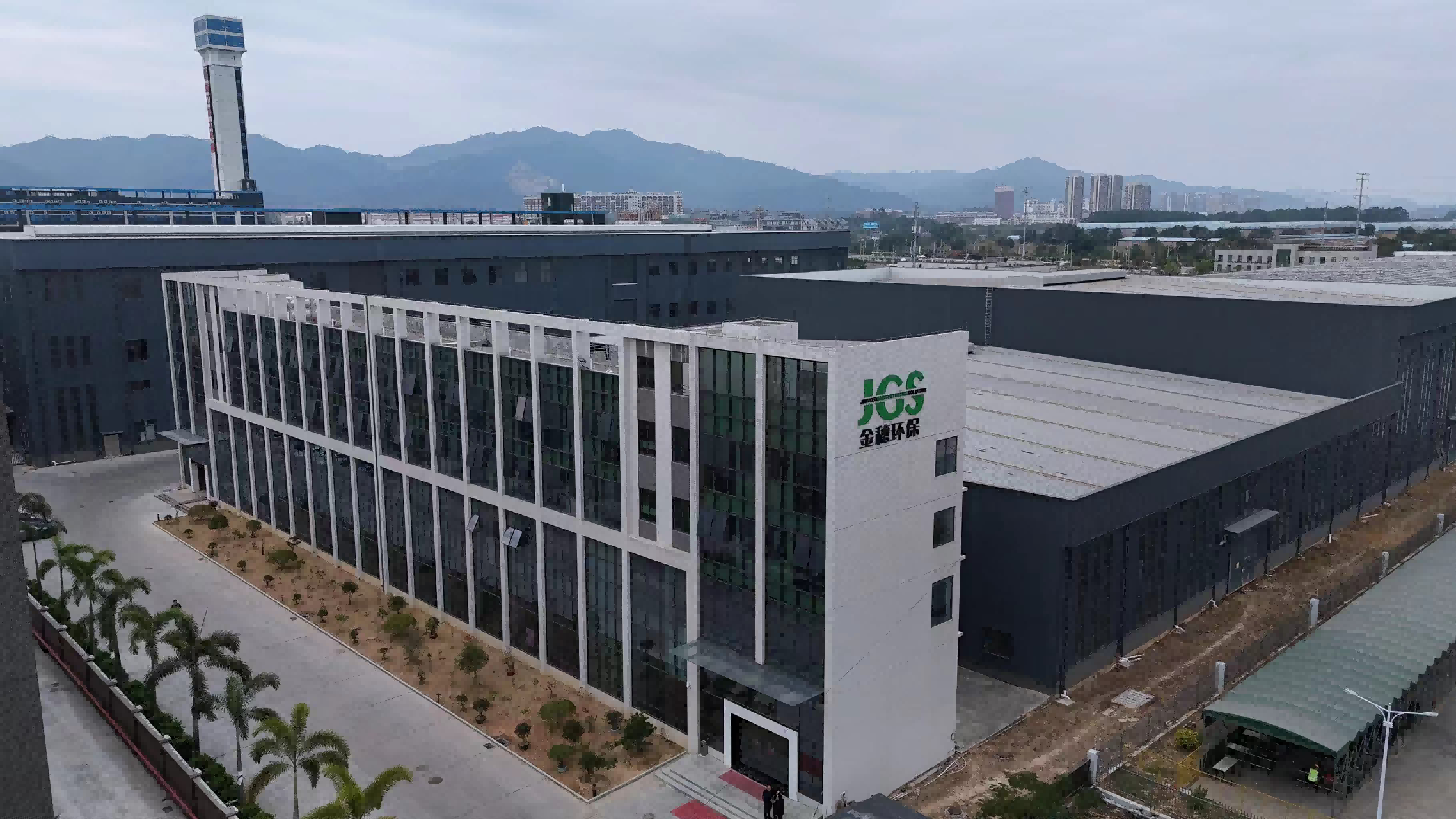

Leading LLDPE Geomembrane Manufacturer for Durable Containment Solutions
2026-08-23
LLDPE geomembrane failures rarely start with a dramatic burst—they begin with overlooked details in manufacturing, welding, or subgrade prep. That’s why JInseed Geosynthetics Solution has positioned itself as a leading LLDPE geomembrane manufacturer for durable containment solutions, not just another supplier. In a market flooded with generic claims, this post looks at the practical factors that determine whether a liner will perform for decades—or become an expensive mistake.
LLDPE Resin Selection: The First Step Toward a 50-Year Service Life
A 50-year service life for buried LLDPE components does not start with a thicker wall or a larger safety factor. It starts at the reactor. Hexene- and octene-based copolymers build a tougher tie-molecule network between crystalline lamellae than butene, and that network is what resists slow crack growth over decades. If the resin datasheet highlights only density and melt index, you are already making a blind bet on the most critical property.
The next cut is long-term stress crack resistance under a real notch, not a razor slit in a lab coupon. A grade can sail through a 24-hour ESCR test and still fail a notched pipe or PENT specimen after a few thousand hours at 80°C. Look for FNCT or PENT lifetimes beyond 8,000 hours, and demand the full failure-time curve at a constant stress, not a single pass/fail data point.
Then scrutinize the stabilization package as if it were part of the resin specification. A hindered phenolic antioxidant alone will not protect a buried geomembrane or pipe from oxidative embrittlement for half a century. You need a phosphite processing stabilizer to survive extrusion without gel formation, plus a high-molecular-weight HALS to handle surface oxidation and UV exposure during storage and installation. Many long-life grades also use a mid-range density with controlled long-chain branching; this keeps melt fracture low while preserving the molecular entanglement that delays brittle failure.
Dual-Track Extrusion: Thicker Edges, Stronger Welds, Fewer Leaks
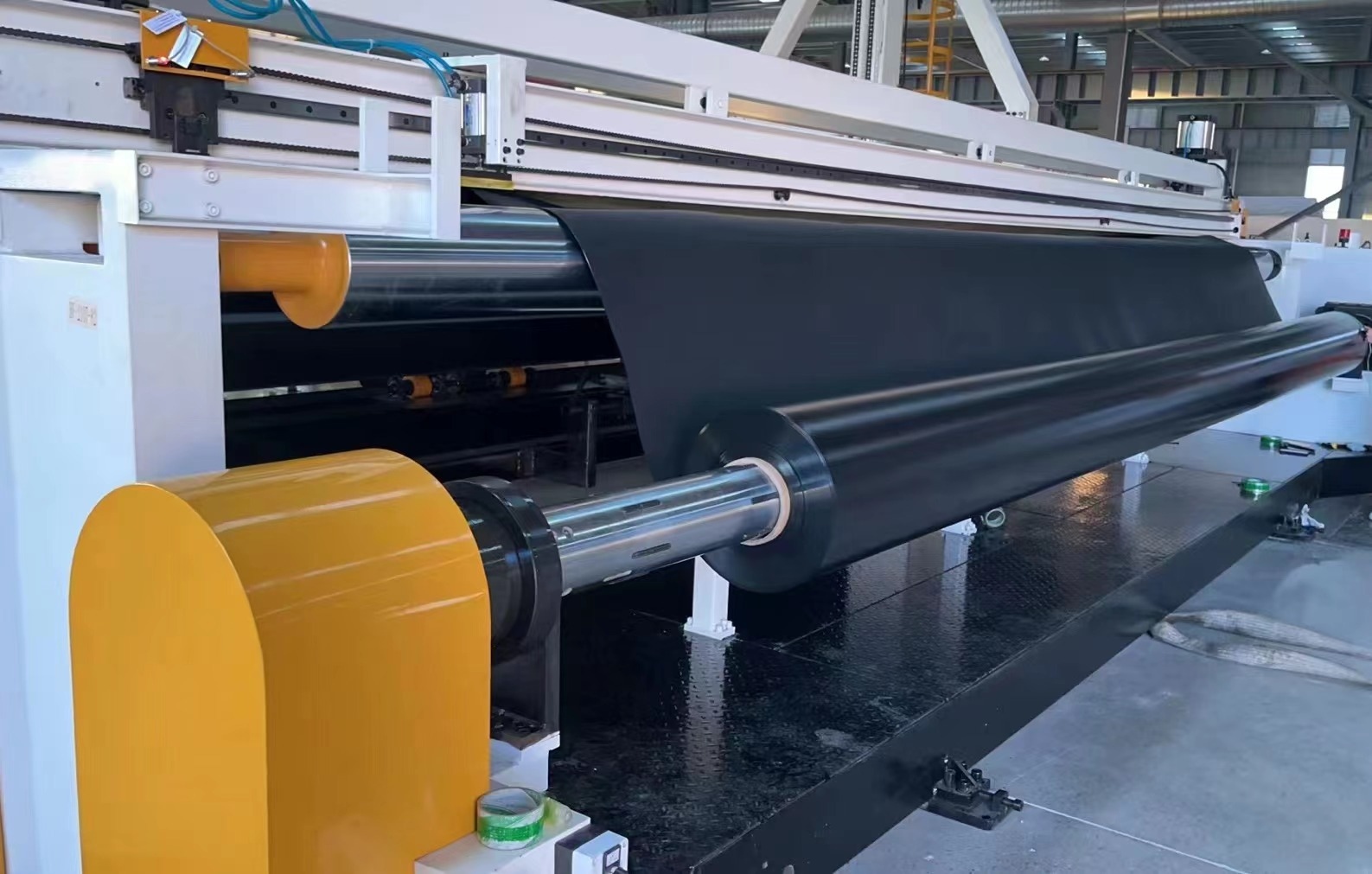
Most extrusion lines treat every millimeter of a profile the same. Dual-track extrusion doesn't. It splits the material flow into two distinct paths, pushing more polymer toward the outer edges while keeping the core leaner and cooler. That extra edge thickness is not a cosmetic tweak; it changes how the part behaves under heat and pressure later.
The real payoff shows up at the welding station. Thicker edges give the weld a larger contact zone and more thermal mass to draw from, so the seam fuses deeper without burning through. Operators notice fewer pinholes, less rework, and a joint that actually holds when the line pressure spikes. Leaks that used to appear after a few hundred cycles simply stop showing up.
This approach means you can run lighter overall wall thicknesses in the middle section and still pass burst tests that heavier single-track profiles fail. It is not about adding more material everywhere, just putting it where the stress and the seal demand it.
Textured Surfaces That Grip Soil Without Sacrificing Puncture Resistance
Real-world traction isn't just about lug height or tread pattern—it's about how the surface interacts with the ground at the microscopic level. Adding fine, irregular texture to a tire shoulder or track pad creates thousands of tiny interlocking points that grip loose soil, gravel, and wet clay, but unlike aggressive deep treads, this approach doesn't compromise the casing's ability to resist punctures from sharp rocks or stumps. The texture acts like sandpaper against the ground, increasing friction without requiring thick, flexible rubber blocks that can be pierced or torn.
Engineers achieve this by molding or laser-etching micro-ridges and micro-dimples onto the outer surface of a relatively stiff, puncture-resistant base layer. These features dig into soft terrain and prevent lateral slip, while the underlying structure remains dense and tough. Field tests on agricultural and forestry equipment show that such surfaces can improve pulling force by 15–20% on muddy slopes, yet they survive impacts that would normally split conventional aggressive treads at the base of each lug.
The key is distributing stress. Traditional deep treads concentrate force at the lug root, creating a weak point where punctures start. A fine-textured surface spreads the load across a broad, unbroken area, so a sharp object must penetrate a continuous layer of high-durometer rubber or polyurethane. This makes it especially useful for robotic harvesters, compact loaders, and off-road utility vehicles that work in debris-strewn fields or rocky terrain where both grip and flat resistance are non-negotiable.
Factory-Fabricated Panels That Arrive Ready to Deploy, Not Just Roll Out
On-site cutting and joining of roll-out materials often turns a simple wall assembly into a week of fiddly work. These factory-fabricated panels skip that stage entirely. They leave the production line with insulation, electrical conduits, window frames and exterior cladding already installed. The only task left for the crew is to lift each panel into place, align the interlocking edges and torque the bolts. No extra sheathing, no field-applied membranes, no weather-dependent sealing work.
Because the panels are assembled under controlled roof conditions, their dimensions stay within tight tolerances that are difficult to replicate outdoors. Joints line up predictably, corners stay square, and the building enclosure performs as designed from day one. That consistency also shortens the commissioning phase: instead of chasing leaks or re-cutting openings, the team moves straight to interior finishes and MEP hookups.
The phrase "ready to deploy" matters here. These are not simply pre-cut boards that still require a full build-out. They arrive as complete wall or roof sections, often numbered and packed in installation order. For remote sites, multi-storey additions or projects with short weather windows, that difference turns a multi-week process into a matter of days.
The Lab Tests Behind Every Lot: From Oxidative Induction to Dimensional Stability
A lot that looks fine on a data sheet can still fail once it's heated under oxygen. The oxidative induction test doesn't just record a number; it tells us how long the antioxidant package holds before the polymer starts degrading. We run it isothermally on a differential scanning calorimeter, watching for the exothermic bump that marks the onset of oxidation. If that bump arrives too early, the entire batch is quarantined, no matter how good the tensile numbers look.
Dimensional stability gets less attention but causes more field complaints than almost any other property. We cut coupons from the same production lot, measure them at room temperature, then expose them to a controlled thermal cycle and, in some cases, high humidity. The percent change in length, width, and thickness is logged against internal tolerances. A drift of a few hundredths of a millimeter can indicate uneven crystallinity or residual stress, which usually shows up later as warping in a finished assembly.
Both tests run on every lot before release, not as spot checks. The lab keeps the raw curves and dimensional measurements for each production date, so if a customer sees an issue in the field, we can pull up that specific lot and compare it to the baseline. This close loop between oxidation resistance and dimensional behavior is what keeps late-arriving failures from slipping through.
Field Support That Turns a Geomembrane Roll into a Certified Containment Barrier
Field support begins long before the first roll is unspooled. A dedicated technician arrives with calibrated welding equipment and a detailed laydown plan, then walks the entire subgrade with the installation crew. Instead of relying on generic instructions, they adjust seam layouts around sumps, pipe boots, and anchor trenches, marking cut lines directly on the liner. Every decision is tied to the specific containment requirement, not a one-size-fits-all checklist.
The real test comes during destructive and non-destructive seam testing. Support personnel perform air channel tests on every weld, then cut out samples for peel and shear testing on site. A failed sample triggers immediate re-welding and retesting, with the exact location and repair method logged in a field notebook. This loop repeats until each seam passes at the project-specified strength, leaving behind a numbered and signed record that maps the entire installed area.
When the last patch is welded and the final vacuum box test comes back clean, the liner is no longer just a material delivery. It has become a documented containment system with a traceable history of field decisions, test results, and signatures. Owners and inspectors can hold that record in hand and trace any point on the barrier back to a specific test and a specific technician, turning a flexible membrane into a defensible engineering asset.
FAQ
LLDPE offers greater flexibility and elongation before break, which helps the liner conform to uneven subgrades and resist stress cracking. It’s often a smarter fit for projects with settling soils or complex geometry where a stiffer HDPE sheet might fail over time.
Yes, the resin formulation is engineered for chemical resistance across a wide pH range. We test against common industrial leachates and acids, and we can provide compatibility data for your specific waste stream before you commit.
Typical landfill designs call for 1.5 mm to 2.0 mm, but the right choice depends on the regulatory requirements, subgrade conditions, and expected stresses. We review your project drawings and specs to recommend a thickness that balances safety and cost.
We monitor thickness, density, and tensile properties at multiple points along every production run. Each roll ships with its own QC documentation, so you can trace the exact material you installed back to the raw resin lot.
Absolutely. We provide detailed welding parameters and can arrange for certified technicians to be on site during critical phases. We also run trial welds on your actual subgrade to fine-tune temperature and speed before production seams start.
Under proper cover and installation, LLDPE geomembranes often perform well beyond 30 years. We use UV-stabilized grades for exposed applications and recommend covering buried liners to minimize thermal cycling and oxidative wear.
We offer NSF/ANSI 61 certified grades specifically for potable water reservoirs and canals. These formulations pass extraction testing for drinking water contact, so you don't have to compromise on safety or durability.
Conclusion
A leading LLDPE geomembrane manufacturer knows that service life begins with resin selection. By specifying high-grade linear low-density polyethylene with the right balance of flexibility, stress crack resistance, and UV stabilizers, the foundation is set for containment systems that can realistically approach half a century of performance. This is not a generic commodity approach—it is a deliberate engineering decision that influences every downstream step, from extrusion to field welding. Paired with dual-track extrusion technology, the geomembrane gains thicker, more uniform edges that translate into stronger, more reliable welds and significantly fewer leak paths. Even the surface texture is engineered to grip soil and prevent slippage on slopes without sacrificing puncture resistance, so the liner holds up under installation stress and long-term loading.
Beyond the product itself, factory-fabricated panels arrive pre-cut and pre-assembled to project dimensions, reducing field seaming and deployment time while improving quality control. Every production lot is backed by rigorous lab testing—oxidative induction time, dimensional stability, tensile properties, and more—so specifiers can trust that the material will perform as designed. When the rolls reach the site, dedicated field support helps turn a simple geomembrane into a certified containment barrier, guiding installation, welding, and testing to meet project requirements. This combination of material science, manufacturing precision, and field expertise is what distinguishes a true leader in durable containment solutions from a basic film supplier.
Contact Us
Contact Person: Jerry Qiu
Email: [email protected]
Tel/WhatsApp: +65 84265294
Website: https://www.jinseed-geo.com