

Inside a China Cutting Picks Factory: Craftsmanship and Innovation
2025-12-18
Ever wondered how the cutting tools that power mining and construction are made? Journey inside a state-of-the-art factory, where PULANKA merges time-honored craftsmanship with cutting-edge innovation. From raw material to finished product, every pick tells a story of precision and durability. Get ready to uncover the secrets behind the tools that move mountains.
Morning Assembly Lines and the Steady Rhythm of Production
The first shift arrives in clusters, shaking off the chill of early morning. Steel-toed boots scuff against concrete as the overhead lamps flicker to life, one row at a time. There’s a quiet understanding here—no one needs to be told to check the torque settings or slide the safety goggles into place. The assembly line begins to hum, a low, insistent vibration that travels up through the soles of your feet and settles somewhere in the chest. It’s not exactly music, but it’s a kind of pulse that pulls everyone into the same tempo.
Parts move along the rollers in a predictable parade: housings, fasteners, seals. Each station receives its offering at the same interval, and each pair of hands knows precisely when to reach. There’s a craft in this repetition that outsiders mistake for monotony. The veteran on the third station can detect a misaligned o-ring just by the way it settles into its groove, a subtle wrongness that would pass right by someone fresh from training. Across the way, the press hisses and clamps, adding its own punctuation to the rhythm—hiss-clamp, hiss-clamp—never early, never late. Over time, the sound engraves itself into your memory, so that you can hear the health of the line even from the breakroom.
By mid-morning, the pace feels less like work and more like a breath. There are no sharp sprints, only a steady current that carries the product forward. New hires fumble at first, fighting the current, but within a week their bodies learn to sway with it. The best days are the ones where nothing breaks, where the count climbs without fanfare. Someone might call out a joke between cycles, and laughter ripples down the line without anyone looking up. That’s when you know the rhythm has truly settled in—not as a metronome, but as a shared and unspoken agreement that today, everything fits.
Where Raw Steel Meets Skilled Hands
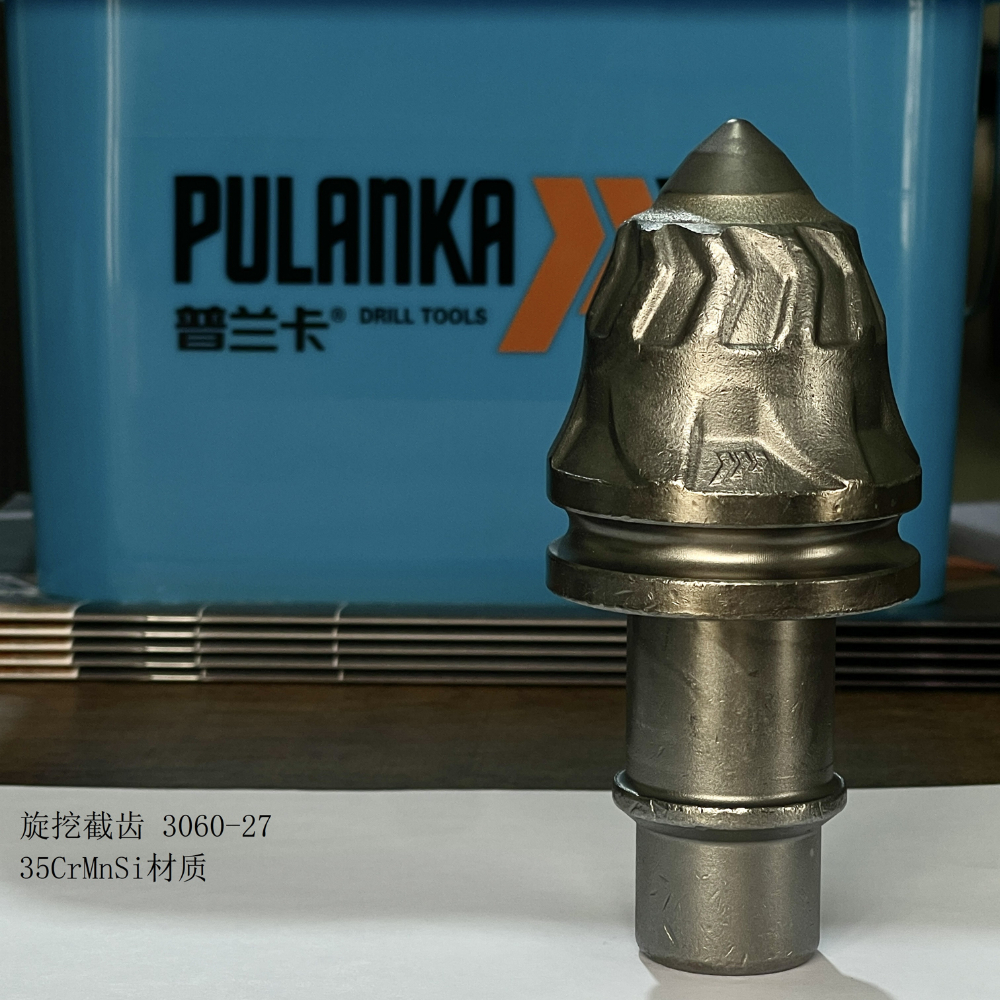
Steel arrives in our workshop as rough, unyielding sheets and bars—cold to the touch and full of potential. Its surface tells the story of the mill: heat, pressure, and a rapid cooling that locked its inner strength in place. In this raw state, it’s just material. But touch it with the right intent, and you can already feel the shape waiting to emerge.
The transformation begins the moment a pair of skilled hands picks up the first tool. There’s no algorithm here, no button to press—just years of practice guiding hammers and torches. Each curve is coaxed, not forced; every joint is a quiet conversation between the maker and the metal. It’s a slow, deliberate process where a misplaced strike or a moment’s hesitation shows, and patience becomes the real engine of change.
What comes out of that dance isn’t just a product—it’s a piece with its own memory. The faint marks of a rasp, the deliberate arc of a bent rod, the subtle warmth that lingers after the forging stops: these are signatures no machine can replicate. This is where utility meets identity, where something as cold as raw steel gains a story you can hold in your hands.
The Quiet Evolution of Cutting Edge Geometry
For decades, geometry felt like a frozen landscape—Euclidean solids, platonic forms, the occasional spline. The real breakthroughs, the ones that shimmered at the edges of conference rooms and CAD labs, happened without fanfare. They weren't the kind of revolutions that make headlines; instead, they seeped into how we model weather systems, design aerodynamic hulls, or animate the subtle draping of a digital cape. This quiet evolution rewired our intuition about shape and space, often staying hidden behind the interfaces we take for granted.
Consider how modern computer graphics stopped faking curvature. Not long ago, a round surface was a clever mosaic of flat polygons, a trick that crumbled under scrutiny. Then came subdivision surfaces and implicit modeling—geometric ideas that had percolated in mathematics for a century before quietly finding their moment. Suddenly, a character's frown line wasn't a texture stretched over a low‑poly mask; it was a genuine crease, born from topological rules that no one had to manually keyframe. These shifts arrived not with a bang but with a new default button in a software update, smoothing our digital worlds from the inside out.
Outside the screen, the same unassuming evolution reshapes the built environment. Architect Zaha Hadid's early obsession with Russian avant‑garde tectonics seemed radical, yet her later fluid shells owed more to incremental advances in computational differential geometry than to a single flash of inspiration. Parametric design didn't erupt—it crept into practice as algorithms learned to handle minimal surfaces and developable panels with a kind of sleepy elegance. The result is a generation of structures that feel organic but are meticulously engineered, a testament to geometry's slow‑burning remaking of what we build and how we imagine form.
Heat, Pressure, and the Art of Endurance Testing
Endurance testing isn't just about pushing a product until it breaks—it's a carefully choreographed dialogue between material limits and design intent. When heat and pressure enter the equation, the test becomes a brutal accelerator of real-world aging. Components that might face years of mild thermal cycling and modest mechanical loads in the field are instead subjected to hours of intense, concentrated stress. This doesn't just reveal weak points; it exposes the hidden assumptions baked into every prototype. The art lies in designing a test that amplifies the right failure modes without introducing artificial ones that would never occur in actual use.
High temperatures can soften polymers, expand metals unevenly, and degrade lubricants, while pressure forces fluids into seals, stresses welds, and magnifies tiny manufacturing flaws into catastrophic splits. Skilled test engineers know that simply dialing both up to extremes can produce dramatic but irrelevant failures. Instead, they carefully map the operational envelope, identifying the thermal hotspots and pressure spikes that truly matter. Then they build test cycles that repeatedly hammer those specific conditions, sometimes with deliberately added contaminants or vibration, to see if the design can absorb the punishment without losing function or safety margins.
The most insightful endurance tests don't just produce a pass/fail verdict; they generate a story in the data. Strain gauges, thermocouples, and crack propagation sensors trace how damage begins and propagates. By studying these signals, engineers learn when a design enters its wear-out phase and where to reinforce it. Sometimes the lesson isn't about making something stronger, but about shaping the way it fails—ensuring that if it must break, it does so gradually and predictably. In this sense, endurance testing transcends mere validation and becomes a tool for sculpting reliability into the very bones of a product.
Feedback Loops That Shape Tomorrow’s Tools
Every click, every hesitation, every moment of delight—these signals feed back into the systems that design our digital lives. The tools we’ll use tomorrow are being carved out of the data we generate today, often without a conscious blueprint. It’s not just about what users say they want; it’s about the silent dialogue between behavior and iteration.
Developers and designers are learning to listen more carefully to this unspoken feedback. When a feature gets ignored or a workflow causes friction, the ripples show up in subtle metrics. The most impactful refinements come from recognizing these patterns before they become obvious, turning data into intuition that shapes the next version of a tool.
This loop is rarely linear. Changes inspired by user behavior often spark new behaviors, which in turn demand fresh changes. The platforms that manage to stay useful are the ones that treat feedback not as a one-time report, but as a continuous conversation—one where the tool evolves alongside the person using it.
A Walk Through the Innovation Lab
Stepping into the lab feels like crossing a threshold between the familiar and the unknown. The air hums with a quiet, persistent energy—servers blinking in neat rows, 3D printers shaping delicate lattices, and prototypes half-revealed under work lights. It’s not cold or clinical; there’s a lived-in messiness here, a map of sticky notes on one wall tracking ideas that veered sideways before finding their path. You see a group of engineers arguing gently over a circuit board, their conversation a blend of optimism and skepticism that signals real thinking.
In the back, a pair of designers are testing something that looks like a cross between a wearable and a musical instrument, coaxing sound from gestures. Someone hands you a rough-hewn gadget—unpolished, warm from recent use—and you realize it’s not about perfection yet. It’s about asking “what if” without flinching. Every surface tells that story: the scuffed floors, the whiteboards dense with erased formulas, the dormant prototypes that taught the team what not to do.
Maybe the most striking thing is the absence of a visitor script. No one rushes to explain what you’re seeing. Instead, they trust that curiosity will draw you in, and it does. By the time you leave, you’ve stopped counting the innovations and started wondering about the questions that sparked them. That’s the real tour—not a catalog of achievements, but a glimpse of the stumbling, brilliant process behind them.
FAQ
We source tungsten carbide from trusted suppliers, but every batch is tested for hardness and grain structure before it even reaches the production floor. That upfront rigor means fewer failures down the line.
Our older craftsmen still inspect and touch up the brazed joints by hand. Machines get you 95% of the way there, but human eyes catch slight misalignments that would stress the tool in tough rock formations.
We switched to induction brazing with a custom flux formula. It heats the steel and carbide evenly without overheating the bond, leading to a stronger attachment and longer wear life.
When a prototype survives 20% more test cycles than the benchmark, you feel the room go quiet. Then the lead engineer just nods and writes 'approved' on the clipboard. No fanfare—just quiet satisfaction.
It sounds counterintuitive, but asymmetry breaks up harmonic vibrations in certain rock types. We learned that from field failure reports and redesigned the geometry specifically for high-impact rotary drilling.
We don't. If a batch is due Friday but the heat treatment readings drift by even half a percent, that batch gets re-done. Our repeat customers know we'd rather apologize for a delay than ship a substandard tool.
There's a 40-year-old lathe near the back that sets the reference surface for all our taper interfaces. Modern CNC couldn't hold that exact tolerance across 800 units a day, so we've rebuilt it twice rather than replace it.
Conclusion
In a bustling Chinese factory, the fusion of time-honored craftsmanship and forward-thinking innovation reshapes the production of cutting picks. Morning assembly lines hum with a steady rhythm, where raw steel is transformed by skilled hands into tools of precision. Each worker, attuned to the nuances of the material, ensures that every step—from initial forging to final assembly—carries the weight of decades of collective experience. This is not mass production in the cold sense; it is a choreographed dance of human expertise and machine efficiency, setting the stage for tools that must endure extreme conditions underground.
Beyond the production floor, the factory’s innovation lab drives a quiet evolution in cutting edge geometry and heat treatment processes. Here, engineers conduct rigorous endurance tests, applying heat and pressure to simulate real-world punishment, then feed the results back into design iterations. This feedback loop, powered by real-time data and field reports, ensures tomorrow’s picks are stronger, sharper, and more durable. The result is a living ecosystem of improvement where tradition meets relentless inquiry, proving that true craftsmanship thrives not just in repetition but in the constant pursuit of better.
Contact Us
Contact Person: Elma
Email: [email protected]
Tel/WhatsApp: +86 13738628777
Website: https://www.pulankagroup.com/