

INNOMOTICS Frequency Converter Vendor Delivers Advanced Drive Technology for Industrial Needs
2026-09-13
Industrial operations demand more than just power—they need precision, efficiency, and reliability. That's where INNOMOTICS frequency converters step in, and few vendors understand this better than Soochee. From heavy machinery to automated lines, the latest drive technology is reshaping how industries manage energy and motion. Curious what makes a truly advanced drive solution stand out? Let's explore.
The INNOMOTICS drive range that adapts to variable torque without manual tuning
Variable torque loads rarely sit still. On a mixer, viscosity shifts with temperature; on a fan, airflow changes as dampers open and close. The INNOMOTICS drive range watches those changes continuously and adjusts its torque response without asking an operator to re-enter settings. The result is a drive that holds the motor steady instead of chasing a setpoint that no longer matches the actual load.
Behind that behavior is an adaptive loop that estimates load inertia and friction from the motor's own electrical signatures. When a conveyor suddenly carries a heavier batch or a pump begins to cavitate, the drive compensates by reshaping its acceleration and deceleration curves. It does this quietly in the background, so a single drive can move between light-duty and heavy-duty cycles without a service call or a laptop connection.
For commissioning, that means fewer decisions at the drive panel. You choose the application profile, let the motor spin up, and the drive locks onto the torque pattern. Later, if the mechanical system wears or the process drifts, the adaptation keeps absorbing those changes rather than passing them on as vibration, overshoot, or wasted energy.
How advanced frequency control survives voltage dips and harmonic noise on busy factory floors
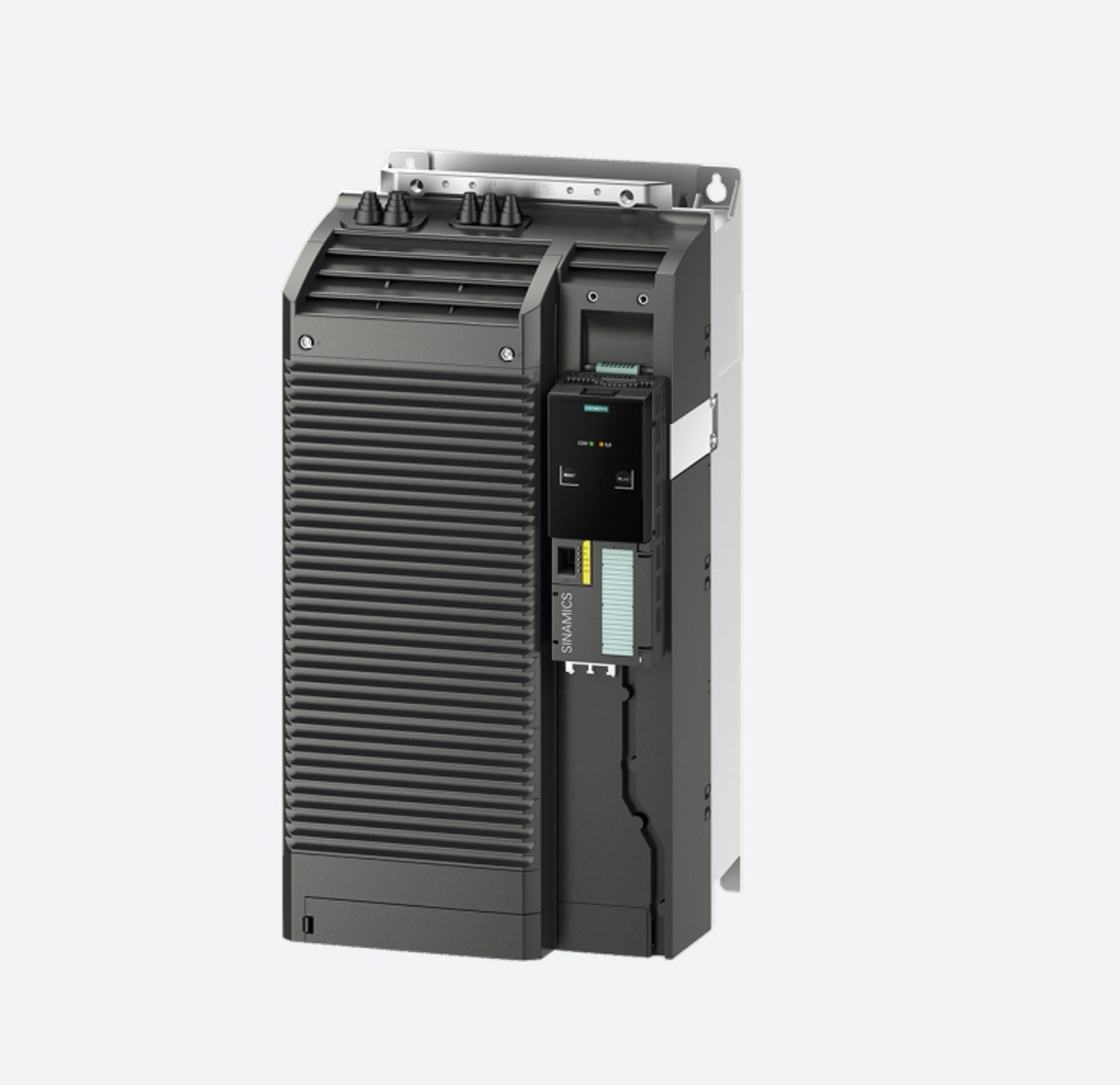
On a busy factory floor, voltage dips and harmonic noise are not rare anomalies—they are daily realities. Advanced frequency control relies on fast sampling and active filtering to ride through these disturbances without tripping. Instead of reacting only when a fault occurs, the control loop continuously adjusts the switching pattern of the inverter, compensating for momentary sag or waveform distortion before it can affect motor speed or torque.
The key is not just higher switching frequency, but smarter modulation. By tracking the point of common coupling and predicting the next few cycles, the drive can pre-charge DC bus capacitors or shift pulse timing to cancel harmonic currents. This makes the system resilient to line notches, phase imbalance, and even short interruptions up to a few milliseconds—no external UPS required.
In practice, this means a conveyor or spindle keeps its setpoint even when a neighboring welder or crane causes a sag. Maintenance teams notice fewer nuisance trips, and the power quality at the panel improves because the drive itself becomes an active harmonic damper rather than a passive load.
Commissioning a drive in under an hour—what INNOMOTICS changed in the setup workflow
The old assumption that a drive needs half a day of fiddling with parameter tables is gone. INNOMOTICS rebuilt the setup flow around a guided start-up routine that asks only for the motor nameplate data, then handles the rest—ramp times, current limits, and control mode—on its own. Most first-time users get the shaft turning in about forty minutes, not because they rushed, but because the steps that used to require a manual and a phone call are no longer part of the job.
A big chunk of that speed comes from automatic motor identification. Instead of entering stator resistance or inductance values by hand, the drive runs a short, controlled test and builds its own accurate model of the connected motor. Pair that with a mobile app that loads the configuration via NFC or QR code before power is even applied, and the usual back-and-forth between cabinet and laptop disappears.
Even the troubleshooting loop feels different. If something is off during start-up, the display now points to the exact terminal or setting instead of showing a cryptic fault code. That means fewer repeat visits to the wiring and a setup process that ends with a running drive, not a list of open questions.
Retrofitting older motors with modern drive technology without replacing the entire line
Many plants still run machinery built decades ago, with motors that hum along fine mechanically but lack the control precision and energy efficiency of today's variable frequency drives. Rather than ripping out the entire production line and starting from scratch, retrofitting just the drive electronics opens a middle path. You keep the existing motor, gearbox, and mechanical infrastructure, but swap the old contactor-based or fixed-speed starter for a modern drive unit. This approach can cut project costs by half or more while delivering immediate gains in speed control, torque limiting, and diagnostic visibility.
The trick lies in matching the drive to the existing motor's voltage, current, and insulation class. Older motors often have lower insulation ratings, so installing a drive with excessive switching frequency or long cable runs can cause premature winding failure. Adding output filters or choosing a drive with adjustable carrier frequency solves most of these issues. On the mechanical side, the coupling, bearing clearances, and cooling fan arrangement need a quick check—especially if the motor will now run at low speeds for extended periods. A small external blower or a derating curve might be all that stands between a smooth retrofit and a burnt stator.
What makes this route attractive beyond the obvious savings is the minimal downtime. Many retrofits happen over a weekend or during a planned maintenance window. The old starter panel gets pulled, a new drive enclosure with proper ventilation and line reactors goes in, and the motor leads are reterminated. Commissioning involves setting basic parameters like acceleration time, min/max frequency, and motor nameplate data. Plant electricians familiar with the existing layout can handle most of the work without bringing in a full automation integrator. The result is a line that runs closer to spec, uses less power at partial load, and gives operators real-time feedback—all without buying a single new motor.
Energy monitoring built into the drive, so operators see real consumption per shift
Watching energy use used to mean guesswork or waiting for the monthly utility bill. The drive changes that by putting consumption data directly in front of the operator. Each shift starts with a clean slate, and the numbers build in real time as machines run, idle, or change speeds.
There’s no need to export logs or open a separate software package just to know how much power the line drew during the morning run. The readout is right there on the drive’s display, updated continuously. Operators can glance at it between tasks and immediately spot unusual spikes—maybe a jammed conveyor or a pump running dry—before they turn into bigger problems.
For managers, the benefit is equally clear: shift-to-shift comparisons become straightforward, and abnormal consumption doesn’t disappear into a spreadsheet weeks later. When everyone on the floor can see the same number, energy waste stops being someone else’s problem.
Field service and diagnostics designed for maintenance teams, not just drive specialists
The tools bundled with most drive systems assume a level of expertise that many plant maintenance crews don't have the time to build. This platform strips away the jargon and presents diagnostics in plain language, with step-by-step checks that match how a general technician actually works. You don't need a drive specialist on site to know whether a fault is mechanical, electrical, or just a loose connection.
Instead of a single blinking code, maintenance teams get a snapshot of what the drive was doing before the trip. Load swings, temperature drift, DC bus ripple, and harmonic distortion are shown as trends rather than isolated readings. That context helps a technician spot the difference between a failing motor bearing and a drive parameter that drifted out of range.
Field service notes, photos, and measurement logs stay attached to the asset, not buried in a service report that disappears after the shift. The same interface works on a laptop in the workshop or a phone at the line, so the next person to touch that machine can see what was already tried. Over time, that shared history catches repeat faults before they turn into downtime.
FAQ
They pair compact hardware with software-defined control, so one unit can switch between pump, fan, compressor, and motion tasks without swapping components or reconfiguring the cabinet.
Mining, cement, oil and gas, and marine operations see strong results because the drives hold torque accuracy under fluctuating loads and harsh ambient conditions.
INNOMOTICS provides remote diagnostics, firmware updates, and on-site commissioning support beyond the standard warranty, which cuts unplanned downtime and keeps equipment running longer.
They work with major fieldbus protocols like PROFINET, EtherNet/IP, and Modbus TCP, so retrofitting older lines usually doesn't force a control architecture overhaul.
Users often report 15 to 30 percent lower energy consumption compared with fixed-speed operation, especially in variable torque loads such as fans and pumps.
The portfolio includes IP55 and higher enclosures, conformal-coated boards, and wide temperature ratings, making them suitable for dusty, humid, or high-vibration installations.
Built-in user authentication, encrypted communication protocols, and regular security patches help block unauthorized access at both the device and network level.
Start with the motor's voltage, current, and load profile, then factor in braking needs, communication requirements, and environmental ratings to select the right frame size and feature set.
Conclusion
INNOMOTICS has quietly reworked what industrial teams should expect from a frequency converter. The drives handle variable torque loads on their own, dropping the usual manual tuning step that burns hours on the floor. In plants where voltage dips and harmonic noise are part of daily reality, the frequency control keeps its composure instead of tripping or throwing cryptic faults. Commissioning is also no longer a drawn-out affair: a drive can be up and running within an hour, which matters when a production line is waiting. For older motor setups, INNOMOTICS offers a retrofit path that leaves the existing motors in place, cutting both downtime and capital cost.
Energy monitoring is built directly into the drive, so operators see per-shift consumption without bolting on extra meters or software. That turns vague efficiency goals into a number people can watch and act on. Field service and diagnostics lean toward maintenance crews rather than drive specialists. Fault codes and repair steps are laid out for those who know the machines, not just the theory, which reduces the need for vendor visits. Taken together, this is advanced drive technology aimed at the everyday demands of busy factories, not the demo room.
Contact Us
Contact Person: Jenny Jaa
Email: [email protected]
Tel/WhatsApp: 0086 152 9510 6006
Website: https://www.china-motor-supplier.com