

HV Switchgear Manufacturer Selection Criteria for Reliable Power Distribution
2026-09-09
Choosing an HV switchgear manufacturer is rarely a simple checklist exercise—it’s a decision that shapes the resilience of your entire power distribution network. The difference between a reliable installation and a costly failure often hides in details that spec sheets never reveal. At Chang Song, we’ve seen how the right selection criteria can prevent downtime before it starts. Here’s what to look for when every switching operation matters.
What Separates a Power Partner from a Parts Supplier
Many companies buy components without expecting much beyond delivery. A parts supplier fills orders. A power partner contributes insight before the order exists, often flagging design risks or suggesting alternative approaches that lower cost or improve reliability. That early involvement is the first clear divide.
A parts supplier typically reacts to specs. A power partner asks why the spec exists in the first place. That simple question exposes unnecessary tolerances, outdated material choices, or assembly steps that could be eliminated. The value shows up not in the unit price, but in weeks saved on the production line and fewer last-minute changes.
The relationship also differs after the sale. A parts supplier disappears until the next purchase order. A power partner tracks field performance, shares failure data, and brings a revised design before you realize a problem is brewing. Over time, that proactive posture turns a vendor into an extension of your own engineering team.
Where Cheap Enclosures Hide Long-Term Risk
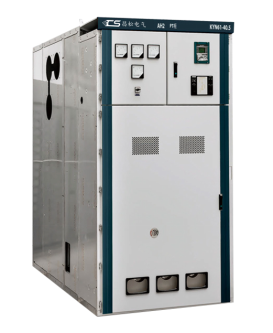
A low upfront price on an electrical enclosure rarely tells the whole story. What looks like a smart budget decision often begins to unravel once the enclosure is installed in a real environment. Thin metal panels dent during routine handling, powder coating flakes near cutouts, and gaskets lose their seal after just a few temperature swings. Each small failure might seem harmless on its own, but together they create a compounding problem: moisture gets in, corrosion starts, and the internal components operate under stress they were never meant to handle.
The hidden costs surface in ways that are easy to overlook until they hit the maintenance log. A door that no longer closes flush lets dust accumulate on terminal blocks, leading to intermittent faults that take days to diagnose. Hinges that loosen over time force technicians to improvise with zip ties or wedges, turning a simple inspection into a frustrating chore. And when a cheap enclosure fails outright, the replacement cost is never just the price of a new box — it includes downtime, labor, and the risk of damaging sensitive equipment that was supposed to stay protected for years.
Wise buyers learn to read between the lines of a spec sheet. Material thickness, gasket material, and coating type are not just technical checkboxes; they are the difference between an enclosure that lasts a decade and one that becomes a recurring line item in the repair budget. Paying more upfront for a properly built enclosure often means paying less over the life of the equipment, because the long-term risk does not disappear when the invoice is paid — it simply moves into the future, where it grows quietly until it becomes impossible to ignore.
Why Local Grid Knowledge Changes Everything
Knowing exactly how power flows through a specific neighborhood—where voltage drops on hot afternoons, which transformers run near capacity, how rooftop solar shifts demand curves—gives grid operators an advantage that generic models can't match. This granular awareness turns guesswork into targeted action, so a heatwave in one district doesn't trigger the same response as a mild evening in another.
Local knowledge also reshapes planning. Instead of pouring money into oversized substations based on regional averages, utilities can reinforce only the weak spots, deferring capital costs for years. Crews dispatched with street-level insight fix recurring faults faster, because they already know the aging splice behind the strip mall or the tree limbs that brush a feeder line every windy season.
The difference becomes most visible during outages. A team that understands local grid behavior can reroute supply around a fault in minutes, not hours, because they've mapped the hidden ties and backup paths that don't appear on standard diagrams. That kind of operational fluency doesn't come from software alone; it comes from years of watching one grid breathe, break, and recover.
When Factory Tests Don't Match Field Conditions
Factory tests are often conducted under tightly controlled conditions that bear little resemblance to the real world. Temperature, humidity, vibration, and even the skill of the operator are all fixed within narrow limits, so a component or system can sail through its certification while still failing on a job site where dust, moisture, and rough handling are the norm.
The mismatch becomes especially dangerous when the test simulates a single stress at a time. In the field, multiple stresses interact: heat accelerates chemical degradation while vibration loosens connections, and humidity turns a minor crack into a short circuit. A module that passes a bench test in isolation may not survive the combined assault of a typical workday.
Field failures often trace back to assumptions baked into the test plan. If the factory only verifies performance at room temperature, it says nothing about how the unit will behave after a cold soak overnight or under direct sun for eight hours. The only way to close that gap is to test against the actual envelope of conditions the equipment will meet—not the comfortable, repeatable conditions of the production floor.
How to Spot Modular Flexibility Before You Buy
Look beyond the marketing phrase “modular” and ask what actually changes without new parts. True modular flexibility means you can rearrange, extend, or replace individual components—like swapping a seat pad, adding a storage pouch, or moving straps—without buying a whole new bag or jacket. If the product only offers color choices or an extra pocket that costs more than the item itself, it is not genuinely modular.
Test the connection points before you commit. Pull on zippers, buckles, rails, or attachment loops and imagine them under real use. A well-designed modular system uses hardware that feels secure but is easy to operate one-handed, and it limits the number of proprietary connectors. If every add-on requires a special adapter or a brand-specific clip, your future options will be narrow and expensive.
Finally, check whether the product’s core structure stays useful when modules are removed. A bag with a removable laptop sleeve should still carry well without it; a stroller with a detachable bassinet should fold cleanly. If removing an accessory leaves exposed seams, dangling straps, or an unbalanced frame, the flexibility is cosmetic rather than functional.
The After-Sales Gap Most Buyers Discover Too Late
The moment a product fails is when its true cost becomes apparent. Yet most purchase decisions are made with eyes fixed on features, price, and delivery time, while the after-sales reality remains an unexamined afterthought. By the time a buyer needs a replacement part or a repair under warranty, the support channels that looked so reassuring on the sales page can turn into a maze of automated responses, outsourced call centers, and prolonged downtime.
The gap often hides in the fine print—limited coverage for the components most likely to break, exclusion of labor costs, or a warranty period that expires just before wear and tear peaks. Some sellers rely on third-party service networks with inconsistent quality, leaving buyers to discover that the promised "lifetime support" means little more than a toll-free number with long hold times. This delayed realization hits small businesses and home users hardest, where a single failed unit can stall an entire workflow.
Closing this gap requires asking uncomfortable questions before paying: What exactly does the warranty cover? Who performs the repair, and where are the parts sourced? What is the realistic turnaround time when something goes wrong? Sellers who welcome these questions tend to be the ones whose after-sales promises hold up after the invoice is paid.
FAQ
Look for full type test certificates covering short-circuit making and breaking capacity, temperature rise, and dielectric performance to IEC 62271 or ANSI/IEEE C37. The reports should come from an independent lab such as KEMA, CESI, or CPRI, not the manufacturer's in-house facility. For arc-resistant designs, ask for internal arc classification reports indicating the accessible side and duration, for instance 31.5 kA for 1 second.
Walk the floor and check for controlled humidity in assembly areas, calibrated torque tools, and traceability tags on circuit breakers and panels. Ask to see the rejection rate data for the last twelve months and how non-conformities are closed. A manufacturer that hesitates to show live production or has no structured corrective action system is often relying on brochure claims.
HV switchgear depends on specialized components like vacuum interrupters, CTs, and epoxy bushings. If the manufacturer sources these from a single region without alternate suppliers, a disruption can stall your project for months. Check where critical raw materials come from and whether the vendor holds buffer stock for at least two full bay assemblies.
Request the average response time for emergency site support in your region and the location of the nearest service hub. Ask for a five-year spare parts price lock and confirm the manufacturer's policy on obsolescence for protection relays and control electronics. A vendor that cannot provide remote diagnostics or local training is likely to leave you dependent on expensive fly-in engineers.
Ask for references from utilities operating under similar fault levels, altitude, humidity, and pollution. A design proven in a coastal substation with salt fog may fail in a high-altitude dry region without adjustment. Request failure statistics, not just delivery records, and contact two end users who ran the equipment for at least three years.
Confirm the panels include pre-wired sensor connections for partial discharge, temperature, and breaker travel, and that the protection scheme supports IEC 61850 with redundant Ethernet. A manufacturer that still relies on hardwired mimic panels and proprietary SCADA interfaces will increase your integration cost and limit predictive maintenance.
For a standard 33 kV GIS bay, expect 16 to 24 weeks from drawing approval to factory acceptance testing. Be wary of promises shorter than 12 weeks unless the manufacturer uses modular platforms with pre-tested components. Insist on a penalty clause for delayed FAT dates and confirm whether the vendor handles transportation to site with proper shock and moisture monitoring.
Review the seismic qualification report to the specific floor response spectrum of your substation, not a generic certificate. For coastal or industrial sites, ask for salt mist test results and confirm the enclosure's IP rating against dust and water. Outdoor installations need UV-resistant gaskets and paint systems proven in similar climates, not just standard powder coating.
Conclusion
Choosing a HV switchgear manufacturer goes far beyond comparing datasheets and price tags. The real distinction lies in whether you are dealing with a power partner who understands your operating environment or merely a parts supplier that ships equipment and disappears. One of the first warning signs appears in enclosure construction—cheap sheet metal and poor gasketing may pass a visual inspection but invite corrosion, condensation, and eventual partial discharge once installed. Equally important is local grid knowledge: a manufacturer familiar with regional fault levels, humidity patterns, and utility practices can tailor protection settings and busbar ratings in ways a generic catalog product cannot. Without this grounding, even a well-known brand can deliver switchgear that meets factory specs yet struggles in the field.
Factory tests, while useful, rarely replicate the thermal cycling, dust, or voltage transients of a real substation. Ask how the manufacturer validates performance under your actual conditions, and whether their design allows modular expansion without a complete retrofit. Busbar joints, breaker compartments, and cable entry points should be reconfigurable as load grows. Finally, look hard at the after-sales reality: response times, spare parts availability, and whether commissioning support includes on-site tuning rather than just a phone line. Buyers who overlook this gap often find themselves stranded after the warranty expires, whereas a manufacturer that plans for the full lifecycle turns a procurement decision into long-term reliability.
Contact Us
Contact Person: Tonglun Chen
Email: [email protected]
Tel/WhatsApp: 8618906642555
Website: https://www.cncsele.com