

DC Circuit Breaker Recommendations for Safe and Efficient Power Systems
2026-07-28
In today's rapidly evolving power systems, selecting the right DC circuit breaker isn't just a technical detail—it's a make-or-break decision for safety and efficiency. Whether you're designing solar arrays, battery storage, or industrial DC grids, the consequences of a poorly chosen breaker can ripple through your entire operation. At Chang Song, we've seen how the right protection turns complex challenges into seamless performance. This guide cuts through the noise, offering practical recommendations that balance real-world demands with long-term reliability. Let's dive into what actually matters when every amp counts.
Key Considerations for Selecting DC Circuit Breakers
Picking the right DC circuit breaker isn't just about matching voltage and current ratings—it's about understanding the quirks of your system. Unlike AC, DC arcs don't self-extinguish at zero crossings, so the breaker's arc quenching method becomes a make-or-break detail. Look beyond the spec sheet and consider real-world factors like load characteristics, ambient temperature swings, and whether you're dealing with steady-state or pulsating currents. A breaker that works flawlessly in a solar array might struggle in a battery storage setup if the time-current curve doesn't align with inrush patterns.
Electromechanical or hybrid? Thermal-magnetic or purely magnetic? The internal architecture dictates how the breaker responds to overloads and short circuits. For sensitive electronics, fast-acting magnetic trips are non-negotiable, while motor-driven applications often need a delayed thermal response to avoid nuisance tripping. Also, don't overlook the interruption capacity—undersizing it is a costly gamble. In DC systems, the available fault current can be deceptively high, especially with low-impedance sources like lithium batteries. Go for a breaker with ample headroom, and verify its performance under your worst-case scenario.
Physical constraints and environmental endurance deserve equal weight. If the installation lives in a marine setting or a dusty industrial shed, corrosion resistance and ingress protection ratings move to the top of your checklist. Mounting style matters too: DIN-rail units simplify maintenance, but panel-mount breakers often handle higher shock and vibration. Finally, factor in auxiliary features like remote trip or status indicators—they might seem like luxuries now, but when you're troubleshooting a 2 a.m. fault, a simple LED can shave hours off downtime.
Comparing Solid-State and Hybrid DC Breaker Technologies
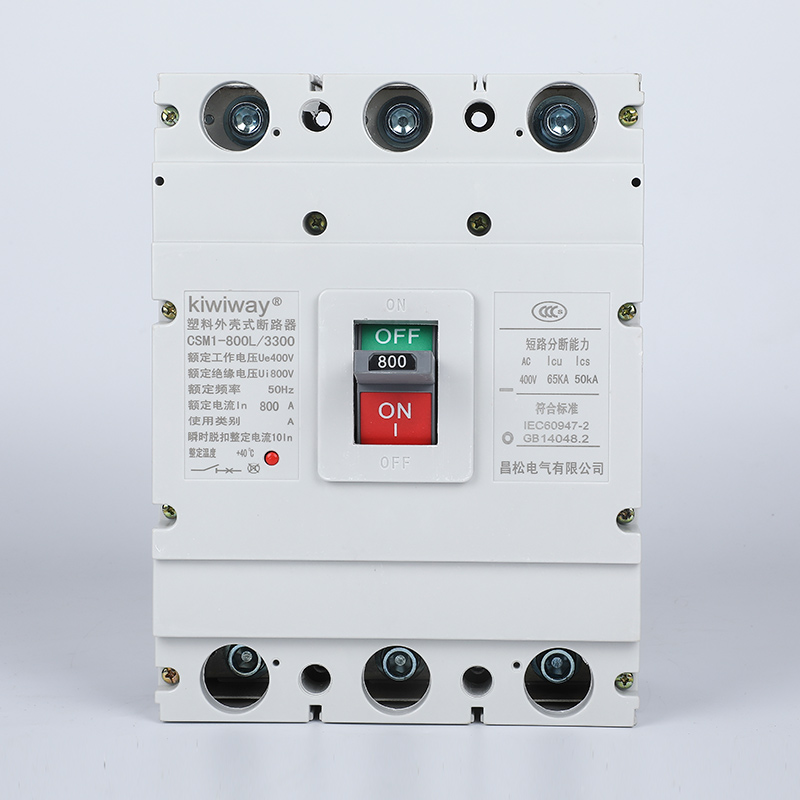
In the realm of direct current interruption, solid-state and hybrid breakers present fundamentally different approaches. Solid-state DC breakers rely entirely on power semiconductors to conduct and interrupt current, offering ultrafast interruption speeds—often within microseconds—and arc-free operation. This makes them ideal for applications where rapid fault clearance is critical, such as in sensitive power electronics or microgrids. However, their on-state losses are notably higher due to the continuous conduction of semiconductors, which necessitates elaborate cooling systems and drives up cost for higher-voltage systems.
Hybrid DC breakers, by contrast, combine a mechanical switch for low-loss normal conduction with a semiconductor-based commutation path for interruption. During a fault, current is rapidly diverted from the mechanical contacts to power electronic devices, which then perform the final break. This design dramatically reduces conduction losses compared to purely solid-state solutions while still achieving interruption speeds in the millisecond range. The complexity of synchronizing mechanical and electronic components, along with higher upfront engineering, can be a drawback, but for medium- and high-voltage DC grids, the improved efficiency often outweighs these challenges.
The choice between these technologies hinges on application priorities. Solid-state breakers excel where speed, maintenance-free operation, and precise current limiting are paramount, albeit at a premium. Hybrid breakers strike a balance, offering efficiency closer to mechanical switches and interruption performance that approaches solid-state speeds. Emerging wide-bandgap semiconductors are further blurring the lines, enabling new hybrid designs with reduced complexity and solid-state devices with lower losses, ensuring that both technologies will continue to evolve and find their niche in modern DC systems.
Integration Challenges in Modern DC Grid Architectures
Bringing together diverse DC sources, storage systems, and loads under a unified grid architecture isn't straightforward. Each component often has its own voltage level, control philosophy, and protection requirements, making seamless integration a serious engineering puzzle. Without careful coordination, you can end up with stability issues, circulating currents, or even equipment damage—problems that AC grids have spent decades solving but that reappear in novel forms with DC.
Another thorny area is the lack of mature, standardized protection gear for DC systems. Unlike AC, where zero-crossing naturally helps extinguish arcs, DC fault currents can sustain arcs much more stubbornly. This means breakers, fuses, and relaying schemes must be completely rethought, and the industry still hasn't settled on universal norms. In multi-terminal DC grids, coordinating protection across different vendors' equipment adds another layer of complexity, often forcing operators to rely on custom, project-specific solutions that don't scale well.
Control and communication add yet more friction. Modern DC architectures often depend on fast, reliable data exchange for power sharing, voltage regulation, and fault management. However, integrating legacy devices with modern digital controllers can be messy, especially when cybersecurity and latency concerns come into play. The absence of a widely adopted plug-and-play framework means each new addition—be it a solar array, a battery bank, or an EV charging cluster—often requires extensive custom engineering, slowing down deployment and increasing costs.
Ensuring Arc Flash Safety in DC Power Systems
DC power systems present unique arc flash hazards that demand tailored safety measures. Unlike AC arcs, DC arcs do not naturally self-extinguish at zero-crossing points, so they can sustain longer and release more energy. This requires a thorough understanding of equipment design and fault currents. Regular risk assessments should account for battery storage systems, photovoltaic arrays, and DC distribution panels, where high fault currents may persist. Proper labeling of equipment with calculated incident energy levels and arc flash boundaries is essential, but it must be updated as system configurations evolve—something often overlooked in the field.
Personal protective equipment (PPE) for DC arc flash is not always one-size-fits-all. While standards like NFPA 70E provide guidance, DC-specific testing is less common, so relying solely on generic tables can be risky. Organizations should invest in customized PPE solutions that match the actual fault current and clearing times of their DC systems. Additionally, tools like remote racking devices and non-contact voltage detectors are underutilized yet critical for minimizing exposure. Training programs need to move beyond basic awareness and include hands-on simulations that replicate DC arc flash scenarios, a gap that many safety programs fail to address.
Prevention also hinges on proper design and maintenance. Installing arc-resistant switchgear and using current-limiting fuses or fast-acting circuit breakers can significantly reduce arc flash energy. But these components must be selectively coordinated to avoid compromising system reliability. Maintenance teams should go beyond standard thermal inspections; they need to verify that connections remain tight and corrosion is managed, particularly in battery rooms where hydrogen accumulation adds explosion risks. Ultimately, a culture of continuous improvement—where near-misses are reported and lessons learned are integrated—is what separates proactive safety management from mere compliance.
Lifecycle Cost Analysis of DC Protection Devices
Evaluating the true economics of DC protection equipment goes well beyond the initial purchase price. A thorough lifecycle cost analysis accounts for expenses that emerge over the entire service life, including installation complexity, energy losses during operation, routine maintenance demands, and eventual end-of-life disposal. For instance, solid-state circuit breakers often command a higher upfront cost compared to traditional electromechanical or hybrid solutions, but their faster reaction times, reduced arc-flash risks, and longer operational lifespans can dramatically lower facility downtime and maintenance overhead in mission-critical DC microgrids or battery storage facilities.
Another layer of cost that is frequently underestimated involves the integration and footprint requirements within a given installation. Compact, modular protection devices that integrate multiple functions—such as surge suppression, fault interruptions, and monitoring—can reduce wiring complexity, save panel space, and simplify compliance with evolving grid codes. While these may carry a premium at the procurement stage, the avoided costs of custom enclosures, additional sensors, and future retrofits often outweigh the initial savings of cheaper, single-function alternatives. Therefore, decision-makers should weigh the total cost of ownership over a 15- to 20-year horizon, considering not only hardware fail rates but also the auxiliary systems needed to sustain reliable operation.
Crucially, a meticulous lifecycle cost approach also factors in the expense of obsolescence and technical support. With the rapid proliferation of DC-based renewable systems, protection devices may become outdated long before they physically fail, requiring software updates or communication module replacements that are rarely covered in basic warranty packages. Choosing suppliers with a clear upgrade path and transparent long-term support policies can protect against surprise expenditures tied to firmware incompatibility or the scarcity of skilled technicians. In the end, the most cost-effective DC protection device is seldom the one with the lowest price tag—it is the one that minimizes cumulative financial impact across its entire lifecycle.
Real-World Performance in Renewable Energy and EV Charging Installations
When you step away from lab conditions and into the field, the numbers often tell a different story. Solar arrays degrade faster than projected in high-humidity coastal zones, while wind turbines in turbulent terrain rarely hit their rated output curves. For EV chargers, the real shock comes from grid instability—voltage sags during peak hours can slash charging speeds by 30%, turning a quick top-up into a prolonged wait. These aren't failures of the technology itself, but a reminder that performance models need to breathe the same air as their real-world operating environments.
Take the case of a mixed microgrid in Arizona that pairs bifacial solar panels with a bank of DC fast chargers. On paper, the system promised 95% uptime and seamless load balancing. In practice, the panels output swung wildly during monsoon dust storms, while the chargers' thermal management systems struggled to keep up with ambient temperatures exceeding 110°F. The fix came not from replacing hardware but from rethinking the control logic—introducing predictive derating based on weather forecasts and historical charger utilization patterns. It's a classic example of how field data reshapes design assumptions.
End users care less about spec sheets and more about reliability under stress. A fleet operator in Norway found that while their chargers boasted 150kW peak rates, actual winter throughput averaged barely half that due to cold-soaked battery chemistry and cable derating. By integrating battery preheating signals into the charging protocol and adjusting cable cooling algorithms, they clawed back nearly 90% of advertised performance. The lesson is clear: genuine optimization happens not in simulation software, but in the messy, unpredictable moments of daily operation.
FAQ
Picking the correct DC breaker isn't just about interrupting current—it's about protecting expensive components, preventing arc faults that can escalate quickly, and ensuring minimal downtime. In systems like solar arrays or battery storage, a poorly chosen breaker can fail to clear a fault, leading to catastrophic damage or fire, so the selection directly impacts both safety and operational efficiency.
The key difference is arc quenching. With AC, the current naturally crosses zero twice per cycle, helping to extinguish arcs. DC current flows continuously, so breakers must forcibly stretch and cool the arc using magnetic blowouts, arc chutes, or vacuum chambers. This makes DC breakers more complex, often larger, and they're typically rated for lower voltages in a single pole since there's no zero-crossing aid.
First, match the breaker's voltage rating to the system's maximum open-circuit voltage, not just the nominal level. Pay attention to the interrupting capacity—it must handle potential short-circuit current from the panels. Also consider the breaker's trip curve; for solar, a slow-blow characteristic may avoid nuisance tripping from inrush, but it must still protect wiring. Environmental sealing and temperature derating are often overlooked but vital for rooftop locations.
Common types include thermal-magnetic, hydraulic-magnetic, and solid-state. Thermal-magnetic breakers are reliable and inexpensive for basic overcurrent protection, but they can be sensitive to ambient temperature. Hydraulic-magnetic units are temperature-stable and good for harsh environments like telecom sites. Solid-state breakers offer precise tripping and remote control, ideal for advanced battery management systems, but they tend to be more expensive and require heat sinking.
Always follow torque specifications on terminals to avoid hot spots from loose connections. Keep adequate spacing for ventilation—DC breakers can generate more heat during normal operation. Use appropriately sized conductors that consider both current rating and voltage drop. If the breaker is in a combiner box, ensure it's not exposed to direct sunlight or rain without a proper IP-rated enclosure. Regular thermographic inspections can catch developing issues before they cause failure.
DC arcs are harder to extinguish because there's no zero-crossing, and they can reach higher temperatures faster, sustaining a plasma channel that damages equipment and risks personnel. DC breakers are designed with arc chutes that split and cool the arc, magnetic blowouts that stretch it, and sometimes vacuum or gas-filled chambers to rapidly quench it. Selecting a breaker with a high interrupting rating and fast trip time is essential, along with proper personal protective equipment during maintenance.
Most manufacturers recommend annual visual inspections for signs of overheating, discoloration, or corrosion on terminals. Mechanical operation checks—tripping and resetting—should be performed every few years, but it's important to de-energize the circuit first. For critical systems, periodic testing with secondary injection equipment can verify trip curves. In dusty or humid environments, more frequent maintenance is needed, and sealed breakers can reduce this burden.
Conclusion
Selecting the right DC circuit breaker demands a holistic view that goes well beyond mere current ratings. Real-world performance in renewable energy and EV charging installations has shown that breaker choice directly impacts system uptime and safety. When evaluating options, it becomes essential to weigh the fast response and low maintenance of solid-state breakers against the fault-current limiting capabilities of hybrid designs—each excelling in different grid scenarios. Yet modern DC grid architectures introduce their own set of integration headaches, from coordinating with bidirectional power flows to managing stray inductance that can compromise breaker coordination. Arc flash safety further complicates the picture; DC arcs lack natural zero-crossings, so breakers must incorporate specialized arc chutes or electronic arc quenchers to prevent catastrophic failures. Ignoring these factors leads to designs that are either oversized and costly or dangerously under-protected.
A lifecycle cost analysis often reveals that paying a premium upfront for advanced DC protection pays off over time. Maintenance savings, reduced downtime, and extended equipment life tilt the balance in favor of breakers with diagnostic capabilities and selective coordination features. For instance, in solar farms, a well-chosen DC breaker prevents cascading faults during the night-to-day transition when voltage ramps could otherwise blind-side traditional protection. Similarly, in fast-charging EV hubs, breakers must handle frequent high-current switching without degrading, all while fitting into compact enclosures. The recommendation is clear: prioritize breakers that have been validated under pulsed load and real fault conditions, not just laboratory standards. By aligning breaker selection with actual stress profiles and long-term operational goals, engineers can build power systems that are both intrinsically safe and economically efficient.
Contact Us
Contact Person: Tonglun Chen
Email: [email protected]
Tel/WhatsApp: 8618906642555
Website: https://www.cncsele.com