

Best Digital Trunking Systems to Enhance Your Communication Network
2026-11-16
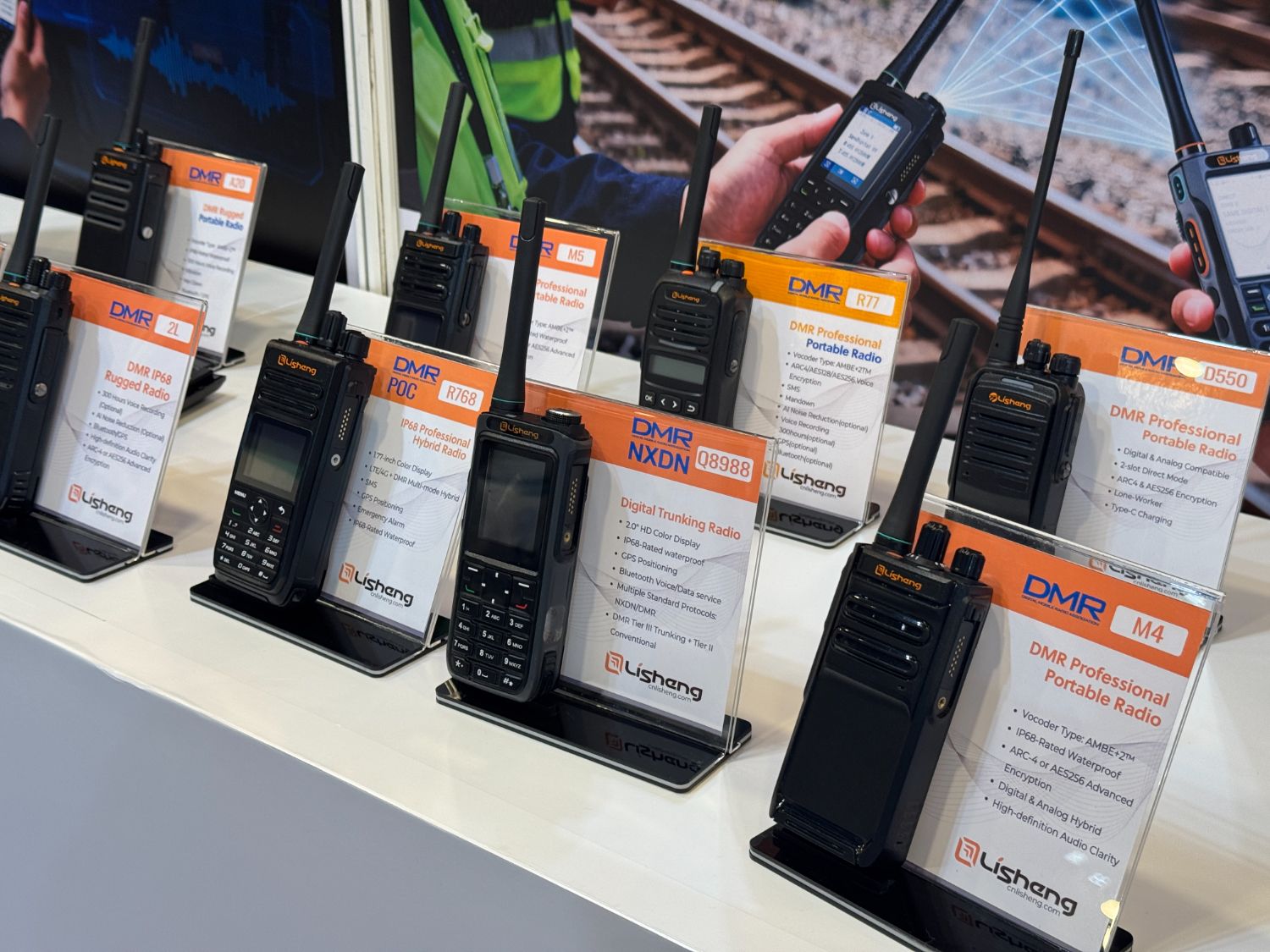
In a world where seamless communication can make or break your operations, choosing the right digital trunking system isn’t just a tech upgrade—it’s a strategic move. From busy transportation hubs to mission-critical field response, the demand for crystal-clear voice, instant group calling, and reliable coverage has never been higher. And while many options promise connectivity, few deliver the tailored performance and rugged dependability required in real-world scenarios. Enter lisheng, a brand quietly powering some of the most demanding communication networks with digital trunking solutions that prioritize both clarity and resilience. In this article, we’ll unpack the key features that separate advanced digital trunking platforms from the rest, and explore how the right system—like those built by lisheng—can transform your network into a true operational backbone, not just another link in the chain.
What Sets Modern Trunking Apart from Yesterday’s Radio Networks
Older radio networks were built around dedicated channels—one for police, one for fire, one for public works. When a channel was busy, you waited. That rigid setup meant capacity was tied directly to the number of assigned frequencies, and a lot of airtime sat unused while other talkgroups were queued. Modern trunking flips this entirely. Instead of fixed assignments, a pool of channels is shared dynamically across many users and talkgroups. A controller assigns an available frequency in milliseconds whenever someone keys up, then reclaims it the instant the transmission ends. The result is far more efficient use of spectrum, with far fewer blocked calls.
Yesterday’s systems were largely hardware-anchored—a repeater on a hill, a console with physical buttons, maybe a basic voting comparator. Changing anything meant rolling a truck. Today’s trunked networks are software-defined at their core. Roles, priorities, and talkgroup affiliations can be reconfigured remotely. If an incident commander needs a temporary patch between agencies, it happens through a management application, not a wiring change. This flexibility also extends to resilience: modern architectures often use geographically separate controllers and link paths, so a single-site failure doesn’t bring the whole network down.
Perhaps the most overlooked difference is how trunking handles data and integration. Old networks carried voice and maybe low-speed signaling. A modern trunked system treats each site as an IP node. It natively shuttles messaging, GPS location, telemetry, and even video snapshots alongside voice, without stealing a voice slot. Dispatchers see real-time unit positions on a map, officers receive silent text alerts, and sensors trigger automatic talkgroup reconfigurations—all through the same backbone. This convergence breaks the wall between field communications and situational awareness, creating something closer to a mobile command environment than a simple radio link.
Architecture That Keeps Channels Flowing in High-Demand Scenarios
When a live match or a flash sale suddenly draws millions of concurrent viewers, the real test isn't peak capacity—it's how gracefully the system absorbs the spike without flushing everyone into a waiting room. A well-designed channel architecture leans heavily on distributed edge ingestion, breaking incoming streams into tiny choreographed segments that can be fanned out across regional nodes before a single origin server ever feels the heat. This means the moment a viewer taps “play,” they’re already being handed a fragment from a nearby cache that barely blinks, even when the crowd multiplies tenfold in under a minute.
Under the hood, adaptive bitrate layers and just-in-time packaging do much more than save bandwidth. They act like a pressure relief valve, letting each device negotiate its own smooth flow without slowing down the whole pipeline. Instead of a monolithic feed struggling to keep up, the architecture treats every resolution variant as an independent streamlet that can be assembled on the fly—so a sudden wave of mobile users tuning in from shaky networks doesn’t choke the 4K audience on fiber. Paired with intelligent origin shielding, where successive requests for the same segment are collapsed into a single fetch, the setup stays remarkably quiet under load, avoiding the thundering herd problem that sends many platforms into a tailspin.
What often goes uncelebrated is the role of observability baked directly into the delivery path. Real-time telemetry from each edge point feeds a control plane that can reshuffle traffic, pre-warm caches, or shift transcoding responsibilities long before buffering icons appear on a single screen. This isn't static load balancing; it's a living map where the system reads audience movements as they happen—like a surge in a single city during a local event—and adjusts the topology accordingly. The result feels invisible by design: a channel that simply stays open, frame after frame, regardless of how many people decide to show up at once.
How Smart Allocation Prevents Bottlenecks Before They Happen
Allocation isn't just about distributing resources evenly—it's about reading the hidden signals of a system before pressure builds. When every request, thread, or unit of work is routed with an understanding of current load and capacity, that's where bottlenecks lose their power. Instead of waiting for queues to form or latencies to spike, a smart allocation layer constantly reshapes traffic patterns, leaning away from saturation points toward underutilized paths. That means the bursty workload that would normally choke one service becomes a non-event, quickly absorbed by elastic capacity and dynamic rebalancing.
What sets truly proactive allocation apart is its feedback loops. Rather than relying on static thresholds or manual overrides, the system watches response times, error rates, and resource headroom in near real time. It learns that a particular node slows down slightly before it starts dropping requests, and shifts weight away early. This isn't machine learning hype—it's operational intuition encoded into routing decisions. The result is a kind of embodied intelligence where the infrastructure itself knows how to avoid the edge of congestion, defusing hot spots while they're still subtle anomalies.
In practice, this shows up in design patterns like token-based admission control, weighted load balancing with health-aware scoring, and capacity-aware scheduling. But the real magic is in the invisible coordination: the way a database connection pool adjusts its maximum in response to upstream backpressure, or how a message broker redistributes partitions before a consumer falls behind. These silent adjustments mean developers and operators aren't woken up by preventable incidents. The system's resource choreography ensures that demand meets tailored, responsive supply long before a queue ever has a chance to stack up in the dark.
Encryption and Resilience: Building a Network People Can Count On
Encryption alone isn't enough—true network resilience means designing systems that expect failure and still deliver. When we talk about building infrastructure people can count on, we look beyond ciphers and keys to the quiet architecture that keeps data moving even when parts of the system go dark. It’s the difference between a service that merely scrambles bits and one that refuses to buckle under pressure, rerouting traffic through healthy paths without the user ever noticing a hiccup.
Modern networks stitch together layers of defense that function like a living organism, not a static fortress. Transport-level encryption guards each hop, while redundant nodes and diversely routed fibers ensure no single accident or targeted cut can isolate a region. This blend of confidentiality and survivability changes the conversation from “how strong is the lock” to “how well does the house stand during a storm.”
What earns long-term trust isn't a marketing promise—it’s the evidence that the network has absorbed countless shocks and kept its promises. That means regular stress testing, transparent incident reports, and an engineering culture that treats every outage as a design flaw rather than an unlucky event. When encryption and resilience evolve together, the result isn’t just a secure pipe; it’s a fabric of connectivity that communities, businesses, and first responders can lean on without second thought.
Scalability Plays That Match Your Growth, Not Vendor Roadmaps
Growth rarely unfolds like a vendor slide deck. The tools you choose should flex around your actual trajectory, not somebody else’s feature calendar. When scalability is dictated by a roadmap you don’t control, you’re already building technical debt into next quarter’s goals. The alternative is a stack that scales out, up, or sideways based on usage signals—not annual license upgrades or promised integrations that never seem to leave beta.
This means looking past the headline numbers. A platform might boast infinite sharding, but if the operational burden doubles every time you add ten nodes, the scalability is an illusion paid for by your team’s sleep. Genuine alignment comes from tooling that absorbs complexity, letting your architecture grow organically. Think autoscaling that respects stateful workloads, replication that doesn’t choke on cross-region latency, and pricing that doesn’t punish you for hitting milestones that were once aspirational.
The companies that scale smoothly tend to bet on composable primitives rather than monolithic suites. They pick persistence layers that don’t demand a full rewrite when throughput spikes, queues that degrade predictably instead of dropping messages silently, and observability that stays coherent when the topology shifts. The common thread is a refusal to let a supplier’s quarterly earnings call determine your engineering cadence. Your growth story should write its own scaling playbook, and the technology underneath should feel like it was listening.
Real-World Deployments Where Trunking Silenced the Noise
A municipal transit hub in Chicago faced constant radio congestion during peak hours—dispatchers, maintenance crews, and security all competing for airtime. After deploying a trunked radio system, the chatter became structured. Talk groups automatically assigned available channels, so a stalled train alert no longer had to wait behind a janitorial request. The result wasn’t just clearer audio; response times dropped by nearly a third because frontline staff finally got through on the first attempt.
Over at a sprawling port complex in Rotterdam, crane operators and vessel coordinators had grown accustomed to garbled overlaps that occasionally led to near misses. Switching to digital trunking with dynamic channel allocation turned the tide. The system prioritized safety calls instantly, while routine logistics hummed in the background. Within months, incident reports tied to miscommunication fell sharply, and the control room noticed something unfamiliar: stretches of silence where there used to be static and cross-talk.
An unlikely success unfolded across a rural sheriff’s network in New Mexico. With a small budget and vast terrain, they retired aging repeaters and adopted a regional trunking protocol shared with neighboring counties. Suddenly, a pursuit crossing jurisdictional lines didn’t mean swapping radios or relaying through dispatchers. Car-to-car conversations stayed intact, and the background noise of overlapping rural channels simply disappeared. Deputies described it as “the moment the radio finally shut up and let us work.”
FAQ
Think of a conventional radio as a dedicated lane on a highway—it's reserved for one group and sits idle when they're not talking. A digital trunking system is more like a smart freeway that dynamically assigns lanes to whoever needs them at that moment. It automatically pools a bunch of frequencies and allocates them on the fly, so you get far more capacity out of the same number of channels, plus clear digital audio and advanced features like private calling or text messaging.
It really depends on who controls the backbone. With digital trunking, you own the infrastructure—the towers, the repeaters, the core network. That means no monthly per-user fees, zero reliance on a commercial carrier's uptime, and the ability to prioritize critical voice traffic during an emergency when cell towers might be congested or down. PTT over cellular is great for convenience, but trunking gives you autonomy and bulletproof reliability on your own terms.
Site coverage works similarly to a cellular grid but you design it yourself. A single high-site can easily cover 15 to 30 miles in open terrain. In urban areas, you rely on multiple linked sites to blanket the city. Because the technology uses low-bit-rate vocoders and robust error correction, you often get usable voice at the fringes where an analog signal would just dissolve into static. The real game-changer is seamless roaming between sites—a vehicle crew can drive across town without dropping a call.
This is where priority levels and graceful degradation kick in. You assign each talkgroup a priority, so in a pinch, the dispatcher and emergency team automatically get channels ahead of general traffic. If all channels are busy, lower-priority users are queued with a busy tone until one frees up. Some systems can even dynamically regroup users, preempting non-essential calls. It's designed to scale gracefully under pressure, not collapse into a free-for-all.
Modern digital trunking protocols absolutely support data alongside voice. You can transmit GPS coordinates for AVL (automatic vehicle location), short text messages to radios, or telemetry from remote equipment—all on the same channel. It's not going to stream Netflix, but for low-bandwidth SCADA commands, lone-worker status updates, or license plate lookups, it's perfectly adequate and far more secure than bolting on a separate cellular modem.
Start with your use case and regulatory environment. If you're a public safety agency in North America, P25 is the mandated interoperability standard. For commercial, industrial, or utility networks, DMR Tier III is cost-effective and widely available. TETRA shines in dense, mission-critical environments like large airports or mass transit, and it's dominant in Europe. Don't get hung up on specs alone—evaluate the vendor's roadmap, the ecosystem of accessories and software, and long-term support. A technically superior system with a dying supply chain is a bad investment.
Much more secure than legacy analog, for sure. Encryption is usually baked in—AES-256 is common, and it effectively scrambles both voice and data at the air interface. Beyond that, the system can authenticate every radio before it's allowed on the network, so a stolen unit can be remotely stunned or killed. Just remember that no wireless system is 100% impenetrable; you still need good key management practices. But casual scanning by a guy with a cheap SDR dongle? Not happening on a properly configured system.
Conclusion
The leap from yesterday’s scattered radio nets to today’s digital trunking isn’t just about clearer audio—it’s a fundamental shift in how a network thinks. Modern platforms pool every sliver of bandwidth into a single logical resource and assign it the moment a transmission begins, which means dead air on one talkgroup instantly becomes capacity for another. This on-the-fly sharing is anchored by architectures that strip away centralized bottlenecks, distributing call control and media routing so that even during a multi-agency emergency, the system never hesitates. Under the hood, adaptive channel allocation algorithms read traffic patterns in real time, preemptively opening or repurposing paths before a queue can form. The result feels invisible to the end user: a radio key-up that always wins a slot, whether the network is serving fifty users or five thousand.
That engineering backbone only matters if it holds up when stress hits, which is why end-to-end encryption and rugged failover designs have moved from optional layers to core requirements. Leading trunking deployments weave in hot-standby controllers and geographically diverse sites so that a single equipment loss barely blips on the operator’s console. Just as critical, these platforms scale on their own terms—adding another ten sites should be a configuration change, not a forklift upgrade dictated by a vendor’s product calendar. Field experiences back this up: from volatile mining pits where constant machinery noise once drowned out critical alarms, to dense urban festivals that used to collapse conventional repeaters, well-tuned trunking has consistently carved out clear lanes. It’s the quiet disappearance of congestion, the routine reliability that lets teams forget the system is there—exactly the kind of silence that speaks volumes about a network’s strength.
Contact Us
Contact Person: andrea
Email: [email protected]
Tel/WhatsApp: (+86)13960400802
Website: https://www.lishengradio.com/