

Best Autonomous Handling Practices That Transform Warehouse Efficiency
2026-08-13
Warehouse managers often chase marginal gains in picking speed or layout tweaks, yet the biggest leap in throughput rarely comes from those adjustments. It comes from rethinking how goods move without human intervention—where autonomous handling turns bottlenecks into continuous flow. The right practices don’t just add robots; they rebuild routines around real-time data, safety zones, and predictive maintenance. HANGCHA’s autonomous fleet demonstrates this shift bluntly: fewer idle hours, fewer collisions, and a floor that adapts to demand spikes instead of crumbling under them. But which practices actually deliver that transformation—and which ones waste your integration budget? Let’s cut through the noise.
Let Robots Reroute Themselves Out of Trouble
When a delivery robot rolls into a construction site or a warehouse aisle suddenly blocked by a fallen pallet, pausing to phone home isn't an option. The latest onboard planners treat detours as a live negotiation with the environment: they keep a rolling cost map of every curb, slick patch, and moving forklift, then re-score possible paths several times per second. If the preferred corridor closes, the robot doesn't start from scratch—it bends the existing route around the obstacle, preserving momentum and battery while respecting safety envelopes.
Some designs now push this further by letting robots learn from near misses. A unit that repeatedly gets squeezed near a loading dock will gradually shift its default approach angle, even without a new software release. Field trials in hospital corridors and solar farms show the same pattern: trouble stops being a hard stop and becomes a signal to re-plan. The result is fewer human interventions, less idle time, and a machine that handles messy, changing spaces without being told exactly what to do next.
Why Your Forklift Drivers Will Love Collaborative Bots
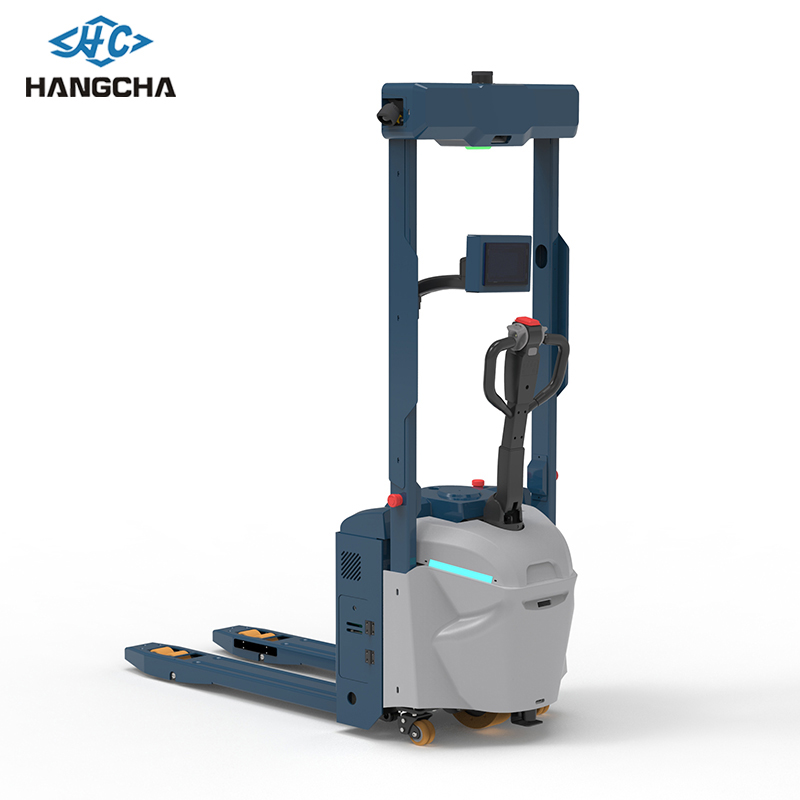
Forklift drivers often spend hours scanning aisles, double-checking inventory locations, and waiting for pick lists to update. Collaborative bots change that rhythm by handling the repetitive scanning and data entry in real time, allowing drivers to focus on the actual movement of goods. Instead of stopping to key in a bin code or confirm a quantity, the driver simply follows the bot’s subtle guidance—a projected light pattern or a small display mounted near the forks. The mental load drops, and the shift feels less like a data-entry job and more like skilled machine operation.
Beyond the reduced paperwork, these bots act as a second pair of eyes that never fatigue. A collaborative bot can flag a misplaced pallet before the driver even reaches the rack, or alert them to a narrow aisle obstruction that might have gone unnoticed during a busy shift. That kind of proactive assistance builds trust quickly; drivers stop seeing the bot as a surveillance tool and start treating it as a partner that makes their route smoother and safer. Over time, this leads to fewer frustrated stops, fewer backing maneuvers, and a noticeable drop in the micro-stress that accumulates over an eight-hour shift.
Perhaps the biggest shift is in how drivers view their own expertise. With a collaborative bot handling the monotonous verification steps, the driver becomes the decision-maker for priority, traffic flow, and load stability—areas where human judgment still outperforms automation. The result is a sense of mastery rather than monotony. When a bot quietly confirms that a load is balanced and the next pick is ready before the driver asks, it feels less like being replaced and more like having a well-trained spotter who never takes a break.
Stop Wasting Battery Life on Empty Runs
Every mile your vehicle travels without a real purpose quietly drains the battery and pushes up operating costs. Those short “just in case” detours, the extra loop around the block, or heading out before confirming a pickup all add up faster than most drivers realize. Instead of letting the battery drain on trips that produce nothing, plan each departure around a confirmed need. A few seconds spent checking your schedule or consolidating errands can easily cut out the empty miles that silently eat into your range.
Look at your route habits and ask where the dead miles come from. Often they’re the result of vague planning—leaving without a firm destination, driving back empty after a drop-off, or making separate trips for tasks that could be combined. By batching pickups, confirming drop-offs before you start, and avoiding the temptation to “just go check,” you keep more energy in the pack for the runs that actually matter. Over a week, that simple shift can save a surprising amount of battery life without changing how far you drive when it counts.
The Maintenance Trick That Keeps Automation Humming
Most automation lines die a slow death from skipped lubrication, not sudden part failure. The trick is to treat linear rails and ball screws like you would a bicycle chain: a quick wipe-down and a thin film of fresh grease every forty hours of runtime. Dust from cardboard, plastic shavings, and even floor sweepings mixes with old lubricant into a gritty paste that forces motors to work harder. Once that paste builds up inside a bearing block, no amount of recalibration will fix the drift. A five-minute wipe with a lint-free cloth, followed by a pea-sized dab of synthetic grease on each rail, keeps the motion profile smooth and the servo amps from spiking.
What makes this maintenance trick stick is putting a small red tag on the machine’s HMI screen that counts down operating hours. When the counter hits zero, the line stops for ten minutes, no exceptions. Operators hate unscheduled downtime, but they will accept a planned pause if you show them the amp draw before and after cleaning. One plant I visited cut its annual servo replacement cost by a third just by assigning this task to the first-shift technician instead of leaving it to chance. The trick is not the grease itself; it is making the routine impossible to ignore.
Sync Inventory in Real Time, Not at Shift End
Waiting until the end of a shift to update stock counts means every sale, return, or misplaced item from the past eight hours remains invisible to the team. A customer asks if a particular size is still in the back, and the system still shows yesterday's numbers. Staff either guess or walk away to physically check, and that delay often costs the sale.
Real-time inventory syncing removes that gap. The moment a barcode is scanned at checkout or a delivery is received, the count changes everywhere—on the floor, in the back room, and on any online channel. That means no more selling an item that isn't actually there, and no more turning away a customer because the system hasn't caught up yet.
Beyond accuracy, this shift changes how a store operates. Employees stop doing nightly reconciliations or manually updating spreadsheets. Instead, they spend time restocking, helping shoppers, and spotting trends before they become problems. Inventory becomes a live part of the business rather than a chore to catch up on.
Design for Peak Season Without Overbuilding
Planning for peak season usually triggers a knee-jerk push to add capacity — extra servers, bigger warehouses, more seasonal hires. But that approach often leaves you paying for idle resources the other ten months of the year. A smarter path is to design systems that flex instead of balloon. Think about variable-cost levers you can pull only when demand spikes: temporary pop-up fulfillment nodes, time-boxed outsourcing agreements, or cross-training core staff so they can shift into high-demand roles without permanent headcount changes.
The key is to map your true peak capability against realistic demand curves, not worst-case fantasies. Many teams overbuild because they confuse a two-week surge with a six-month trend. By segmenting your peak into micro-windows and assigning each a targeted response — express shipping lanes during the first rush, delayed restocking for the long tail — you can absorb 90% of the pressure with a fraction of the fixed investment. This keeps your base operations lean while creating a modular overflow layer that activates only when order volume crosses a pre-set threshold.
Another overlooked lever is rethinking the product mix itself. During peak season, simplify your offering: promote items with similar pick paths, bundle slower movers with fast sellers, or temporarily suspend customizations that eat capacity. This reduces strain on your existing infrastructure without adding a single square foot of space. Combined with dynamic staffing schedules and shared logistics partnerships, you can deliver a peak-season experience that feels robust to customers while your internal footprint stays deliberately compact year-round.
FAQ
It usually comes down to a few proven moves: autonomous mobile robots that shuttle totes or pallets between zones, automated guided vehicles for repetitive long hauls, and robotic picking arms that work same-aisle with human pickers. The biggest gains show up when you pair those tools with warehouse management software that assigns tasks dynamically instead of following rigid schedules.
Most warehouses lose hours to pickers walking empty-handed. Autonomous mobile robots shrink that by bringing shelves to pack stations or by following optimized routes that avoid choke points. Some setups let robots drop completed orders at a central sortation hub, so staff stay in one zone and keep working.
Start with a pilot in a single process, like returns sorting or replenishment. Pick one narrow lane, map the current travel distances and error rates, then run an AMR pilot for four to six weeks. That gives you hard numbers on throughput and downtime without committing to a facility-wide rollout.
No, the most successful implementations treat robots as a buffer for walking and lifting. People shift into exception handling, quality checks, and overseeing multiple robots at once. In many cases, the same team handles higher order volumes with fewer repetitive strain injuries.
High-density, fast-moving operations with lots of SKUs and same-day shipping deadlines see the strongest results. If your pickers regularly cross the entire floor just to grab one item, autonomous shuttles or robotic carts can restructure that flow. Multi-level mezzanines also respond well because robots can use vertical lifts without fatigue.
Integration with the existing warehouse management system often costs more than the robots themselves. You also need to budget for floor updates (smooth surfaces, clear markings), wifi coverage, charging stations, and staff training. Forgetting those can stall a deployment for months.
Track orders shipped per labor hour, average pick cycle time, travel distance per order, and incident rates. Compare the pilot area against a control zone. If the autonomous zone doesn't show a 20–30% labor efficiency gain within the first quarter, the process or layout likely needs adjusting.
Conclusion
Warehouse efficiency stops being a boardroom slide and starts on the floor when autonomous systems are allowed to make their own path choices. Instead of treating robots as fixed-route carts, the best operations let them sense congestion and reroute around trouble before it becomes a bottleneck. That same respect for intelligence extends to people: forklift drivers quickly learn that collaborative bots are not there to take their jobs but to handle the repetitive, low-value moves, which keeps drivers in the cab and batteries out of the red. Empty runs are the silent killer of autonomous fleets, so smart dispatch logic now prioritizes loaded travel and uses idle time for opportunistic charging rather than deadheading across the dock.
What keeps all this moving is not just software but maintenance that predicts wear instead of reacting to a broken sensor. A ten-minute calibration check during shift overlap often prevents an hour of downtime later. Inventory accuracy follows the same real-time rhythm: when cycle counts happen continuously through RFID or vision systems rather than at the end of a shift, the whole operation plans from a live picture, not a stale one. Finally, building for peak season no longer means pouring concrete for volumes you might hit twice a year. Modular staging, adjustable robot zones, and flexible picking cells let a warehouse flex upward without overbuilding, so the automation pays for itself even in the slow months.
Contact Us
Contact Person: Liuxue
Email: [email protected]
Tel/WhatsApp: +86-19084200370
Website: https://www.hf-ec.com/