

Air Cleaner Supplier Shares How to Select the Best Air Purification System for Your Home
2026-09-02
Most “air purifier buying guides” read like they were written by a robot with a spec sheet. So we went straight to the source—an air cleaner supplier who's spent years helping real homeowners fix real air quality problems. What follows is the no-fluff advice you actually need: how to match the unit to your room, which filters earn their keep, and why cheap replacement costs matter as much as the upfront price. When you're ready to stop second-guessing, check out LUFUTATECH for systems that hold up long after the marketing wears off.
What's Actually in Your Home's Air Might Surprise You
You might assume your home is a clean-air sanctuary, but the reality is often messier. Everyday activities like frying an egg, burning a scented candle, or even just sitting on a couch can release a cocktail of particles and gases you’d never expect.
Consider that new furniture smell: it’s often formaldehyde and other volatile organic compounds off-gassing from adhesives and finishes. Meanwhile, the cozy throw pillow can be a reservoir for dust mites and their waste, which easily become airborne when you fluff it.
Even your cleaning routine can backfire. Mixing certain products or using aerosol sprays introduces fine particles that linger long after surfaces look spotless. A quick airing out—opening windows for ten minutes a day—does more than any scented spray ever could.
The Difference Between Real HEPA and Marketing Hype
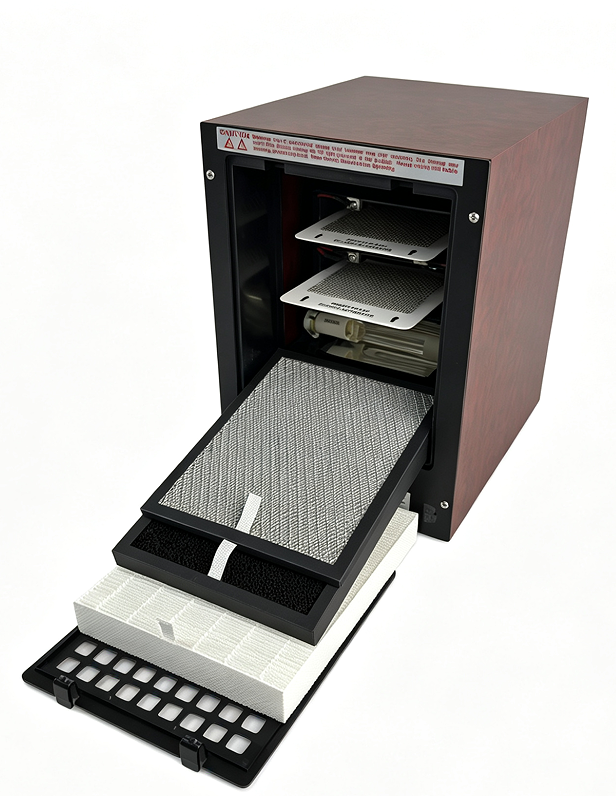
When you see the letters HEPA on a box, it’s easy to assume you’re getting serious filtration. But plenty of manufacturers play fast and loose with the term. Products labeled “HEPA-like” or “HEPA-type” often fall short of the mark, and that’s where the confusion begins. The word itself gets thrown around so casually that it starts to lose meaning, leaving buyers unsure whether they’re getting a genuine filter or just a clever name.
A true HEPA filter has to meet a strict benchmark: capturing at least 99.97% of particles down to 0.3 microns in size. That’s the number independent labs use for certification, and it’s not negotiable. Filters that don’t hit this threshold simply aren’t HEPA, no matter how convincing the packaging looks. The gap between a real high-efficiency filter and a cheaper imitation can be huge, especially for anyone dealing with allergies or respiratory issues.
To cut through the hype, look for specific certification labels rather than vague promises. If a product only mentions “HEPA-style” filtration without a clear test report, treat it with a healthy dose of skepticism. Genuine HEPA filters are built to a documented standard, not a marketing slogan. Taking a few extra seconds to verify the actual spec can save you from paying a premium for something that doesn’t deliver.
Match the Purifier's Airflow to Your Room, Not Your Whole House
Most people size an air purifier based on the square footage of their entire home, but that's rarely how cleaning actually works. The unit sits in one room, pulling air from that room and pushing it back into that same space. If your bedroom is 180 square feet and your house is 1,800, buying a model rated for the whole house just means you're paying for capacity you'll never use in that doorway-closed, overnight scenario.
Instead, measure the room where you'll actually run the purifier most. Multiply length by width by ceiling height to get cubic feet, then look for a unit whose air delivery rate can cycle that volume at least four times per hour. A smaller unit running on medium in a 150-square-foot office often delivers cleaner air than a massive machine on low in a large open-plan area, simply because it's recirculating the right amount of air for that specific space.
Choosing this way also cuts down on noise and energy waste. An oversized purifier in a small room tends to blast air past you, create drafts, and hum louder than necessary. Matching airflow to the room lets the unit work in its efficient mid-range, which is usually quieter and cheaper to run. If you need coverage in several rooms, two well-matched smaller purifiers often outperform a single monster unit.
Why the Quietest Setting Could Be the Most Important Spec
Most buyers chase raw numbers—horsepower, lumens, gigabytes. Yet the setting you barely notice often shapes daily experience more than any headline figure. Noise output is not just a comfort metric; it is a sign of mechanical refinement, build quality, and long-term durability. A machine that runs quietly under load suggests tighter tolerances, better dampening, and less wasted energy vibrating its own frame instead of doing the job.
Think about where the device actually lives. A dishwasher in an open-plan kitchen, a fan in a bedroom, a laptop in a library. The difference between 40 and 50 decibels may look tiny on paper, but every 10 dB increase roughly doubles perceived loudness. Suddenly that small numerical gap decides whether you can hold a conversation, fall asleep, or focus for more than ten minutes. Quiet operation stops being a luxury and becomes the invisible backbone of usability.
Manufacturers often bury noise ratings in fine print, but they reveal more than marketing promises. A low decibel number typically means the engineers prioritized component selection, airflow design, and vibration isolation—choices that ripple through the entire product. If a brand sweats the sound profile, chances are they have also sweated the parts you cannot hear but will eventually feel.
The Real Cost of Clean Air Is in the Replacement Filters
When you buy an air purifier, the sticker price rarely tells the whole story. The machine itself might seem affordable, but the ongoing expense of replacement filters quickly adds up. Over a few years, those filters can cost more than the unit did originally.
Manufacturers often sell the device at a low margin and make their profit on proprietary filter cartridges. If you don't replace them on schedule, the purifier loses efficiency and may even blow dirty air back into the room. So the real financial burden isn't the upfront cost—it's the subscription-like filter cycle.
Smart shoppers should calculate the total cost of ownership by checking filter lifespan and price before buying. Some models use washable or long-life filters, but many don't. Either way, the true cost of breathing clean air at home is measured in what you spend every six to twelve months, not what you paid on day one.
Look for These Certifications and Avoid Ozone Claims
A meaningful air purifier purchase often comes down to third-party badges rather than box claims. The AHAM Verifide mark is one to prioritize, since its CADR numbers let you directly compare how quickly different units pull smoke, dust, and pollen from a room. An Energy Star label also helps keep long-term electricity use in check. For ozone specifically, look for CARB certification or UL 2998, both of which confirm the machine emits little to no ozone during operation.
Some brands still lean on words like “ozone,” “activated oxygen,” or “plasma” to suggest deeper cleaning. That should raise a flag. Ozone is a respiratory irritant that can cause coughing, throat irritation, and shortness of breath, even in small amounts. Terms like “ionizer” or “electrostatic precipitation” often mean the device produces ozone as a byproduct. If you see those claims, move on. A properly certified unit cleans air without adding anything harmful to it.
FAQ
Measure your room size and compare it with the unit's recommended coverage area. Many people buy a small model for a large living room and wonder why the air doesn't feel different.
True HEPA filters are great for trapping fine particles like dust and pollen, but if odors or chemicals are your main concern, look for a model with a substantial activated carbon layer as well.
It depends on your air quality and usage, but most homes should plan on every six to twelve months. If you have pets or live near a busy road, you may need to replace them sooner.
Not necessarily. CADR tells you how quickly it cleans a certain room size, but a very high CADR in a small bedroom can just mean more noise and energy use than you need.
Placing the unit against a wall or behind furniture blocks airflow. Give it at least a foot of clearance on all sides so it can pull in and push out air freely.
In most cases, no. Air purifiers work best in the room where they are placed, so you would need to move it or use multiple units for whole-home coverage.
Price often reflects brand or smart features, not cleaning power. Focus on filter quality, room coverage, and fan speed settings rather than the price tag alone.
Look for a model with a low decibel rating on its sleep setting. Some units are quieter than a whisper, while others can be distracting even on low.
Conclusion
As a supplier, I've watched too many people buy an air purifier based on a box label or a flashy demo, then wonder why their allergies didn't improve. The problem usually starts with room sizing. Your living room isn't the same as your bedroom, and a unit rated for 500 square feet won't help much in a small home office if the airflow pattern is wrong. Check the clean air delivery rate for the room you actually spend time in, and pay attention to the lowest fan setting, because that's the one you'll use overnight. If it's noisy enough to bother you, you'll switch it off and get zero benefit. Also, ask what's truly being filtered: real HEPA means a specific standard, not just a word on the side of the box.
But the machine itself is only half the story. Replacement filters are where the real long-term cost hides—some budget units need new filters every four months, and two replacements can cost more than the original purchase. Before you buy, check the filter price and how often it must be changed. Also look for certifications from organizations like AHAM or Energy Star, and avoid any model that mentions ozone generation or leans heavily on ionizer claims. Those features can introduce lung irritants instead of removing them. A trustworthy supplier will show you the test data, filter pricing, and noise levels for the lowest setting without being asked. That's the kind of detail that separates a purifier that actually helps from one that just looks good in the store.
Contact Us
Contact Person: Paul Luo
Email: [email protected]
Tel/WhatsApp: 0086-19966314501
Website: https://www.lufutatech.com