
3D TPU Heat Transfer Label Solutions: Achieve Premium 3D Texture and Durability
2026-11-02
Have you ever run your fingers over a garment label and felt a raised, tactile design that simply refuses to peel or fade? That’s the promise of 3D TPU heat transfer labels—and with Victorygen heat transfer label, it’s a promise kept. In a market flooded with flat, forgettable tags, achieving a truly premium 3D texture with lasting durability isn’t just a nice-to-have; it’s how your brand stands out. Whether you're elevating sportswear, outdoor gear, or fashion accessories, the right heat transfer solution can transform a basic label into a tactile brand statement. Below, we’ll explore what makes 3D TPU the go-to choice and why Victorygen’s approach delivers depth that doesn’t quit.
Where Flat Transfers Fall Short and 3D TPU Steps In
Flat transfers look fine on a mockup, but real-world wear tells a different story. The printed layer is thin and rigid once cured, so every bend of the fabric stresses the edges. After a few washes, you start seeing hairline cracks that turn into peeling. On textured or coarse materials, the transfer doesn't seat fully into the grain, leaving a patchy bond that lifts at the corners. High-friction zones like cap brims, bag straps, or sleeve cuffs are usually the first places to fail.
3D TPU replaces that fragile printed surface with a solid, flexible polymer that has actual thickness. The raised design flexes with the material instead of cracking against it. Because the color and shape are built into the TPU itself, there's no ink layer to rub off or fade unevenly. It also conforms better to curves and rough textures, bonding across the full surface rather than just the high points. That makes TPU the practical choice for anything that gets handled, stretched, or thrown in the wash on a regular basis.
The Feel Test and Why Texture Changes Everything
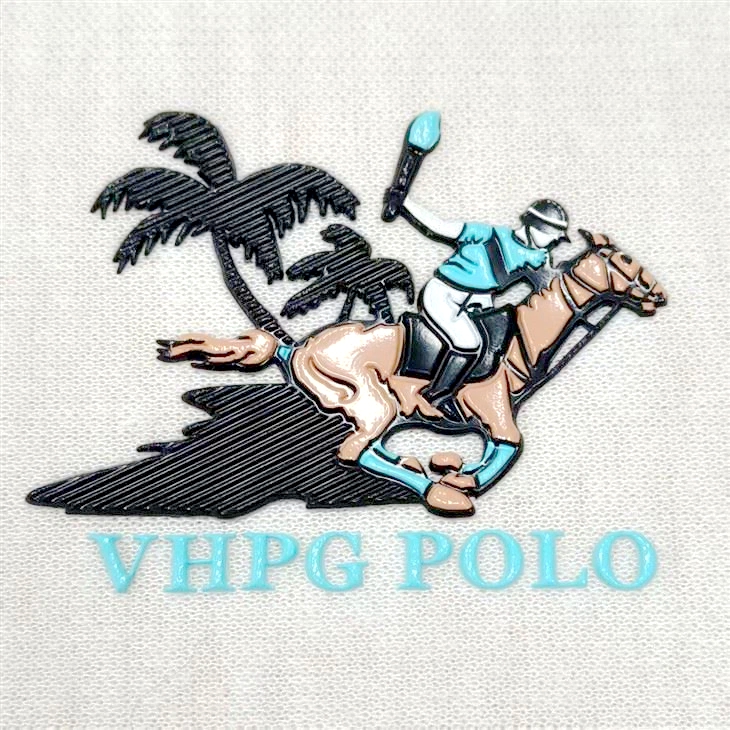
Run a finger across a surface and the brain makes a dozen silent judgments before the eye even has time to blink. The feel test isn't a formal procedure—it's the quick, almost involuntary way we press, stroke, or grip an object to figure out what it promises. Texture is the first unspoken conversation between a product and its user, setting expectations about durability, grip, comfort, and even taste or cleanliness long before any label can speak up.
A matte finish can make a plastic remote feel more expensive than polished chrome, while an overly smooth handle might suddenly seem slippery and untrustworthy in a humid room. These reactions happen below conscious reasoning. The tiny peaks and valleys on a surface—whether etched metal, pebbled leather, or brushed ceramic—change how light catches, how heat transfers, and how weight seems to rest in the hand. That's why two objects with identical shapes can feel completely different: one whispers quality, the other flattens into cheapness.
Designers who ignore texture end up correcting problems that never needed to happen. A phone that feels too slick gets wrapped in cases; a chair that feels cold stays empty. By shifting just the micro-texture—adding a soft grain, deepening a groove, or warming the edge of a button—the entire experience shifts from forgettable to memorable. In the end, people may not remember what something looks like, but they rarely forget how it made their fingertips feel.
Laundry Abuse and How the Raised Detail Survives
Washing machines have no mercy on raised stitching, puffy logos, or textured embroidery. Every spin cycle grinds those proud threads against zippers, buttons, and the drum itself. The result is usually a sad, flattened shadow of the original design—unless you know how to fight back.
The trick isn’t just turning clothes inside out, though that helps. It’s about giving the raised detail a shield. A mesh laundry bag does more than keep socks together; it creates a soft cocoon where embroidered patches or appliqués barely move during the wash. Less friction means those high-relief fibers don’t get yanked or crushed.
Cold water and a gentle cycle are equally crucial. Hot water softens adhesives and weakens thread, while aggressive agitation tears at the very loops that create dimension. After years of trial, I’ve found that air-drying on a flat surface preserves the puffiness far better than any dryer sheet ever could. Those raised details survive not by luck, but by deliberate neglect of everything the machine wants to do.
Fabric Stretch and Recovery Without Cracking the Design
A stretch fabric that doesn’t bounce back is more damaging to a garment’s look than one with modest elasticity. Rather than chasing the highest spandex percentage, start with the knit’s geometry—tight, even loops with balanced yarn twist give the material a quiet memory. When the structure itself absorbs movement, you won’t need to over-tension seams or add stiff backers that later crack under repeated wear.
Surface treatments fail first where elongation peaks: underarm panels, shoulder seams, or any place a print crosses a stretch line. To stop cracks before they form, match the print or coating’s elongation limit to the fabric’s actual working stretch, not its lab maximum. Pre-stretching panels during curing or using discontinuously printed zones lets the base fabric flex without pulling the surface apart.
Recovery mapping changes how patterns are cut. Measure fabric after five and twenty stretch cycles, then use that residual deformation to adjust seam allowances and grainline placement. A sleeve cap cut on the bias may recover differently than one on the straight grain; designing with those measured differences prevents that telltale sagging at elbows and knees without resorting to heavier construction.
Layering Different TPU Thicknesses for a Sculpted Badge
Stacking TPU sheets of different thicknesses changes how light hits the badge edges, so even a flat print can read as carved. A 0.4mm base layer keeps the back stable, while 0.8mm and 1.2mm sections build up the main emblem. The jump between thicknesses isn't uniform—place the thinnest layer only under fine details like lettering or small filigree, and let the thicker pieces carry the larger forms.
The trick is cutting each thickness with a slight offset from the one below it. That offset creates a stepped slope rather than a hard vertical wall, which makes the badge look molded instead of stacked. If your design has an undercut or a bevel, use a 0.6mm sheet in that zone and sand the edge lightly after bonding.
Test the stack dry before applying adhesive. Different TPU hardness values flex at different rates, and a mismatch can cause the top layer to peel away from the base after repeated bending. Once the layering feels right, press the sheets together at low heat so the material softens just enough to merge the seams without blurring the sculpted details.
Setting Heat Press Profiles That Preserve the Third Dimension
To keep raised elements from collapsing under a heated platen, start with a lower pressure setting than you would use for flat graphics. Most dimensional transfers respond better to a gentle first pass that tacks the adhesive without squeezing the loft out of the design. A short dwell of five to eight seconds at around 300°F often lets the base film release cleanly while the foam or puff layer retains its height.
Temperature ramping matters just as much as the pressure dial. Bring the press up in stages if the material includes heat-sensitive expandable inks or layered vinyl details. The moment the top sheet begins to lift at the edges, stop the cycle and let the garment cool under a weighted but not compressed platen. This pause lets the dimensional elements set in their raised form instead of flattening during the final bond.
Finally, check the profile's cooldown step. Some users make the mistake of opening the press immediately and peeling while the adhesive is still soft, which drags the raised texture sideways. A medium-firm silicone pad, not a hard rubber one, combined with a ten-second rest before peeling, goes a long way toward preserving that third dimension without sacrificing durability.
FAQ
It's a raised, flexible label made from thermoplastic polyurethane that gets applied to garments or accessories using heat and pressure. Unlike flat prints, it has a dimensional surface you can both see and feel.
TPU offers a smooth, rubbery feel and holds crisp detail even at small sizes. It won't fray, fade, or absorb moisture the way fabric labels can, and the 3D effect gives products a more modern, tactile identity.
High-quality 3D TPU labels typically withstand 50+ industrial wash cycles without peeling, cracking, or losing shape. The bond strengthens with proper heat application, and the material itself resists abrasion and chemicals.
Yes. TPU has enough elasticity to move with performance knits and spandex blends, and it adheres well to coated or laminated surfaces like waterproof jackets and bags when the right backing and pressure are used.
Bold logos, monograms, geometric shapes, and text with clear spacing reproduce best. The raised areas need enough width to hold their form, so ultra-fine lines under 0.3mm may flatten or lose definition.
You can choose matte, gloss, metallic, translucent, or color-gradient effects. Some suppliers also offer multi-layer constructions that create a pillowed or engraved look without sacrificing flexibility.
The label is positioned on the fabric, covered with a protective sheet, and pressed at a specific temperature, pressure, and dwell time. Once cooled, the carrier film is peeled away, leaving the 3D graphic fused to the surface.
It varies by supplier, but many offer low minimums starting around 300–500 pieces for simple designs. More complex multi-color or oversized labels may have higher thresholds due to tooling and production setup.
Conclusion
Flat heat transfers often look great on a spec sheet but disappoint once applied—edges lift, colors crack, and any hint of dimension disappears after a few washes. 3D TPU heat transfer labels solve this by replacing printed imitation with genuinely raised, molded polyurethane. The moment you run a finger across the surface, the difference is obvious: soft-touch ridges, beveled logos, and layered textures that feel as premium as they look. Unlike flat prints that rely on optical tricks, TPU builds height and depth directly into the label, so the tactile experience matches the visual promise. This is especially critical for brands that want a badge or emblem to feel like an integrated part of the garment rather than an afterthought.
Durability is where 3D TPU really proves its worth. Raised details shrug off the friction, detergent, and temperature swings of repeated laundry cycles without peeling or flattening. On stretch fabrics like performance knits or ribbed cuffs, the TPU flexes with the material and rebounds cleanly—no cracking, no shark-tooth splits along the edges. By layering different TPU thicknesses, you can sculpt a true three-dimensional badge with recessed backgrounds and proud top surfaces. The key is heat press calibration: moderate pressure, lower dwell time, and a firm silicone pad underneath keep the raised profile intact while ensuring a strong bond. The result is a label that not only survives real-world wear but continues to demand attention with its depth and crispness long after flat transfers would have faded into the fabric.
Contact Us
Contact Person: Wang Song Lin
Email: [email protected]
Tel/WhatsApp: +8613751282193
Website: https://www.heat-transferprinting.com/